Monday, January 28, 2013

How One Man Tried To Slim Down Big Soda From The Inside

PepsiCo's product line ranges from salty chips and its sugary namesake drink to more healthful fare like hummus and yogurt. In 2010, the company announced plans to cut sugar, fat and sodium in its products to address health and nutrition concerns. Enlarge image i

PepsiCo's product line ranges from salty chips and its sugary namesake drink to more healthful fare like hummus and yogurt. In 2010, the company announced plans to cut sugar, fat and sodium in its products to address health and nutrition concerns.
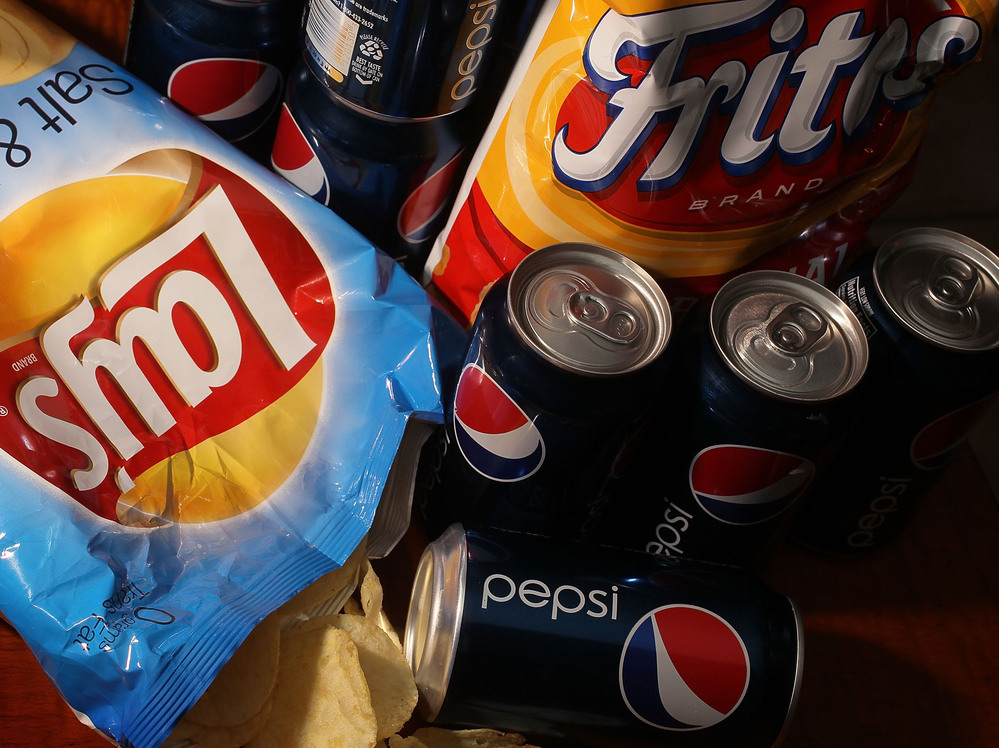
PepsiCo's product line ranges from salty chips and its sugary namesake drink to more healthful fare like hummus and yogurt. In 2010, the company announced plans to cut sugar, fat and sodium in its products to address health and nutrition concerns.

PepsiCo's product line ranges from salty chips and its sugary namesake drink to more healthful fare like hummus and yogurt. In 2010, the company announced plans to cut sugar, fat and sodium in its products to address health and nutrition concerns.

Many big food companies are caught in a dilemma these days. They want to rebrand themselves as merchants of health Coca-Cola's new anti-obesity ads are just the latest example but many of their profits still come from products that make nutritionists scowl.

If there's one person who symbolizes this tension, it's Derek Yach.

A decade ago, Yach, a soft-spoken doctor from South Africa, was building a reputation as a thorn in the side of the global food industry.

He was working at the World Health Organization in Switzerland, leading the WHO's new effort to take on health problems that come from smoking or from unhealthful diets.

Among the academic experts who got to know Yach during those years was Marion Nestle, a nutrition professor from New York University. "He was putting enormous pressure on food companies to stop marketing junk foods to kids," she recalls. "I saw him as someone who saw the food industry as an enormously destructive force in public health."

But Nestle may have misunderstood Yach. Yach himself says that food companies were never the enemy.

The strategy for dealing with the food industry, he says, was very different from his tactics for fighting tobacco. The anti-tobacco formula was simple: "Demonize the industry. Tax it through the roof. Ban all forms of marketing."

But you can't get the same results with sugary soft drinks, he says. If you tax them heavily enough, you can drive consumers away from those products, "but that doesn't mean you solve the obesity problem. It all depends on what they choose as that alternative."

With food, there's always an alternative another sugary product on the shelf.

Food companies create this universe of options, which is why Yach felt that he needed to talk to those companies, draw them in, persuade them to offer consumers better alternatives.

But he says he never, ever, thought he'd actually go work for one of those companies until one day in 2006. He'd left the WHO and was working at the Rockefeller Foundation in New York. He got a call from Indra Nooyi, who had just been named CEO of PepsiCo.

"She had the most powerful vision of how she wanted to transform the company," he recalls.

PepsiCo sells Pepsi, of course. And Mountain Dew, Frito-Lay chips, Doritos, Cheetos, and Cap'n Crunch. But PepsiCo had also picked up Tropicana orange juice and Quaker Oats. In fact, Nooyi wanted to transform the company's entire product line. "Her vision was very clear. There was an opportunity to turn this into the healthiest food and beverage company in the world."

She wanted Yach inside the company, pushing everybody toward that goal.

He took the job. He felt like he had to.

Nestle and a lot of other former allies in the public health community were stunned.

"I couldn't believe it," she says. "I was really astounded. I mean, it's not like he went to work for a company that's selling carrots! He went to work for a company that's selling sugar water!"

With that choice, Yach became the symbol of a very controversial idea: that companies like Pepsi can be part of the effort to get people to eat better.

Yach stayed at Pepsi for almost six years. He left a few months ago.

While he was there, he says, he pushed for changes in some of the company's products to make them more healthful, like potato chips with less salt and fat, and beverages with little or no sugar in them.

He got very different reactions to this idea in different parts of the company. Some took it almost as a personal attack.

"People very much loved and believed in their brands. They couldn't believe that there could be anything wrong [with them] or that they should be reducing the way that they market or sell these delightful, tasty brands," he says. But Yach stuck to his guns. "I said, 'We've got to change our marketing strategies. We've got to lower salt, sugar, fat,' repeatedly, over and over."

The food technologists, on the other hand, became Yach's allies. They took on the challenge of making a low-sodium snack that still tastes salty or a soda that's sweet without the calories. This is true throughout the food industry, Yach says. "There are pockets of people who are spending their entire lives trying to reformulate as fast as possible."

PepsiCo has, in fact, adopted some ambitious long-term goals for cutting salt, sugar and fat from its products.

But when it came to making changes right now launching new products, putting marketing muscle behind them, changing recipes Yach's goals ran into the limits of what the company was prepared to do.

Executives often got cold feet, because all of those things cost money. And pulling full-calorie Pepsi off the shelves certainly wasn't an option.

"You can't just withdraw from markets. That would simply be giving up market share to a competitor. That wouldn't be permitted by a shareholder," Yach says.

Despite all that, and even though he's no longer a PepsiCo employee, Yach remains convinced that companies like PepsiCo can, in fact, help people change their diets for the better.

He points out that PepsiCo is cutting salt from its products. It's selling a lot more reduced-calorie beverages. And it's now in the hummus and yogurt business.

The change isn't happening as fast as Yach would like, but it is happening, because it's good business in the long run, he says. People's expectations are changing. The arc of history, as he puts it, is pointing food companies toward more concern for health.

Nestle, though, thinks Yach is well-meaning but naive. PepsiCo hasn't changed that much, she says. The company's sugary soft drinks are still adding to obesity worldwide.

In fact, she says, Yach actually has hurt the cause of public health by giving the company more credibility. "He was a much greater asset to Pepsi-Cola than Pepsi was to him, or to public health."

Yach has moved on now, to a company called the Vitality Group. It's part of a health insurer in South Africa.

The Vitality Group finds ways to pay people to do healthful things like eat more fruit and vegetables or exercise. It makes money doing this, because it then has to pay fewer medical bills.

This is an industry, apparently, that really can capture profits by promoting better health.


Sunday, January 27, 2013

Oysters Rebound In Popularity With Man-Made Bounty

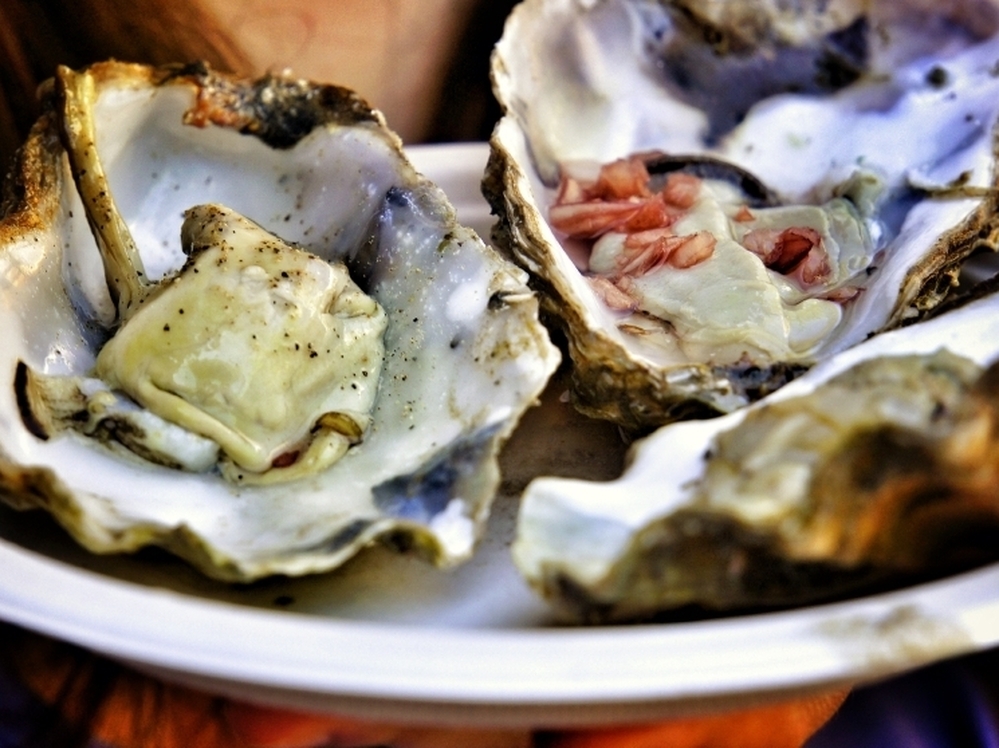
Along the East Coast, wild oysters have been disappearing, but the number of farm-raised oysters is exploding. Enlarge image i

Along the East Coast, wild oysters have been disappearing, but the number of farm-raised oysters is exploding.

Along the East Coast, wild oysters have been disappearing, but the number of farm-raised oysters is exploding.

Along the East Coast, wild oysters have been disappearing, but the number of farm-raised oysters is exploding.

In colonial Virginia, oysters were plentiful; Capt. John Smith said they lay "thick as stones." But as the wild oyster harvest has shrunk, Weekend Edition food commentator Bonny Wolf says the market for farm-raised oysters is booming.

The local food movement is expanding from fertile fields to brackish waters.

Along the rivers and bays of the East Coast, where wild oysters have been decimated by man and nature, harvests of farm-raised oysters are increasing by double-digits every year. At the same time, raw oyster bars are all the rage.

Shore Gregory, vice president of Island Creek Oysters in Duxbury, Mass., says when his oysters first went to market in 2001, just five Boston restaurants served oysters. Island Creek now works with 70 local restaurants and 300 chefs around the country. His company began with harvests of 50,000 oysters. Today, it's closer to 5 million.

When Travis Croxton and his cousin, Ryan, took over Rappahannock River Oysters in Virginia about 10 years ago, there were only a couple of farms in Virginia and Maryland. Now, he says, there are close to 300.

Tim Devine had been a successful photographer in New York for 11 years when he returned home to Maryland's Eastern Shore last spring to start Barren Island Oysters.

Like the Croxtons, he learned the business from the Internet. Even with the Internet, they have a lot to learn, so some of the new oystermen hire veteran watermen to teach them. Many of these old salts remember better days in the oyster fields.

When wild oysters were plentiful and cheap, they were a poor man's food. Modern, farm-raised oysters are for upscale eaters. They have catchy names and clever marketing. Consumers discuss the "merroir" of different oysters, the water conditions that determine an oyster's flavor. Like wine connoisseurs, oyster enthusiasts talk about an oyster's mild finish, hints of copper, pleasant melon flavor. What happened to "briny"?

Oyster entrepreneurs are confident that they're tapping into demand that's been unmet since oysters' glory days, when reefs were actually a danger to ships and oysters were a staple food. They also know they are helping the environment, since oysters are one of nature's best water filters.

They all wish each other well. A rising tide lifts all oyster boats.

Bonny Wolf is managing editor of American Food Roots.


Manmade Snow From Recycled Sewer Water May Contain Antibiotic ... This winter, an Arizona ski resort, Snowbowl, will be the first to use treated sewage water, and sewage water alone, to make manmade snow. Recyclings usually a ... Hurricane Sandy: Live Report - Yahoo! News Singapore Read 'Hurricane Sandy: Live Report' on Yahoo! News Singapore. That's it from us, but follow us on Twitter (@afp) for more updates. TOP EVENTS THEMES USA Different types of USA events and festivals Top Event Themes USA explores the best events and festivals themes and categories in America, from rodeos and parades, to marathons and state fairs. Ultralingua Online Language Resources - Dictionary Grammar ... GetGlue - Your app for TV, Movies, and Sports GetGlue's vision is to create a deeply personalized, social and connected experience around television, movies and sports. Topic Galleries -- mcall.com Topic galleries provide easy access to stories and photos about people, places, organizations, events and subjects of interest to you. They bring together rich ... Coast Guard rescues two off sinking boat near Point Lookout State ... News, recent developments, and useful information from around the Chesapeake. Topic Galleries -- baltimoresun.com - The Baltimore Sun Breaking ... Topic galleries provide easy access to stories and photos about people, places, organizations, events and subjects of interest to you. They bring together rich ...

Saturday, January 26, 2013

Vigor, Brain Power And Other Health Claims From Coke's Advertising Past

Coca-Cola is taking a lot of flak for its new television ad campaign addressing America's obesity epidemic an epidemic in which sugary sodas are widely fingered as a key culprit.

Launched last week, the ads discuss the beverage giant's efforts to combat obesity, while also insisting that Coke products can be part of a healthy lifestyle. Those claims have been met with widespread skepticism and ridicule from public health advocates and the advertising world alike, with words like "shameless" and "chutzpah" bandied about. As one satirical parody video of one of the new ads put it bluntly: "Don't drink Coke it's killing you, and your family."

All this debate over the truthiness of Coca-Cola's new anti-obesity message reminded us that, more than a century ago, the company actually branded itself a maker of "medicinal tonic." Let's go back in time for a moment, shall we?

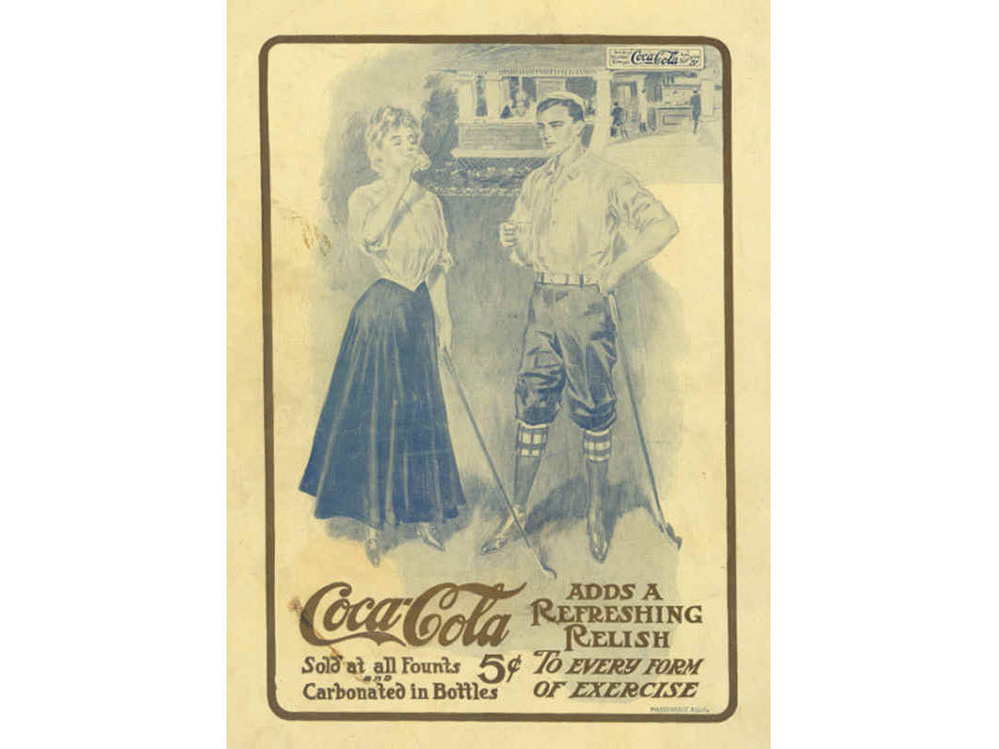
Circa 1907 Enlarge image i
Circa 1907

This 1907 magazine ad states that Coke "relieves fatigue without undue stimulation [and] aids digestion. Its use after exercise is especially healthful."

... And during exercise, too, apparently. (Golf, anyone?)

Circa 1906 Enlarge image i
Circa 1906

Other ads promised Coca-Cola would have the power to revitalize both the mind and body.

Circa 1890s Enlarge image i
Circa 1890s

Studying? Shopping? Sight-seeing? Coke offered to "revive and refresh" and relieve your fatigue.

Circa 1905-06

But perhaps the most disturbing claim, at least to our modern minds, comes from this vintage ad not for Coca-Cola but its forebear, Vin Mariani a Bordeaux wine containing six milligrams of cocaine per fluid ounce. (That's one way to get a baby to sleep through the night.)

Vin Mariani Enlarge image i
Vin Mariani

In his unauthorized history of the company, For God, Country and Coca-Cola, author Mark Pendergrast recounts that Coca-Cola inventor John Pemberton released his famous drink in 1886 as a nonalcoholic beverage inspired by this coca wine.

In comparison to these old ads, the health claims in Coca-Cola's new anti-obesity ad campaign seem almost harmless. (OK, plenty of food advocates would beg to differ.)

One of the new advertisements focuses on outlining the ways in which Coca-Cola is helping people consume in moderation, including creating "portion control"-sized cans and adding easy-to-find calorie labels.

But Coca-Cola advertising hasn't completely lost its sense of the ridiculous, as evidenced in this second new ad, which presents viewers with fun, easy ways to burn off the 140 "happy" calories in a can of Coke. Among the suggestions? Laugh out loud! Do a victory dance!

I did the math, and by my calculations, you'd have to laugh for about two hours to burn off one can of Coke. So better get chuckling! Excuse me while I go cue up that Scottie pinwheel video.


Main Page - PESWiki PESWiki.com-- Pure Energy Systems Wiki: Finding and facilitating breakthrough clean energy technologies. Ran Prieur Ran Prieur "The bigger you build the bonfire, the more darkness is revealed." - Terence McKenna World News Latest headlines from WN Network. WorldNews delivers latest Breaking news including World News, U.S., politics, business, entertainment, Video, science, weather and ... Chevron Corporation Home - Human Energy The Power of Human Energy Finding Newer, Cleaner Ways to Power the World India Power Outage: The Shape of Things to Come? Energy "So far as I am able to judge, nothing has been left undone, either by man or nature, to make India the most extraordinary country that the sun visits on his rounds. Science Daily: News & Articles in Science, Health, Environment ... Offers news releases submitted by leading universities and other research organizations around the world, organized by day and topic. A Plan to Power 100 Percent of the Planet with Renewables ... Energy & Sustainability:: Feature Articles:: October 26, 2009:: 177 Comments:: Email:: Print; See Inside A Plan to Power 100 Percent of the Planet with Renewables Health News & Articles Healthy Living - ABC News Get the latest health news from Dr. Richard Besser. Here you'll find stories about new medical research, the latest health care trends and health issues that affect ...

Friday, January 25, 2013

Haul Out the Haggis, It's Time to Celebrate Burns Night

Enlarge image i

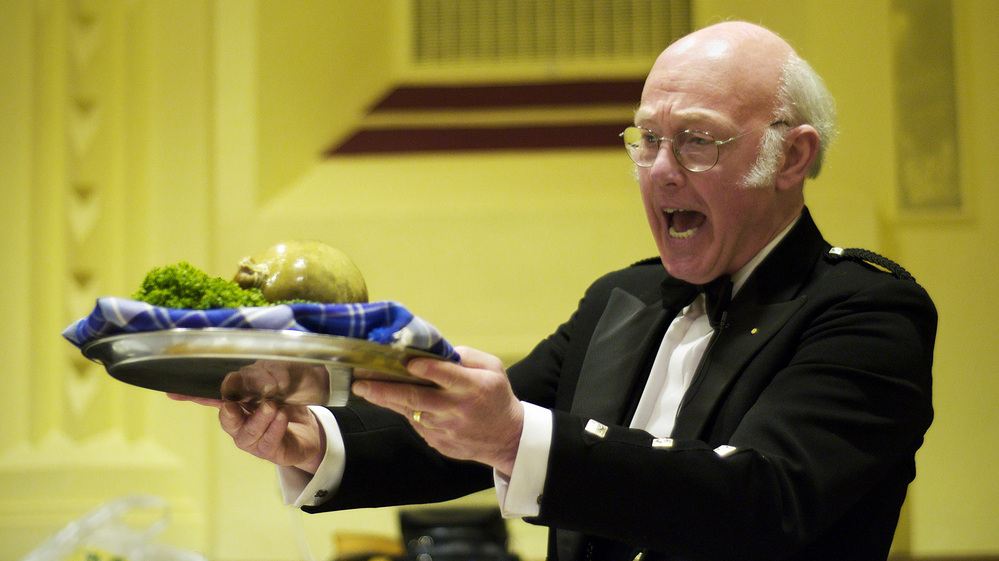
Before serving the haggis at a Burns Supper, it's tradition to address it by reciting Robert Burns' "Address to a Haggis" which begins "Fair fa' your honest, sonsie face, Great chieftain o' the pudding-race!"

Before serving the haggis at a Burns Supper, it's tradition to address it by reciting Robert Burns' "Address to a Haggis" which begins "Fair fa' your honest, sonsie face, Great chieftain o' the pudding-race!"

Don't fear the haggis. Just think of it as a big, round sausage. That's what it is anyway.

Haggis is Scotland's national dish and every year on (or near) Jan. 25, it plays the starring role in Burns Suppers held around the world in celebration of the Scottish poet Robert Burns on his birthday.

Technically, it's the heart, liver and lungs of a sheep mixed with suet, oatmeal and seasoning and boiled in a bag. Yes, said bag was traditionally the sheep's stomach, but modern haggises are frequently prepared in sausage casing. It's much tastier than you might think. As one Scottish friend puts it, haggis is "a dish that makes the worst-sounding combination of meat taste fantastic."

It's central to the Burns Supper, paraded into the room on a silver platter and accompanied by bagpipes. Before cutting and serving haggis, a designated guest first addresses it, reciting Burns' poem of appreciation for the "Great chieftain o' the pudding-race." In a mock heroic style, the verse describes the haggis as worthy of grace and a glorious sight, tasting better than a French ragout or fricassee, and that "if ye wish her gratfu' prayer, Gie her a Haggis!"

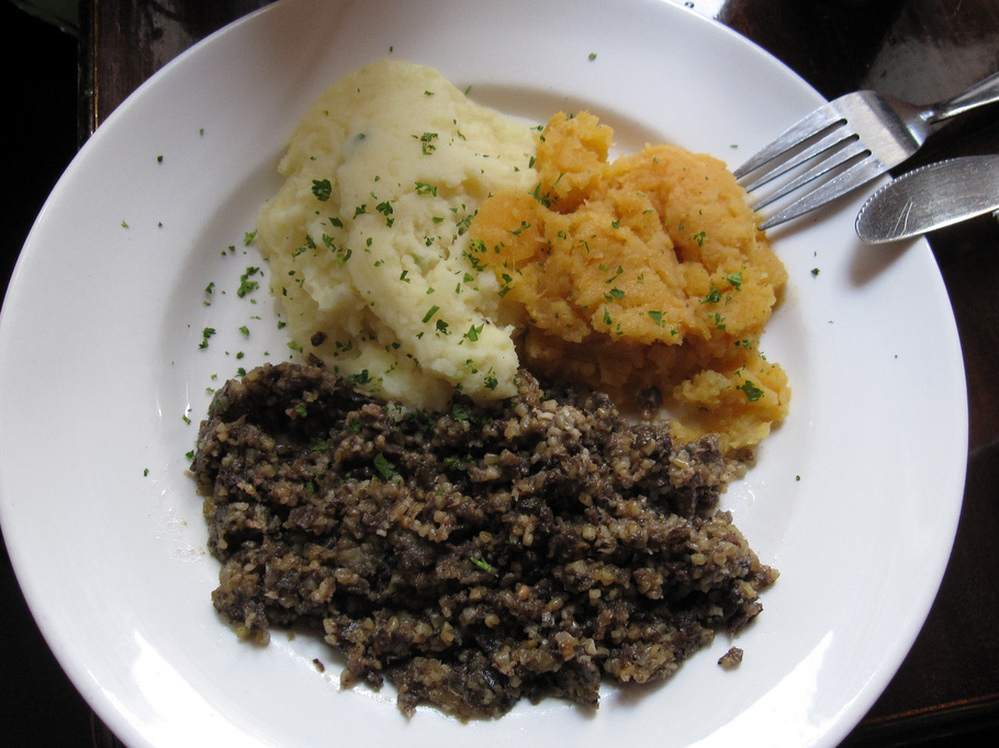
Haggis is traditionally served with mashed neeps and tatties, or turnips and potatoes. Enlarge image i

Haggis is traditionally served with mashed neeps and tatties, or turnips and potatoes.

Haggis is traditionally served with mashed neeps and tatties, or turnips and potatoes.

Haggis is traditionally served with mashed neeps and tatties, or turnips and potatoes.

With his "Address to a Haggis," Burns elevated the worth of a peasant food. "Haggis was really a meal of the working man the people who didn't have much because when a sheep was killed, they would cut it up and use everything," says Tony Grogan, president of the Robert Burns Association of North America and a Scottish ex-pat.

For the first recorded Burns Supper, which occurred on July 21, 1801, the fifth anniversary of the poet's death, nine of his friends gathered to eat and toast the poet. The meal featured haggis as well as sheep's head, now out of style. Celebrations were held twice a year on both his birth and death date from then until 1809, when admirers eventually settled on his January birthday.

Modern-day Burns Supper menus stick to tradition, and regularly consist of other funny-sounding Scottish favorites like cock-a-leekie soup, made of chicken and leeks, for a starter, and clootie dumpling a pastry with dried fruits. And you can't have the haggis without the neeps and tatties (turnips and potatoes) alongside. Then if you're lucky, there's cranachan made with oats, cream, Scotch whisky and raspberries for dessert.

Speeches, recitations and music follow or are interspersed between the meal's course, remaining fairly true to the script of the first supper. One speaker describes and expounds on a particular aspect of Burns' life, concluding with a toast "to the Immortal Memory of Robert Burns." Familiar poems such as "My Luve is like a Red Red Rose," "A Man's A Man for A' That" and "To a Mouse" are commonly recited.

At the original suppers, the Toast to the Lassies was a thank you to the woman who cooked the supper and an acknowledgement of Burns' love of the ladies. Later, it evolved into a rather snarky reflection on the differences between men and women, personalized, of course, to present company, much like a wedding toast.

But don't worry, ladies in the modern era we get a Reply to the Toast to the Lassies. (Here's a particularly sassy one, and YouTube has dozens of examples of the variety of ways in which they can be delivered.)

And at the end of it all, guest join hands and sing "Auld Lang Syne," which Burns collected, edited and published.

So how did this humble country poet come to symbolize Scottish national pride?

"Burns died at a time of profound economic, social and political change, when writers perceived that Scottish identity was being lost," writes Rab Houston, professor of modern history at St Andrews University in Scotland. "Romantic and anti-modernist, they found in him a symbol of an allegedly uncorrupted Scotland."

By celebrating the symbols most associated with Burns, his suppers have helped to shape Scottish identity over the last 200 years.

They've also been embraced by other cultures. They're particularly popular with Russians and have been cross-bred with the Chinese New Year in Vancouver to create Gung Haggis Fat Choy.

An estimated 12,000 to 15,000 Burns Suppers are held worldwide each year. There is no compiled list of them, since anyone can organize one. Scottish heritage societies and Burns clubs usually hold formal Suppers, but your local Scottish or Irish pub probably holds them, too.

Why so much adoration for one guy? Grogan simply says, "He spoke to the common man. He just hit the right note."


Director Paul Haggis Takes Aim At The Church Of Scientology Director Paul Haggis Takes Aim At The Church Of Scientology. The 2005 film "Crash" won the Oscar for Best Picture and was directed by Paul Haggis, who also won for ... News - WBTV 3 News, Weather, Sports, and Traffic for Charlotte, NC WBTV On Your Side in Charlotte, NC breaking news, weather, traffic, sports and television programming. Gung HAGGIS Fat Choy Toddish McWong's Misadventures in ... Gung HAGGIS Fat Choy Toddish McWong's Misadventures in Multiculturalism: through arts, culture, food, dragon boats, travel + more Menu Skip to content University of Dundee - Dundee, United Kingdom - College ... The face of Robert Burns has been revealed thanks to work by forensic experts at the University of Dundee. The STV documentary, In Search of Robert Burns, last night ... 2012 Presidential Election: Campaign News, Polls, Results, Debates ... When we launched our blog in June 2011, we had no idea how this enterprise would turn out. Ryan's Bar RYANS BUZZ Burns Night 2013. Burns spent much time in Edinburgh, and the city had a lasting impression on him. Enjoy a traditional Burns Supper, or sample from the ... Celebrity News Celebrity Gossip - Yahoo! omg! Get the latest celebrity news from Yahoo! omg! Find the latest news about the Hollywood celebrities with videos and photos My Sweet Charity An Ongoing Conversation For the Good Of Dallas An Ongoing Conversation For the Good Of Dallas ... With Troy Aikman Out With The Flu, Roger Staubach Does Double Duty At Childrens Cancer Fund Shoot

Still Life With Cheeseburger: Art That Looks Good Enough To Eat

Back in the day the 17th century Vermeer, Rembrandt and the rest of the Dutch Golden Age crew blazed a trail for realism in art. Their work wasn't just technically dazzling; it was also distinctive. Instead of fat baby cherubs and saints, they painted the stuff of every day life. Often, that meant food.

In their hands, grapes popped with juiciness. Lobsters steamed, ready for cracking. Milk practically splashed the viewer as it poured from the jug.

The Milkmaid (Johannes Vermeer, circa 1658)

The Milkmaid (Johannes Vermeer, circa 1658)

It's hard not to think of these old Dutch masters when looking at the work of a new one: Tjalf Sparnaay. Since the 1980s, Sparnaay, who is based in the town of Hivlversum, has been painting mouth-wateringly photorealistic still-lifes of food.

Cheeseburger, 2012 (Tjalf Sparnaay)

His images are so gobsmacking in their detail, you've got to resist the urge to pick up a yummy patat-friet and dip it in some mayo. (How very Dutch.)

Bakje patat (Tjalf Sparnaay)

And yet Sparnaay's intention was never to make his audience salivate, but to help them "take awesome pleasure in ordinary things."

"I am not a gastronomic man," Sparnaay tells The Salt in an email. "I am not dedicated to food. But it gives me a tool to paint textures, light, space (I see them almost as landscapes!) and, last but not least, temptation."

  • De moorkop, 2009 (Tjalf Sparnaay)
    Hide caption
    De moorkop, 2009 (Tjalf Sparnaay)
    Previous Next
    Courtesy of the artist
  • Mayonaise (Tjalf Sparnaay)
    Hide caption
    Mayonaise (Tjalf Sparnaay)
    Previous Next
    Courtesy of the artist
  • Draadjesvlees (Tjalf Sparnaay)
    Hide caption


    Draadjesvlees (Tjalf Sparnaay)

    Previous Next
    Courtesy of the artist
  • Broodje gezond II, 2009 (Tjalf Sparnaay)
    Hide caption
    Broodje gezond II, 2009 (Tjalf Sparnaay)
    Previous Next
    Courtesy of the artist
  • Srainless (Tjalf Sparnaay)
    Hide caption
    Srainless (Tjalf Sparnaay)
    Previous Next
    Courtesy of the artist
  • Gebakken Ei (Tjalf Sparnaay)
    Hide caption
    Gebakken Ei (Tjalf Sparnaay)
    Previous Next
    Courtesy of the artist

1 of 6

View slideshow i

Ummm, temptation indeed ...

Sparnaay is part of the modern art movement known as hyperrealism. These artists use snapshots as a reference to preserve light and perspective and create astonishing detail in their paintings.

"They are basically the 21st-century version of the old masters," says Maggie Boellart, director of the Plus One Gallery in London, who literally wrote the book on hyperrealism. "Because if you look at Vermeer or any of the Dutch painters, they were very hyperrealist in their painting."

In that sense, Sparnaay says sees his work as a continuation of the old Dutch tradition. "I use these age-old skills to get a timeless idiom." And food, he says, is a "common, recognizable language."


A feast for the eyes: Artist's incredible oil paintings of food ... This food certainly looks good enough to eat. But these mouth-watering creations would taste disgusting as they are, in fact, oil paintings. They are the work of ... Ran Prieur Ran Prieur "The bigger you build the bonfire, the more darkness is revealed." - Terence McKenna Still Learning the Game of Life: DIY HOOD TO HEADREST MEI TAI ... A little background... PS: If you don't really care and want to get right to it, just scroll on down to the tutorial! Artists Hyper-Realistic Paintings Look Good Enough to Eat ... Have you ever seen a picture of food that looked so good that it made your mouth water? Dutch artist Tjalf Sparnaay has created oil paintings that you ... Mr. Cheeseburger 9000 musings from brooklyn . . . musings from brooklyn . . . (by Mr. Cheeseburger 9000) ... So you probably all heard the news that there has been some credible but unconfirmed reports ... My Art. Life In Letters Just another WordPress.com site (by pmillerwatson) ... Hello My Tricky Treats! I just wanted to post pictures of the Ghoulish Goodies my mom and I made last night! Still A Lovely Life By Rachel Enjoy the moment and don't let ... Enjoy the moment and don't let the fear of the future spoil it! Latest blog posts - Spokane7 Spokane7 entertainment blog, covering movies, dining and things to do in Spokane and North Idaho.

Thursday, January 24, 2013

Maxing Out The Mini Season For Maine Shrimp

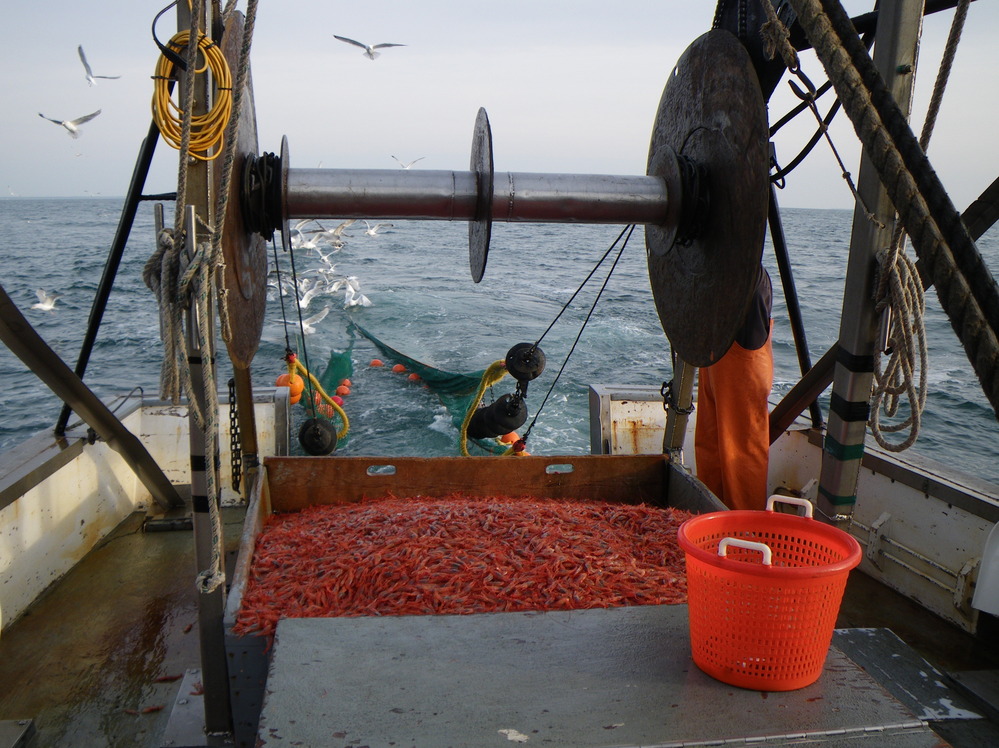
Trawlers in the Gulf of Maine are allowed to catch Maine shrimp during a limited season that started this week. Enlarge image i

Trawlers in the Gulf of Maine are allowed to catch Maine shrimp during a limited season that started this week.

Trawlers in the Gulf of Maine are allowed to catch Maine shrimp during a limited season that started this week.

Trawlers in the Gulf of Maine are allowed to catch Maine shrimp during a limited season that started this week.

To Mainers, cold-water shrimp pulled from the Gulf of Maine in midwinter by a shrinking fleet of fisherman are many things: fresh, sweet, delicious, affordable, precious.

"The absolute best thing about them is that they are almost exclusively ours," boasts Portland-based architect and Maine shrimp lover Ric Quesada. He revels in the fact that Maine shrimp don't travel well out of state. "You don't run errands with these in your car. They want to go right home and be eaten," he says.

Upwards of 90 percent of the U.S. harvest of Pandalus borealis comes from the coast of Maine, with the remainder pulled in from waters off New Hampshire and Massachusetts.

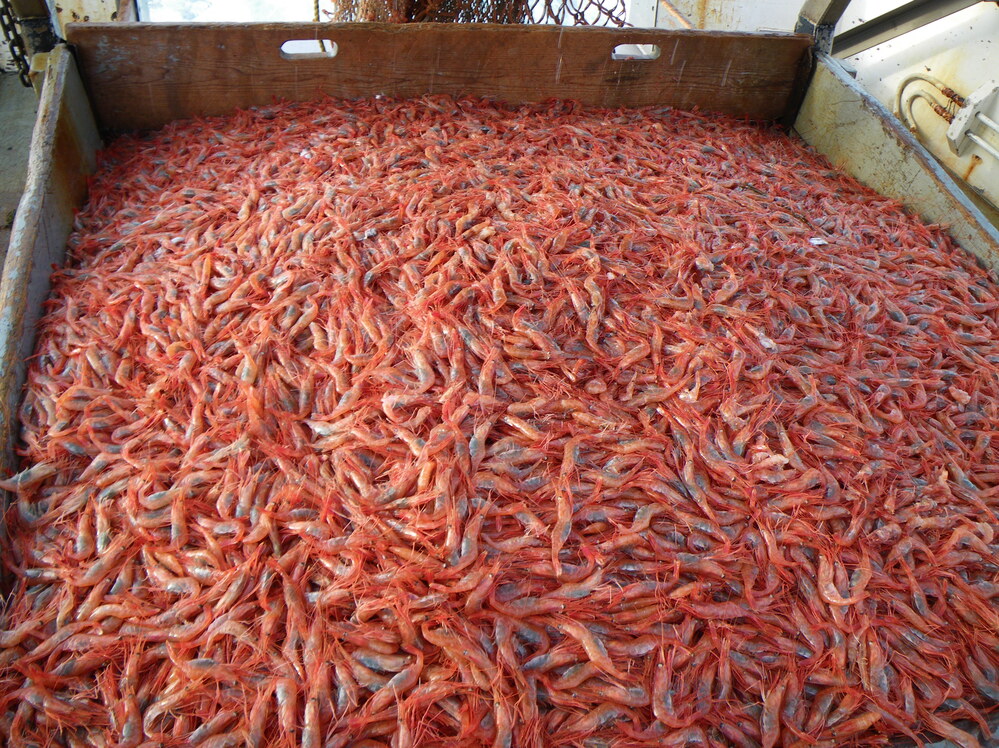
The small crustaceans with bulbous black eyes are colloquially dubbed "salad shrimp" because of their 2- to 4-inch physiques and the frequency with which they top Caesar salads in Maine. Mainers contend their shrimp have a sweeter, more delicate flavor than those reared in the Gulf of Mexico or shipped in from Asia, most likely because of the colder water, they say.

The season for Maine shrimp is always fairly short, driven by the life cycle of these migratory hermaphrodites. Maggie Hunter, a scientist with the Maine Department of Marine Resources, says Maine shrimp sexually mature as males at about 2 1/2 years of age in the muddy bottoms of the deep, cold canyons of the Gulf of Maine. Roughly a year later, they transform into females and mating soon starts. When they are about four or five years-old, they migrate to slightly warmer waters closer to shore and there they spawn.

It's at that point in their lives, when the ladies approach the shore between December and February, that they are caught for Mainers' consumption.

But this year Mainers are going to be consuming much less shrimp than they have in the past. The season is starting late to allow more shrimp to spawn before they are caught. And in December, regulators set the allowable catch for the species at just 72 percent of the 2012 level.

The overall allowable catch is divided between fishermen that drag nets behind their boats (a process called trawling) and fishermen that use traps. The season for trawlers began on Jan. 23, and they're only allowed to shrimp on Mondays and Wednesday mornings. Fisherman using traps which typically bring in more uniformly sized shrimp because holes in the trap let the little ones escape can't begin their shrimping until Feb. 5.

Maine shrimp are small and more red than pink. Mainers say the shrimp have a sweeter, more delicate flavor than shrimp from the American south or Asia. Enlarge image i

Maine shrimp are small and more red than pink. Mainers say the shrimp have a sweeter, more delicate flavor than shrimp from the American south or Asia.

Maine shrimp are small and more red than pink. Mainers say the shrimp have a sweeter, more delicate flavor than shrimp from the American south or Asia.

Maine shrimp are small and more red than pink. Mainers say the shrimp have a sweeter, more delicate flavor than shrimp from the American south or Asia.

How long the season will last is anyone's guess as weather and the shrimpers' ability to locate the shrimp both play a role. Estimates range up to to six weeks, but many think it will be a lot shorter.

If early sales are any indication, the shrimp haul won't last long in the shops. Harbor Fish in Portland received 180 pounds of shrimp on the 23rd at 11:30 a.m., and sold out in less than three hours.

The Atlantic States Marine Fisheries Commission, which regulates the fishery, contends the limits are necessary because the little gals have been overfished for the last three years, all surveys of the Maine shrimp population are trending downward and there are alarmingly few shrimp mature enough to make the migration to the shore.

The hope is that cutting back on the allowable catch will allow the fishery to return to sustainable levels. But recent samples don't bode well for a quick turnaround, Hunter says.

Sammy Viola is a commercial fisherman who has shrimped out of Maine's Portland Harbor on and off since 1994. He says catch limits are unnecessary. "Maine shrimp are so sensitive to both water temperature and salinity that they are either going to be there or not be there," he says. "If they are not there from one year to the next, we can't catch them, can we?"

Viola says he'll cast his shrimp nets this season, lured by a wholesale price for whole shrimp that's about 50 cents higher per pound than last year. But he also fears that if he doesn't go shrimping this year, regulators will decide to ban him next year. Regulators have made no calls yet about the 2014 season, but the previous year's haul does sometimes factor into the determination of an individual fisherman's quotas for other species, like cod.

Quotas aside, Mainers offer plenty of advice on how they plan to prepare as much of the rare Maine shrimp as they can get their hands on.

Viola will eat some raw on his boat. "They crunch like popcorn," he says.

Quesada first brines them in a salt solution and then marinates them very quickly in olive oil, garlic, herbs and cayenne pepper. He arranges them whole on a very hot, cast iron plancha, turns them once and then calls his family over.

"They should be eaten at the stove. Bringing them to the table is almost wasted effort," he says.

Shrimp cookers all admit to freezing some of the meats for future use and some of the shells for stock. But they say that frozen Maine shrimp isn't quite the same as fresh.

When Quesada pulls a half pound bag from the freezer, he only employs them as a garnish, for paella or on seafood pasta, for example.

"It's just a little hocus pocus I do to conjure up the image of the real Maine shrimp season," he says.

Christine Burns Rudalevige is a food writer and recipe developer who recently relocated to Maine and is currently enjoying her first shrimp season there.


WGME 13 :: Local Portland, Maine News WGME 13 :: Local Portland Maine News, Sports, and Weather RM Seafood - The Strip - Las Vegas, NV (702) 632-9300 "I've been wanting to try RM Seafood for a while a it was out standing in many levels. First off the service could not have been better. I really ... Recipes - How To Information eHow.com Season 1: Grilled Zucchini Medallions With Pita Recipe; Season 1: Fresh Garden Salad & Goat Cheese Toast Recipe; Season 1: Creamy Thyme Scrambled Eggs Recipe ABC News: Technology & Science - ABCNews.com - Breaking News ... So weve recommended a few expensive items over the last couple of weeks. But it turns out, great... Maine Avenue Fish Market - Washington, DC (202) 484-2722 "I came here again and got some fantastic seafood. I'm serious! You really can't go wrong here. The Maryland blue crab is to die for and so ... Mini Shepherd's Pie Recipe : Aaron McCargo, Jr. : Recipes : Food ... Well my first mistake was to use flakey Grand biscuits and they puffed up so much that I had to punch the middles down after the first baking to make room for the ... Printable Coupons - Ezeebuxs Freebies And More We find you coupons,savings,free stuff ,deals and more! Where To Stay Acadia National Park Maine All the information you might need to plan an exciting visit to Acadia National Park, Bar Harbor, Mount Desert Island, Downeast Maine and Atlantic Canada.

In Order To Live With People, Canines Evolved To Love Carbs

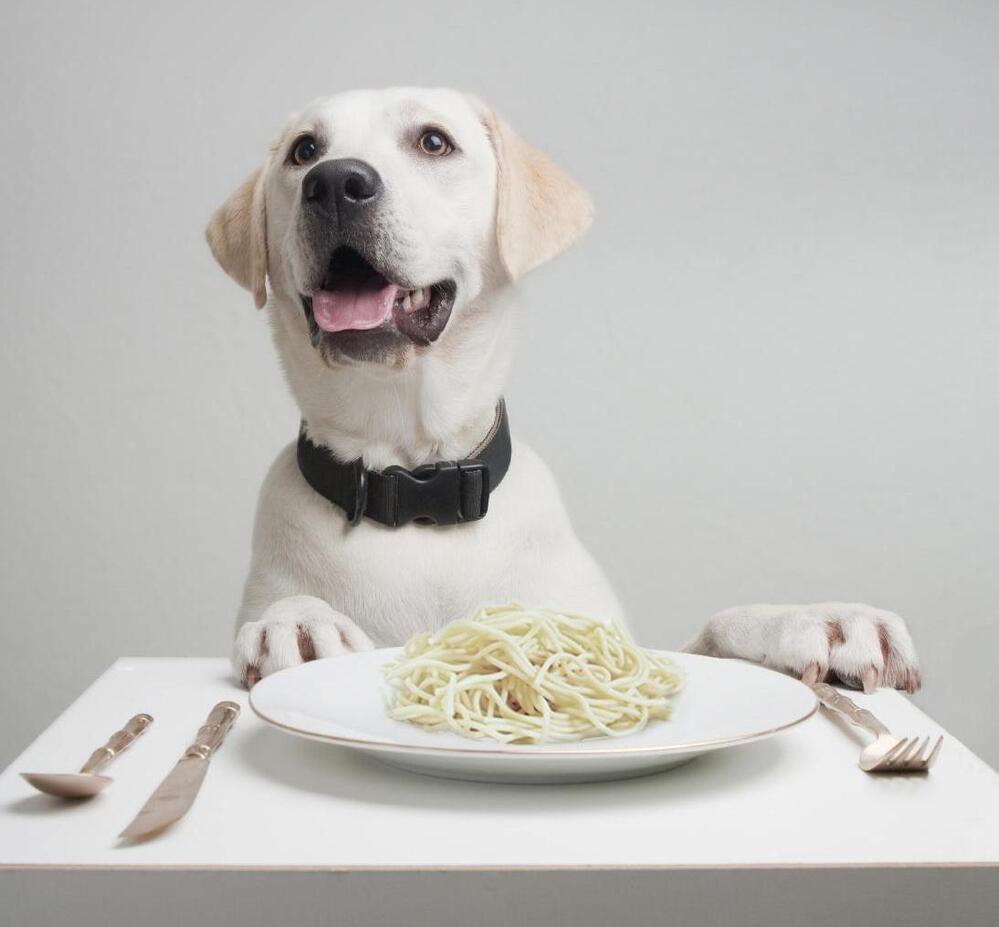
Got spaghetti? Dogs digest starch more efficiently than their wolf ancestors, which may have been an important step during dog domestication. Enlarge image i

Got spaghetti? Dogs digest starch more efficiently than their wolf ancestors, which may have been an important step during dog domestication.

Got spaghetti? Dogs digest starch more efficiently than their wolf ancestors, which may have been an important step during dog domestication.

Got spaghetti? Dogs digest starch more efficiently than their wolf ancestors, which may have been an important step during dog domestication.

These days, a trip down the dog food aisle of your local pet store or supermarket can be a little overwhelming. There are hundreds of brands out there, catering to let's be honest every dog owner's taste: everything from generic kibble to organic nuggets.

There are even dog food cookbooks and specialty gourmet shops for people who want their pets to eat as well or better than they do.

How did we get here? The first step happened thousands of years ago, when meat-eating wolves evolved to tolerate people and their more starchy, plant-based diet.

If you listen to my story on Morning Edition, you'll hear about Erik Axelsson. He's an evolutionary geneticist at Uppsala University in Sweden. (You'll also hear some pretty cool wolf howls.)

Now, dog food wasn't on Axelsson's mind when he started looking for genetic differences between dogs and wolves. During his research, Axelsson found changes between wolves and dogs in genes related to the nervous system. But he also noticed something else: "Three key genes involved in the digestion of starch also look differently in dogs and wolves."

Axelsson says he expected to find differences in nervous system genes since dogs behave very differently from wolves. But the ability to digest starch?

"That was surprising," Axelsson says. "I mean, no one's really been hypothesizing about any such changes. On the other hand, it makes sense."

It makes sense because some researchers, including Axelsson, speculate that wolves first became domesticated when people settled down and started farming.

The hungry wolves would have been attracted by their garbage dumps full of food scraps. But Axelsson says to take advantage of this convenient new food supply, the wolves would have to adapt not just to being near people, but also to eating their food, which now included starchy grains and vegetables.

So any wolves who could digest starch would have had an advantage. Axelsson thinks today's domesticated dogs are probably descended from them. His comparison of the wolf and dog starch genes are published this week in the journal Nature.

UCLA evolutionary biologist Robert Wayne has very different ideas about how and when dogs became domesticated. But he says Axelsson's findings about starch digestion are fascinating new piece of the story.

Wayne believes dogs and people got together more than 30,000 years ago, when we were still hunting, not farming. He says it could have been the leftover animal carcasses that drew wolves to humans.

Then, when farming started, it wasn't just dogs that had to deal with a more starchy diet. "Humans might have likewise adapted to such carbohydrate-rich diets, after they transitioned from more of a meat-eating diet," Wayne says.

In other words, dogs and humans would have undergone similar genetic changes at around the same time. Axelsson says this is a really striking example of parallel evolution. "Both dogs and humans have adapted to a similar environment," Axelsson says, "and that environment was probably created by the development of agriculture."

Axelsson says because dog and human history is so closely tied together, there may be other examples of our adapting in similar ways. This makes him think that studying dog genetics could provide insights into human physiology and disease.

And as dogs have adapted, so has dog food. Most brands are relatively high in carbs, and have a lot less protein than meat.

I'll never think of my dog's kibble the same way again.