Saturday, February 2, 2013

How To Save A Public Library: Make It A Seed Bank

The seed library is a partnership between the Basalt Public Library and the Central Rocky Mountain Permaculture Institute. Seed packets encourage gardeners to write their names and take credit for their harvested seeds.

The seed library is a partnership between the Basalt Public Library and the Central Rocky Mountain Permaculture Institute. Seed packets encourage gardeners to write their names and take credit for their harvested seeds.

Despite the cold and snow, some signs of spring are starting to break through in Colorado. The public library in the small town of Basalt is trying an experiment: In addition to borrowing books, residents can now check out seeds.

In a corner of the library, Stephanie Syson and her 4-year-old daughter, Gray, are just finishing a book with a white rabbit on the cover.

When Gray approaches the knee-high shelves filled with seed packets, she zeroes in on a pack labeled "rainbow carrots."

"We just read two books with bunnies in them, so we've got bunnies on the brain," Syson says.

Syson flips through a wicker bin labeled "carrots" and offers other varieties to Gray, like "atomic red" and "cosmic purple."

Here's how it works: A library card gets you a packet of seeds. You then grow the fruits and vegetables, harvest the new seeds from the biggest and best, and return those seeds so the library can lend them out to others.

Syson says tending a garden in Western Colorado can be frustrating. The dry climate, alkaline soils and short growing season keep many novices from starting. She'll take seeds from the plants that withstand pests and persevere through drought.

"If you save seed from those plants, already, in one generation, you will now be able to grow a plant that has those traits," Syson says.

The seed packets are a novelty within the library's more mainstream collection of books, CDs and DVDs.

The library's director, Barbara Milnor, says in the age of digital, downloadable books and magazines, the tangible seed packets are another way to draw people in.

"You have to be fleet of foot if you're going to stay relevant, and that's what the big problem is with a lot of libraries, is relevancy," she says.

Milnor says that while a library may seem like an odd location for a project like this, seeds and plants should be open to everyone. That makes a public library the perfect home for a seed collection. The American Library Association says there are at least a dozen similar programs throughout the country.

Back at the front desk, Syson and Gray place the rainbow carrot seed packets on the counter.

Syson says the library has always been a place for her daughter to learn. The seeds just add another lesson.

"For her to see a little pot of dirt and to plant a seed into it, and then 30 days later being able to eat something from it is really exciting for her," she says. "She really enjoys seeing that whole process."

A process that now includes a trip to the local library.


eHow How to Videos, Articles & More - Discover the expert in you ... Learn how to do just about everything at eHow. Find expert advice along with How To videos and articles, including instructions on how to make, cook, grow, or do ... Personal Finance - How To Information eHow.com Personal Finance: Find answers to nagging financial questions, from taxes and stocks, to real estate and insurance. Saving money for a new home or your kids ... Video - Breaking News Videos from CNN.com Distraction: Pit bull uses treadmillDistraction: Pit bull pup uses treadmill Survival Seeds - The Survival Seed Bank Provides a Lifetime Food ... New survival seed bank for survival gardening, lets you grow a permanent, full acre crisis garden with non-hybrid survival seeds. Events @ Your Library - Frederick County Public Library Babies With Books Wednesday, January 30, 2013 Middletown Branch Library Wiggle Giggle Storytime! Wednesday, January 30, 2013 C. Burr Artz Public Library Los Angeles Public Library Use the new enhanced My Library Account (which offers an ezlogin option) to renew books, check hold status and suspend holds, save searches, save lists and even ... History News Network Alexis Coe: Being Married Helps Professors Get Ahead, but Only If They're Male; Paul Finkelman: 2nd Amendment Passed to Protect Slavery? No! Robert O. Self: Have We ... Personal finance news, how to make money, how to save money ... Personal finance news including expert tips on how to make money, save money and look after your personal finances from telegraph.co.uk

Friday, February 1, 2013

Where's The Beef? Burger King Finds Horsemeat In Its U.K. Patties

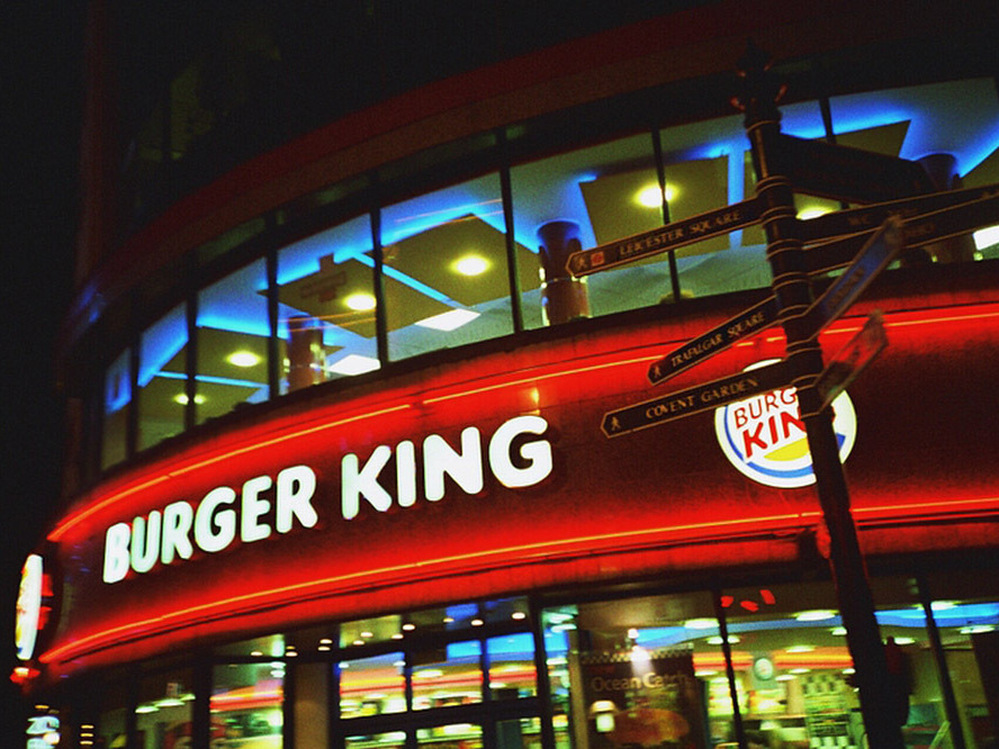
Signs point to tourist destinations outside a Burger King in London. Enlarge image i

Signs point to tourist destinations outside a Burger King in London.

Signs point to tourist destinations outside a Burger King in London.

Signs point to tourist destinations outside a Burger King in London.

Burger King has acknowledged this week that some of its burgers in Britain and Ireland included horsemeat, the latest development in an ongoing scandal.

Horsemeat actually contains just as much protein and far less fat than beef, according to nutritionists.

Burger King says it found trace levels of horse DNA in four samples from its Irish meat supplier, Silvercrest, but "this product was never sold to our restaurants," the company said in a statement. Nevertheless, Burger King's admission has prompted a Twitter campaign and threats of a boycott.

The horsemeat controversy is Britain's worst food scandal since Mad Cow Disease in the 1990s. But this time around, the potential danger isn't to Britons' physical health, but their emotional well-being.

For as long as a year, British consumers who thought they were buying beef products may have been unknowingly eating pork and horse, as well.

Irish food safety officials broke the news in mid-January, when they said 23 out of 27 beef burgers sampled were found to contain pig DNA, and 10 also contained horse DNA. The meat had been marketed across the British Isles.

One beef patty, sold by the British grocery giant, Tesco, was 29 percent horse meat.

Outside a Tesco supermarket in West London, Alicia Rodrigues, a Muslim, loads a cart with bags of groceries. She's seen the reports, and says: "It's horrible. I feel like, wow, it's horrible, horrible, horrible."

Jewish and Muslim leaders in Britain have said there's no evidence that any of the pork-contaminated beef was mislabeled as halal or kosher.

But the greatest expressions of revulsion, here in the U.K., haven't been religious. And they haven't been about pork, but horse.

Another Tesco customer, who only gave his first name, Johnny, says he's stopped buying beef burgers altogether.

"I'm not eating them any more! Poor old horses, I feel sorry for them, that's all. France and all them countries eat the horse meat we don't," he said.

Horsemeat is commonly eaten in France and other parts of Europe and of the world. But in the U.S. and United Kingdom, horses are more often seen as companions. Indeed, to the average animal-loving, horse-mad Brit, the concept of eating Mr. Ed is abhorrent and positively un-English.

Henry Harris, the chef at Racine, a French restaurant in London, said: "There's misconception that we shouldn't be eating horse, because the whole pet connotations and companionship that horses give people. And it puts them off. Whereas you go over to the Continent, they don't have quite the same connection. And they appreciate it more for its culinary, rather than its companion, qualities."

Most of the adulterated beef has been traced to a single Irish supplier called Silvercrest. Silvercrest seems to have acquired the suspect meat from an unapproved Polish firm.

Food critic Rose Prince says the Polish operation probably used horse for two reasons: its cheaper price and its deep red color.

"Adding it to the meat, you would certainly make it look leaner," she said. "You'd look like you're getting more, and less sort of fatty mince."


World News - britain First for breaking news and analysis: Compelling world news stories from NBC News journalists. Follow us on Twitter and Facebook. World News - uk First for breaking news and analysis: Compelling world news stories from NBC News journalists. Follow us on Twitter and Facebook. News - Latest breaking UK news - Telegraph Latest UK news, breaking news and current news, plus celebrity news and political news from Telegraph.co.uk, all the latest breaking stories. Plant Closed by USDA Supplied Beef for In-N-Out Burger - Yahoo! News Federal inspectors have temporarily shut down a California meat company that provided beef for the popular In-N-Out Burger chain and the U.S. school lunch ... International Animal Rescue Foundation World Action Northern ... International Animal Rescue Foundation World Action Northern Ireland, Dublin, Ireland. 1,425 likes 62 talking about this. Canada meat plant operations halted on food safety concerns ... OTTAWA (Reuters) - Canadian food inspectors on Friday said they have suspended operations at a meat-processing plant in Edmonton, Alberta, for failing to ... Notebook : Alton Brown Buffalo Wings. The only Super Bowl Im watching Sunday is one filled with Buffalo Wings. According to the National Chicken Council Americans will consume some 1.23 ... McDonald's Canada Proves Its Burgers Are 100% Beef (VIDEO) McDonald's Canada continues its bizarre transparency quest with a video that shows us how the chain's burgers get made. This video appears to be a direct ...

Where's The Beef? Burger King Finds Horsemeat In Its Patties

Signs point to tourist destinations outside a Burger King in London. Enlarge image i

Signs point to tourist destinations outside a Burger King in London.

Signs point to tourist destinations outside a Burger King in London.

Signs point to tourist destinations outside a Burger King in London.

Where's the beef?

Burger King, which made that slogan its trademark in the 1980s, has acknowledged this week that some of its burgers in Britain and Ireland included horsemeat, the latest development in an ongoing scandal.

Horsemeat actually contains just as much protein and far less fat than beef, according to nutritionists.

But "Where's the horsemeat?" just doesn't have quite the same appeal. More to the point, Burger King's admission has prompted a Twitter campaign and threats of a boycott.

The horsemeat controversy is Britain's worst food scandal since Mad Cow Disease in the 1990s. But this time around, the potential danger isn't to Britons' physical health, but their emotional well-being.

For as long as a year, British consumers who thought they were buying beef products may have been unknowingly eating pork and horse, as well.

Irish food safety officials broke the news in mid-January, when they said 23 out of 27 beef burgers sampled were found to contain pig DNA, and 10 also contained horse DNA. The meat had been marketed across the British Isles.

One beef patty, sold by the British grocery giant, Tesco, was 29 percent horse meat.

Outside a Tesco supermarket in West London, Alicia Rodrigues, a Muslim, loads a cart with bags of groceries. She's seen the reports, and says: "It's horrible. I feel like, wow, it's horrible, horrible, horrible."

Jewish and Muslim leaders in Britain have said there's no evidence that any of the pork-contaminated beef was mislabeled as halal or kosher.

But the greatest expressions of revulsion, here in the U.K., haven't been religious. And they haven't been about pork, but horse.

Another Tesco customer, who only gave his first name, Johnny, says he's stopped buying beef burgers altogether.

"I'm not eating them any more! Poor old horses, I feel sorry for them, that's all. France and all them countries eat the horse meat we don't," he said.

Indeed, to the average animal-loving, horse-mad Brit, the concept of eating Mr. Ed is abhorrent and positively un-English.

Henry Harris, the chef at Racine, a French restaurant in London, said: "There's misconception that we shouldn't be eating horse, because the whole pet connotations and companionship that horses give people. And it puts them off. Whereas you go over to the Continent, they don't have quite the same connection. And they appreciate it more for its culinary, rather than its companion, qualities."

Most of the adulterated beef has been traced to a single Irish supplier called Silvercrest. Silvercrest seems to have acquired the suspect meat from an unapproved Polish firm.

Food critic Rose Prince says the Polish operation probably used horse for two reasons: its cheaper price and its deep red color.

"Adding it to the meat, you would certainly make it look leaner," she said. "You'd look like you're getting more, and less sort of fatty mince."


McDonald's Canada Proves Its Burgers Are 100% Beef (VIDEO) McDonald's Canada continues its bizarre transparency quest with a video that shows us how the chain's burgers get made. This video appears to be a direct ... 67 reviews for Smashburger - Smashburger - Fairfax, VA (703) 291-1264 "Giving this place a solid 4 stars.... I can't believe Smashburger only has a three star average rating. I didn't read any of the other reviews but ... Expanded beef recall concerns Toronto consumers - Yahoo! News Canada Amid what's being called the biggest beef recall in Canadian history, Toronto butchers and restaurateurs say consumers are asking more questions about their meat than ... Burger King news, articles and information: Burger King hypes up 'cage-free' pork - but what does it really mean? 4/28/2012 - The latest fast food chain to alter its image in an attempt to appeal to the health ... barfblog safe food from farm to fork Health inspectors with Vancouver Coastal Health met with officials at B.C. Place on Tuesday after expired cheese was used in hamburgers sold at last weekends ... BurgerBusiness Burger menus and burger marketing for burger restaurants. Linscott At Large Snowballs at White Hart Lane. HOW REFRESHING it was the other night to sit in the heat of late summer Durban and watch Tottenham Hotspurs play Manchester United in a ... Eden Burger Bar - Glendale - Glendale, CA (818) 552-2212 "I have to thank all of my friends for introducing me to Eden, and I have to apologize, because it's taken me this long to review. Aside from the ...

Carrot Juice Instead Of Coke? USDA Proposes New School Snack Rules

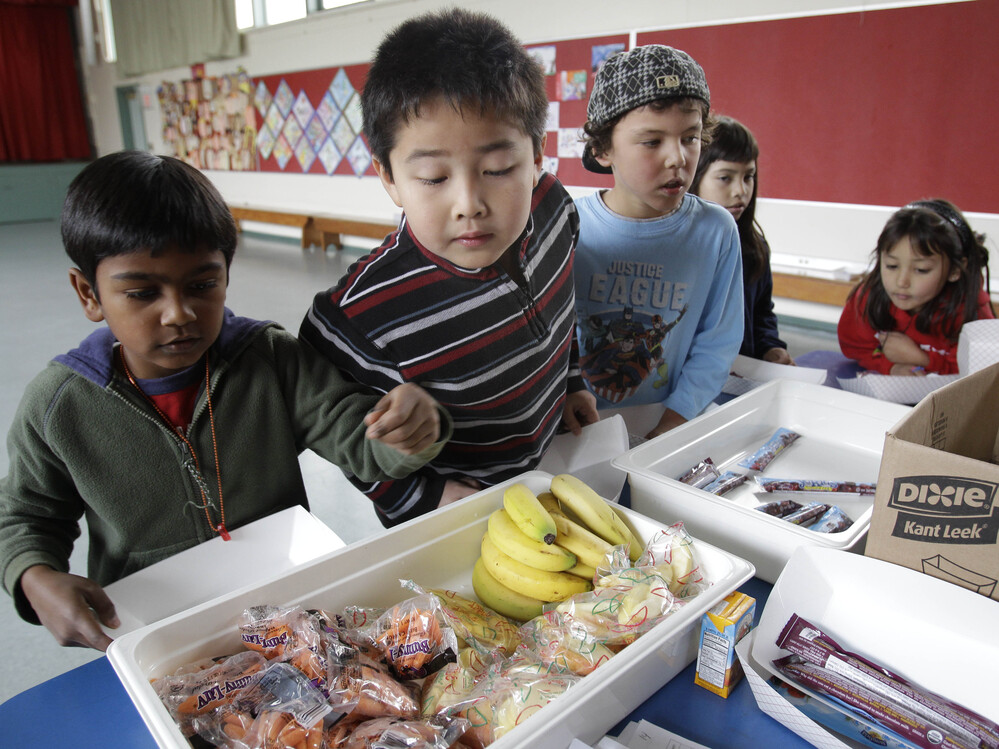
USDA's proposed new rules for school snacks promote healthier options, like the fruits and vegetables served in this Palo Alto, Calif., cafeteria. Enlarge image i

USDA's proposed new rules for school snacks promote healthier options, like the fruits and vegetables served in this Palo Alto, Calif., cafeteria.

USDA's proposed new rules for school snacks promote healthier options, like the fruits and vegetables served in this Palo Alto, Calif., cafeteria.

USDA's proposed new rules for school snacks promote healthier options, like the fruits and vegetables served in this Palo Alto, Calif., cafeteria.

The USDA has proposed a new "Smart Snacks in School" rule that aims to promote more healthful options in school vending machines, snack bars and cafeterias across the country.

The Department of Agriculture's updated regulations, which are open to public comment for 60 days, will set nutrition standards and calorie limits for snack foods that are sold in schools.

"Parents and teachers work hard to instill healthy eating habits in our kids, and these efforts should be supported when kids walk through the schoolhouse door," wrote Agriculture Secretary Tom Vilsack in a release announcing the proposal.

The snack rule will complement the standards set for school breakfast and lunch, which took effect last year as part of the Healthy, Hunger-Free Kids Act.

"The updated USDA rule could have a major impact on children's diets," Jessica Donze Black, director of the Pew Charitable Trusts Kids' Safe and Healthful Foods Project, tells The Salt in an email.

As Pew's Out of Balance report highlights, about 50 percent of secondary school students eat at least one snack food a day, and this contributes an average of about 300 calories per day to their diets.

"Given that the proposed rule would limit snacks to a maximum of 200 calories, it could significantly reduce those calories to something more reasonable for young people," says Donze Black.

So what evidence is there that stricter rules at school will encourage kids to eat less junk overall during the day? Well, a study I reported on last year found that kids in California eat about 150 fewer calories per day compared to kids in other states.

And the authors of that study point to the strict standards already in place in California that limit the junk foods and sugary drinks that can be sold in schools.

150 calories may not sound like a lot. But experts say this many fewer calories each day, over years, can add up to big calorie savings.

If you want to weigh in on the new Smart Snack proposals, you can add your comment at www.regulations.gov.

Here are some of the proposal highlights, as flagged in USDA's press release:

"More of the foods we should encourage. Promoting availability of healthy snack foods with whole grains, low fat dairy, fruits, vegetables or protein foods as their main ingredients.

Less of the foods we should avoid. Ensuring that snack food items are lower in fat, sugar, and sodium and provide more of the nutrients kids need.

Targeted standards. Allowing variation by age group for factors such as beverage portion size and caffeine content.

Flexibility for important traditions. Preserving the ability for parents to send in bagged lunches of their choosing or treats for activities such as birthday parties, holidays, and other celebrations; and allowing schools to continue traditions like occasional fundraisers and bake sales.

Reasonable limitations on when and where the standards apply. Ensuring that standards only affect foods that are sold on school campus during the school day. Foods sold at an afterschool sporting event or other activity will not be subject to these requirements.

Flexibility for state and local communities. Allowing significant local and regional autonomy by only establishing minimum requirements for schools. States and schools that have stronger standards than what is being proposed will be able to maintain their own policies.

Significant transition period for schools and industry. The standards will not go into effect until at least one full school year after public comment is considered and an implementing rule is published to ensure that schools and vendors have adequate time to adapt."


School Lunch Rules For Healthier Meals Get Mixed Reviews From Students ROTTERDAM, N.Y. -- One student complains because his cafeteria no longer serves chicken nuggets. Another gripes that her school lunch just isn't filling. A ... Dietary Brain Wave Alteration NutritionFacts.org A neurological basis for humanity's love affair with Camellia sinensis? Health News & Articles Healthy Living - ABC News Get the latest health news from Dr. Richard Besser. Here you'll find stories about new medical research, the latest health care trends and health issues that affect ... Past Press Releases Newsroom News from CSPI Center for ... Since 1971, the Center for Science in the Public Interest has been a strong advocate for nutrition and health, food safety, alcohol policy, and sound science. Its ... Some schools cut lunch options for kids who struggle to pay ... 111pct, I guess you think we should print more money, because, hey, everything in life should be handed to us. I bet you support sports with no scores, because in the ... Healthier For Us Here are some snacks that you can indulge in and still feel good about yourself, even if you are on a diet. And your kids with love them too. Use of Industrial Byproducts in Agriculture Abstract. Use of Industrial Byproducts in Agriculture. U.S. Department of Agriculture, National Agricultural Library. Massive quantities of industrial byproducts are ... Business News, Personal Finance and Money News - ABC News Find the latest business news on Wall Street, jobs and the economy, the housing market, personal finance and money investments and much more on ABC News

An Oscar-Nominated Guacamole: Your Friday Visual Feast

Mashed avocado hand grenades, chopped baseball onions and hand-picked light bulb chili peppers can hardly be considered an authentic recipe, but that's not going to stop a Latina like me for rooting for Fresh Guacamole in the Oscars later this month.

The extremely short film 1 minute 45 seconds, including credits is up for an Academy Award in the Animated Short category on Feb. 24. It's a charming stop-motion take on the beloved Mexican dish, with a twist: Common toys and household tchotchke (poker "chips," anyone?) star in the role of the ingredients.

As The New York Times reports, "Despite its brevity and deceptively simple concept the short took four months, upward of $50,000 and a team of technical experts to create."

Was it worth all that effort? Grab a margarita and judge for yourself.


Hubert Keller: Secrets of a Chef KQED Public Media for Northern CA Chef Hubert Keller's magical cooking reflects the many influences of the places he has lived; from his native Alsace with its legendary soups and stews to San Paulo ... Singapore Food Blog Index ladyironchef: Food & Travel Here's a list of the best places to eat in Singapore, with the best food porn. Your complete guide to the Singapore food scene Philadelphia's Independent Weekly Newspaper :: Philadelphia Events ... The Web site for the award-winning alternative weekly, the Philadelphia City Paper. San Antonio Mexican Restaurant La Fonda on Main Authentic Mexican La Fonda on Main is one of San Antonio's most historic dining options for authentic Mexican fare. With party rooms, banquet facilities and one of San Antonio's best ... American Feast's Sustainable Food Blog - Timely food news, fun ... What is Sustainable Food? Community Supported Agriculture at Roxbury Farm, An Alternative to Big Agra; Mexicali Chicken Recipe from Denise Szarek Now Playing - Frontier Film: Frontier's Best of 2012 Series: Chasing Ice Showtimes: Tues Jan 22 2pm, 6pm, 8pm Weds Jan 23 2pm, 6pm, 8pm Thurs Jan 24 2pm Sun Jan 27 2pm, 6pm, 8pm Archives Mark's Daily Apple Archived Posts and Past Articles from Mark's Daily Apple. A treasure trove of health, nutrition and fitness information. San Antonio Current - BEST OF SAN ANTONIO: Best of San Antonio: Food Best Late Night Restaurant, Best Bakery/Panadera, Best Menudo 1.

Pig Out In The Winter Or When Money's Tight? Blame Evolution

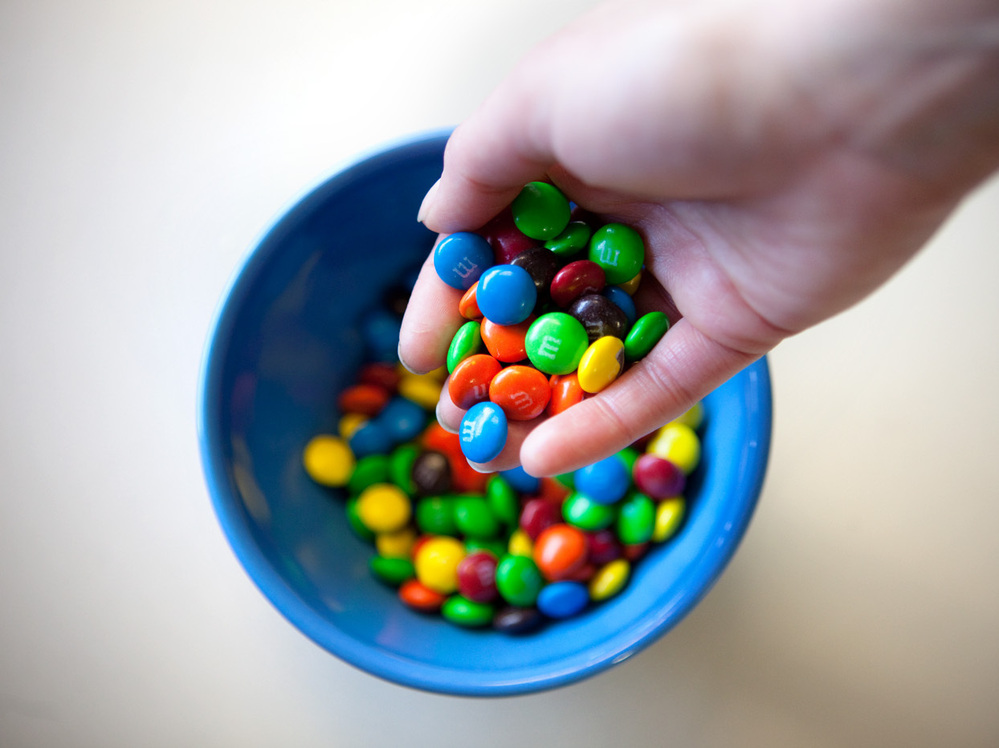
When times are tough, that prehistoric urge to splurge on high-calorie treats like M&Ms still kicks in. Enlarge image i

When times are tough, that prehistoric urge to splurge on high-calorie treats like M&Ms still kicks in.

When times are tough, that prehistoric urge to splurge on high-calorie treats like M&Ms still kicks in.

When times are tough, that prehistoric urge to splurge on high-calorie treats like M&Ms still kicks in.

Has the recession made you fat?

To the long and growing list of risk factors known to increase the risk of obesity, scientists recently added a new one: scarcity.

People given subtle cues that they may have to confront harsh conditions in the near future choose to eat higher-calorie food than they might do otherwise, a response that researchers believe is shaped by the long hand of evolution.

Evolutionary biologists have long speculated that in prehistoric times, when the blueprint of modern human behavior was created as our ancestors struggled for survival, gluttony may have been a useful response to scarcity: If you knew or feared a famine was coming, it made sense to tuck away as many calories as possible to prepare for it.

That response, while perfectly suited for prehistoric times, is maladaptive today, when more people in wealthy countries such as the United States are dying from diseases related to obesity rather than starvation. But behavior is not easily changed: The experience of food surplus is a relatively recent development in our history, and ancient rules about how to respond to adversity are likely hardwired into the brain. Our evolution hasn't had a chance to catch up, if you will, to dramatic changes in our ecosystems.

Here's the evidence for the theory that subtle cues about environmental adversity could be partly behind our nation's obesity epidemic: Researchers recently stopped 121 pedestrians on a college campus and asked them to participate in a study. The volunteers were given a bag of M&Ms; some were told the M&Ms were high calorie and some were told their M&Ms were low-calorie.

The researchers then exposed the volunteers to unconscious signals words that indicated harsh environmental conditions such as "survival," "withstand," "persistence," "shortfall," "struggle" and "adversity." When subtly prompted in this way to think about harsh conditions, volunteers given the high-calorie M&Ms ate nearly twice as many as volunteers given the low-calorie M&Ms.

In a paper published in the journal Psychological Science, researchers Juliano Laran and Anthony Salerno at the University of Miami suggested this meant that "high calorie foods, which are useful when resources are scarce, are consumed in larger quantities when an environment is perceived to be harsh, whereas low-calorie foods are consumed in smaller quantities."

In a second experiment, the researchers found that when volunteers subtly induced to think about harsh environmental conditions were also made to feel that they were starved of resources, they consumed more calories than volunteers who had been induced to think about harsh environmental conditions but were not given a feeling of scarcity.

Of course, it's not all biology. Other factors such as opportunity and less exercise may also play a role in why we stock up on calories during hard times, Marcia Pelchat of the Monnell Chemical Senses Center in Philadelphia told us last year.

Laran and Salerno suggest that one implication of their new research is that people's life history needs to be a part of understanding their struggles with obesity and dieting: Not all heavy-eaters are gluttonous and hedonistic a history of scarcity can make people vulnerable to overeating.

They point out that current public health approaches to obesity largely assume people would choose to eat less when they are given information about the amount of calories in various foods.

But posting calories on menus, most recently McDonald's, may not really decrease consumption of high-calorie foods. "In fact, making the high number of calories in a food item salient may draw people to it," the researchers wrote.

"The key is to understand that the choice of unhealthy food is not always the result of a willingness to indulge but can sometimes be the result of exposure to information suggesting environmental harshness."

Sometimes, in other words, reaching for that last french fry when you're already full may not be entirely your fault.


A Quest For Real Beer, Without The Gluten

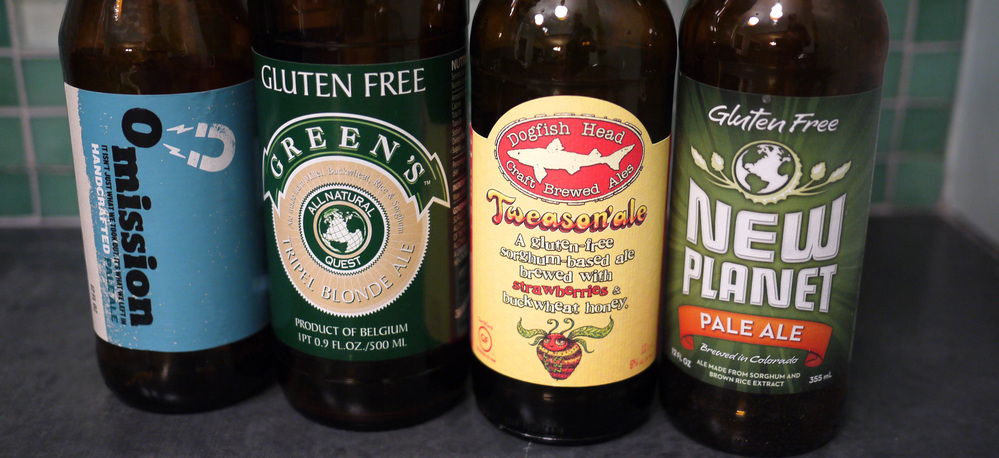
More and more gluten-free beers are entering the marketplace. We asked a librarian with celiac disease for her list of favorites. Enlarge image i

More and more gluten-free beers are entering the marketplace. We asked a librarian with celiac disease for her list of favorites.

More and more gluten-free beers are entering the marketplace. We asked a librarian with celiac disease for her list of favorites.

More and more gluten-free beers are entering the marketplace. We asked a librarian with celiac disease for her list of favorites.

Anyone who gives up gluten, either by choice or medical necessity, will inevitably feel a twinge of regret bidding adieu to bread, pasta or pastries. But for some, the greatest hardship may be saying no to beer especially at times like Super Bowl Sunday, when having a cold one in hand is part of many people's game day tradition.

So it's no small thing that a growing number of brewers are offering gluten-free beers that are both tasty and satisfying.

They're joining other food and beverage producers who've discovered that gluten-free is now a $4.2 billion market, as the ranks of people with celiac disease and gluten sensitivity grow.

While many gluten-free beer drinkers complain of the lack of quality or variety, the choices have grown steadily. Consider that in 2007, when the Great American Beer Festival officially added a gluten-free category to its competition, only eight beers were entered. At last year's festival, the category drew 20 entries.

When I tell Abbey Potter, a librarian at the Library of Congress who was diagnosed with celiac disease five years ago, that several brewers are now focused only on making good beer without gluten, her answer is immediate: "God bless them."

Potter learned to appreciate craft beer during her college years in Kalamazoo, Mich. She eventually took up homebrewing, buying equipment that later sat unused. For her, the treat of drinking Kalamazoo-made Bell's beers in Washington, D.C., was short-lived; she was diagnosed with celiac not long after it hit local shelves.

So I invited Abbey to join me in a tasting of gluten-free beers. I was a bit dubious of the quality we'd find, knowing that malted wheat or barley, which are responsible for the gluten in most beers, also add a lot of flavor and heft. But Abbey had recently said she'd found options that taste like "real" beer, and I had tracked down a couple I wanted to try, as well.

Enlarge image i

"God bless them," Abbey Potter says of craft brewers who are making gluten-free beer. Potter was diagnosed with celiac disease several years ago.

"God bless them," Abbey Potter says of craft brewers who are making gluten-free beer. Potter was diagnosed with celiac disease several years ago.

Most brewers use one of two strategies for making beer without gluten. Some avoid cereals like wheat, barley and rye, substituting sorghum, rice or fruit. Others brew with barley and then extract gluten from the beer. Drinkers who are highly sensitive to gluten often avoid these beers. But the process removes enough of the protein to be deemed gluten-free according to international standards. And Abbey says she hasn't had a problem with them.

"They're trying to give you the real experience," she says. "Because that's what you miss the most when you have to drink gluten-free beer: feeling like you're having a beer."

Some of the following selections are widely available; some are more limited, due to seasonal releases or distribution deals.

New Planet Pale Ale (5 percent alcohol by volume)

This beer, from a brewery whose owner is gluten-intolerant, replaces malted grains with sorghum and brown rice extract. Like a traditional pale ale, it has a floral bitterness that brings craft beer to mind.

"It has that little bitterness to it, which is nice," Abbey says. "Because sorghum can be kind of sweet."

Dogfish Head Tweason'Ale (6 percent ABV)

Featuring strawberries and sorghum along with hops, this crisp ale is a nod to the sweet and sour flavors of a Belgian lambic. The fruit adds a little complexity without taking over "it smells like beer," Abbey says.

"It would definitely work for me in a ballpark, picnic situation and I would not feel like a weird outcast," she says. "I think they have a good recipe."

Still, she notes, "It's not as carbonated as 'real beer.'"

Omission Pale Ale (5.8 percent ABV)

Omission comes from Craft Brew Alliance, which also produces Widmer Brothers and other malted beers. To reduce the gluten content, the brewer uses low-protein barley, and adds an enzyme called Brewers Clarex, which breaks down gluten. The end product isn't 100 percent gluten-free, though, and Abbey could feel the effects of it after drinking it.

But she enjoyed the flavor enough to keep at it, anyway.

"That tastes more like beer to me," Potter says. "It tastes malty. Which is hard" when you're making beer without gluten.

Green's 'Quest' Tripel Blonde Ale (8.5 percent ABV)

This Belgian beer pours with a rich, full head. Like some of our other selections, hops and a relatively high alcohol content help it avoid the sweet and watery qualities of other gluten-free beers.

"This has that refreshingness you drink it, it makes you go, 'Aah,'" Abbey says.

Made with millet, buckwheat and rice, the Quest has a full body that's made more complex by Belgian yeast.

"You can see there's something in there," Abbey says. "It looks like a craft beer; it's not clear. It has a nice bitterness to it, too ... it's like an orange coriander beer."

Indeed, gluten-free beers have come a long way since 2007, when two sorghum-based beers Anheuser-Busch's RedBridge and Lakefront Brewing's New Grist took the Great American Beer Festival's top two spots for gluten-free beer. Since then, the winners have included Strange Brewing Co.'s Gluten-Free Lemon Pale and The Alchemist's Celia Pale Ale. Another contender is Harvester Brewing, a Portland company that uses gluten-free oats and chestnuts from Oregon.

And the trading of gluten-free homebrewing tips online, along with gluten-reducing enzymes like Clarex, mean that celiac beer-lovers can tinker with their own recipes, as well.

In fact, Abbey says, she and a friend recently used her brewing kit to make a batch of gluten-free beer. After considering roasted millet and malted buckwheat, they settled on sorghum extract and a large dose of hops.

"It was delicious," she says. "It made me think that beer was possible again."