Showing posts with label vegetables. Show all posts

Wednesday, January 23, 2013

A Slight Twist On The Sunday Roast

Enlarge image i

Get recipes for Salsa Verde, Roasted Whole Salmon, Roasted Root Vegetables and Vanilla Pudding With Roasted Fruit.

There are certain foods that are almost as fun to say as they are to eat. This is especially true when it comes to British cuisine. There are the easy jokes about bangers and mash (sausages and mashed potatoes), bubble and squeak (fried patties of cabbage, potatoes, and any other random leftovers) and stargazy pie (savory pastry with whole sardines horrifyingly poking their heads out the top crust). While it doesn't have quite the same Anglotastic drama, my favorite entry in the genre is the simple Sunday roast.

This end-of-the-weekend meal was once common throughout the British world. After church, families would gather for a late-afternoon spread of simple abundance. The exact format varies week to week, but the basic template is the same: a meal centered around a slow-cooked cut of meat, usually beef or lamb. Potatoes are roasted in the oven as well, boiled first to ensure that they're crisp on the outside and deliciously fluffy on the inside. Sometimes a Yorkshire pudding (a sort of savory popover), and then everything served with lashings of brown gravy (or, if you're fancy, a bit of brown mustard). But there's something about the grandeur of the term "Sunday roast" that just lets you know it's more than a meal it's an occasion.

About The Author

Deena Prichep is a Portland, Ore.-based freelance print and radio journalist. Her stories have appeared on Morning Edition, All Things Considered, Marketplace, The Splendid Table, Voice of America, The World and Northwest News Network, and in The Oregonian, Vegetarian Times and Portland Monthly. She chronicles her cooking experiments at Mostly Foodstuffs.

As with most rituals, the meal itself is sort of by-the-by. Sunday roast is about more than just a roast. It's about time. The time to make a feast-worthy, table-groaning slow-cooked meal. The time to sit with your family on your day off, to spend hours talking and eating and playing a game of cards, enjoying the last of your down time before the work week ahead. No wonder it's a tradition that so many Brits remember with fondness.

I am all for adopting the Sunday roast, but with a few tweaks. While the practice is clearly about more than just food, you still want that food to be good. I don't begrudge those who want to sit down with their meat and potatoes. But for my contemporary West Coast sensibilities (and desire to avoid gravy for several months after Thanksgiving), I give it a bit of a twist.

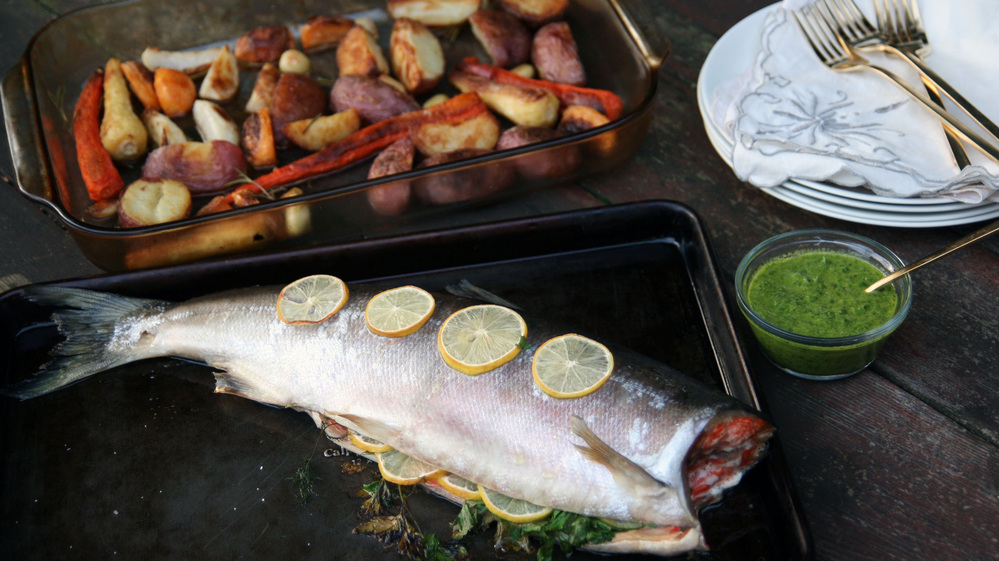
First off, I swap out the roast beef for a roast salmon. Even when fillets are expensive, the whole fish can be surprisingly cheap. And it roasts up nicely in the oven, staying moist and separating easily from the bones. Stuffed with herbs and topped with lemon slices, the presentation is beautifully dramatic. And, also befitting a Sunday roast, it's ample enough to yield leftovers for Monday's dinner (it'll be fish tacos rather than mutton sandwiches, but the idea is the same).

I love roast potatoes, but why stop there? For the sake of variety (and health), I'll pull together an assortment of root vegetables potatoes, parsnips, carrots, turnips depending upon what looks good at the market. Instead of brown gravy, I make up an Italian-style salsa verde, a pestolike sauce of fresh herbs that brightens up the slow-roasted meal.

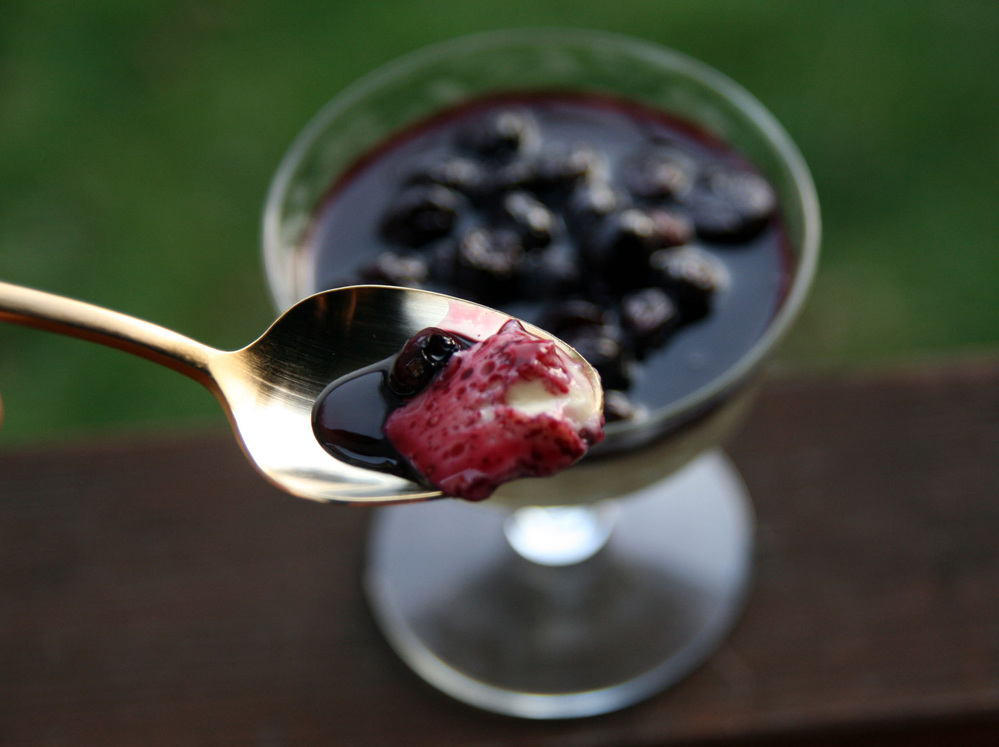
And a British meal isn't proper without a pudding. True, they use the term for any dessert, but why not go with an actual pudding? Start with a simple vanilla version in advance, then take advantage of the hot oven to cook up some fruit for a warm, sweet topping.

This updated, West Coast Sunday roast might not be recognizable to anyone from the British Empire. But it's a great way to turn a lazy weekend into an occasion, to gather family or friends for good food and good times. It may just become your new favorite phrase.


Recipe: Salsa Verde

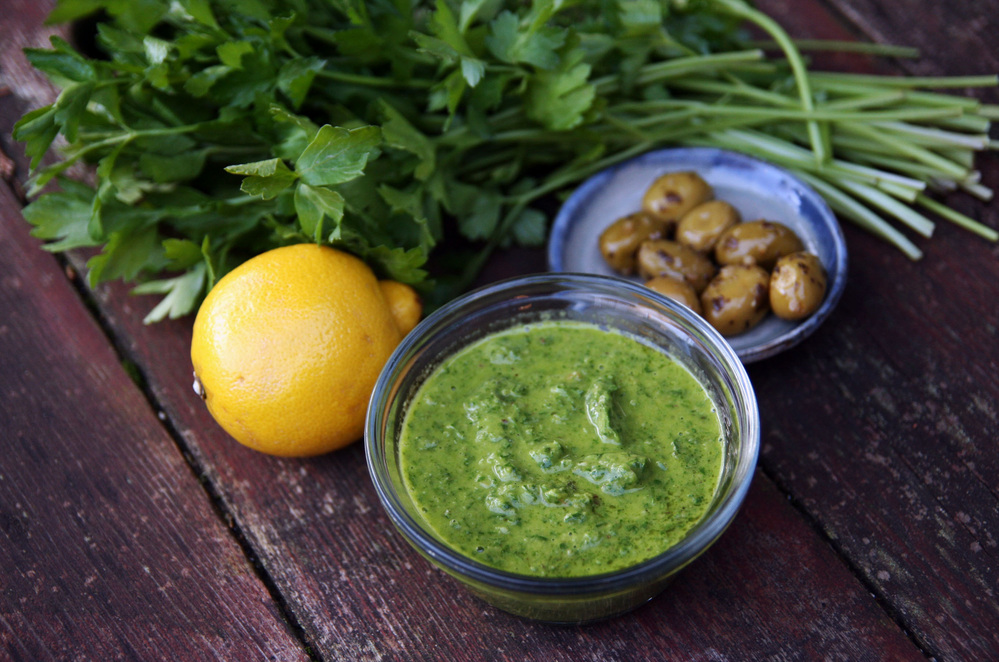
This punchy salsa is delicious on many things roasted salmon, roasted vegetables, creamy soups, rice pilafs, etc. There are many variations, but my favorite is a simple one, with several types of fresh herbs (you can vary them depending on what's available) and lemon juice instead of vinegar to further brighten things up. You want to process it (or, if you're going old school, pound it with a mortar and pestle) until it's just a rough puree a bit of texture is nice, so you can get little jolts of the different elements.

Salsa Verde Enlarge image i
Salsa Verde

Makes 1 cup

1 large or 2 small cloves garlic, pressed

1 anchovy (optional)

1 handful capers or pitted green olives (if the latter, coarsely chop them)

1 large bunch parsley, washed and coarsely chopped

1 handful fresh mint, washed and coarsely chopped

1 handful celery leaves, washed and coarsely chopped (optional)

Juice of 1/2 to 1 lemon

1/3 to 1/2 cup olive oil

Salt and cracked pepper to taste

Place the garlic, anchovy (if using), capers or olives and fresh herbs in a blender. Add half the lemon juice and smaller amount of olive oil, and pulse a few times, scraping down as needed. It may take a few bursts to get everything going. Add more oil and lemon juice as needed to create a well-balanced, pourable but still herb-heavy sauce (while leaving some texture), and season to taste with salt and pepper. Serve with salmon and vegetables. Can be made a day or two in advance.


Recipe: Roasted Whole Salmon

As with cooking any fish, the secret here lies in not overcooking. The fish will continue to cook after you remove it from the oven, so pull it before you think it's quite done. The roast salmon is delicious from the oven, but it's also quite lovely at room temperature, allowing you to fuss a bit with the rest of your Sunday roast without worry.

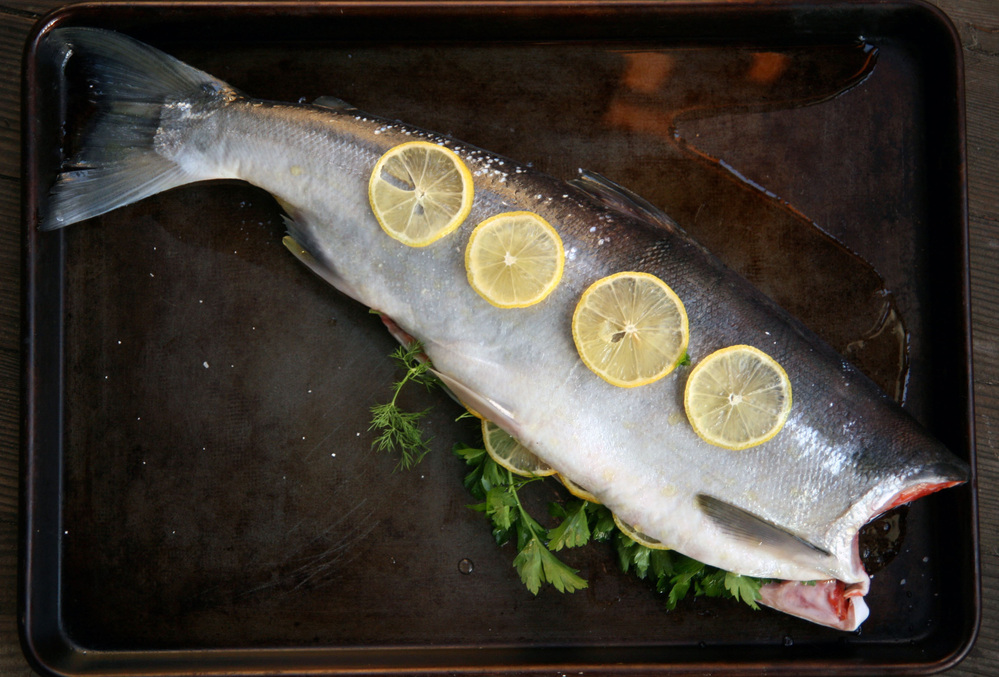
The Roasted Whole Salmon is prepped for the oven with lemon slices inside and out, plus fresh herbs and spices. Enlarge image i
The Roasted Whole Salmon is prepped for the oven with lemon slices inside and out, plus fresh herbs and spices.

Makes 8 to 10 servings, depending on the size of the fish and appetites (and leftovers are always nice)

1 whole salmon, 3 to 4 pounds

Salt

2 large handfuls of herbs parsley, dill, green onions, etc.

1 lemon, cut into thin slices

Olive oil

Preheat the oven to 350 degrees (if you've already got the oven heated for the rest of your Sunday roast, just wait until the veggies are about half an hour from being done). Lay the salmon down on a rimmed baking sheet. Season the cavity with salt and stuff the herbs and half the lemon slices inside. Drizzle a bit of olive oil over the top, sprinkle with salt, and lay the remaining lemon slices on top.

Place in the oven, and bake about half an hour, until just barely set the fish will have some firmness when you press it with your finger, and then flesh should just be thinking about flaking (begin checking after 25 minutes to ensure you don't overcook). Remove from the oven, let cool slightly (it will continue to cook) and serve. The salmon also is delicious at room temperature, in case folks aren't coming to the table as quickly as you'd like.


Recipe: Roasted Root Vegetables

The secret to British roast potatoes (and all roasted vegetables, really) is to boil them before they hit the oven, so that they'll roast up into sweetness without drying out. Knocking the vegetables about a bit after the simmer roughs up the edges, and that, paired with a sprinkling of flour, ensures that they'll have delicious, crisp-roasted outsides to offset their creamy insides.

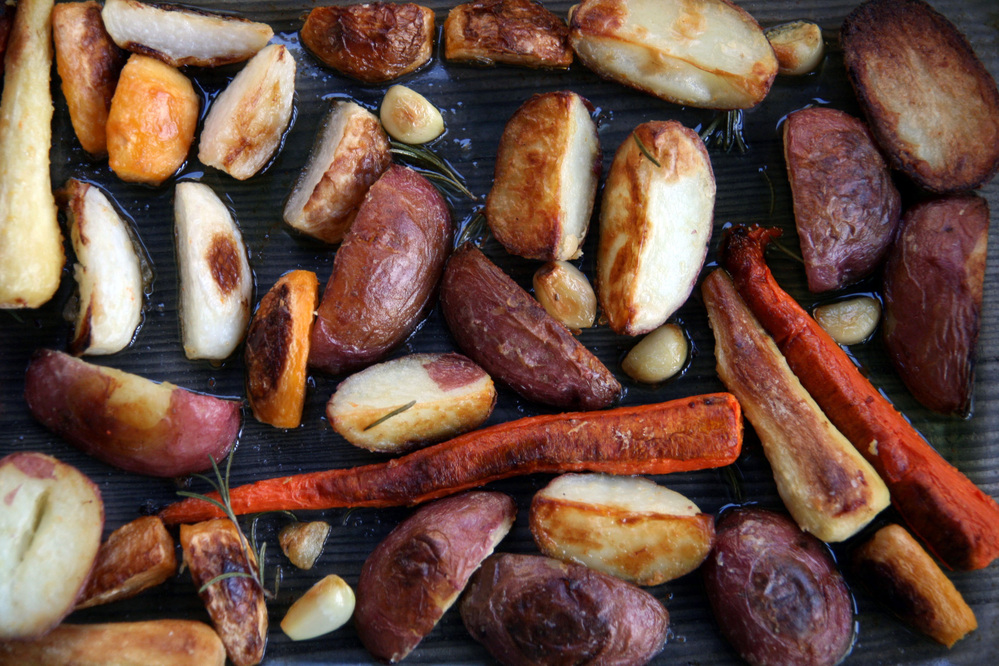
Roasted Root Vegetables Enlarge image i
Roasted Root Vegetables

Makes 6 to 8 servings

2 pounds waxy red or yellow potatoes (you can go with floury russets if you prefer they'll crisp up more dramatically, but I favor the creaminess of the waxy red or yellow varieties)

2 pounds vegetables (scrubbed carrots, peeled parsnips, chunked-up fennel, cauliflower, turnips or rutabagas whatever you desire)

1/4 cup olive oil

2 to 3 tablespoons flour

Salt

8 cloves garlic, peeled (slice in half if particularly large)

A few branches thyme and/or rosemary

Preheat oven to 400 degrees.

Bring large pot of salted water to a boil. Add the potatoes and simmer until they are cooked but not falling apart, about10 minutes. Remove with tongs or a spider, and set aside in a large bowl. When cool enough, cut in halves or quarters, depending on size. Add the other vegetables in rounds, cooking until each one is just barely tender (3 to 5 minutes for carrots, parsnips and turnips; just a couple minutes for fennel, cauliflower and less-dense vegetables). Remove when done and let drain, setting aside with the potatoes.

Take two rimmed baking sheets, and pour a few tablespoons of oil on each. Place in oven to heat up until quite hot but not smoking, about 5 minutes. Preheating the trays of oil jump-starts the cooking and ensures that everything ends up even crisper and doesn't stick. But if you don't fancy the danger of negotiating a pan of hot oil (understandable), you can omit this step.

Sprinkle a spoonful or 2 of flour over the vegetables, and toss or stir vigorously to distribute, adding another sprinkle if needed. Don't worry if you bang up the vegetables a bit mushed edges mean more crunchy surface area.

If preheating pans, carefully remove from oven (if not preheating pans, just add oil to 2 pans). Carefully place vegetables in a single layer on trays, stirring so they're coated with oil, and sprinkle generously with salt. Place in oven and roast 30 to 40 minutes, or until butter-soft inside and crisp and browned on the outside. Remove from oven, add garlic cloves and herbs, turn the vegetables and sprinkle with a bit more salt. Return to the oven for another 30 to 40 minutes, until browned and lovely (if you're roasting the salmon at the same time, you can turn down the oven to 350 after another 10 minutes, then add the salmon to finish roasting in the same oven).


Recipe: Vanilla Pudding With Roasted Fruit

These light, creamy puddings are a perfect end to a big Sunday meal. They are made in advance (you can even do them the night before), then a fresh fruit topping is roasted while you enjoy the meal, and ladled on top while warm. The topping is just a loose template, so you can vary with the seasons.

Vanilla Pudding With Roasted Fruit Enlarge image i
Vanilla Pudding With Roasted Fruit

Makes 6 servings

Pudding

2 1/2 cups whole milk

4 large egg yolks

1/2 cup granulated sugar

Pinch salt

1/4 cup cornstarch

2 tablespoons unsalted butter

2 teaspoons pure vanilla extract, or scrapings from half a vanilla bean (I like to add a little of each, if I can)

Roasted Fruit

2 cups fresh or frozen fruit blueberries, peaches, plums, pears, etc.; leave berries whole, cut larger fruit into thin slices or small dice

1/4 cup sugar, or to taste (depending on sweetness of the fruit)

Juice of 1/2 lemon, or to taste (depending upon flavor of fruit)

To make the puddings, place milk in a medium-sized saucepan. If using vanilla bean seeds, add them as well (I like to rub them with a spoonful of the sugar so they disperse evenly). Heat the mixture over medium heat until steaming.

While the milk mixture is heating, whisk together the egg yolks, sugar and salt in a bowl until well combined (you don't have to beat a lot of air in, but you want it to become a nice, ribbony mixture it'll take a minute or 2), then whisk in the cornstarch (this will thicken). When the milk is steaming, pour a small amount of it into the yolk mixture and whisk thoroughly to loosen it. Continue to slowly pour in the rest of the milk, mixing, until everything is combined.

Pour mixture back into the pan, return to stove and cook over medium-high heat, whisking constantly, until it begins to bubble and sputter. Turn it down to medium-low and whisk for another minute or 2, then remove from heat. Add butter and vanilla extract (if using). Whisk to combine. Pour the mixture through a strainer (or, my favorite, transfer to a blender and blitz for a moment, then pour) into 6 small ramekins or any small bowls. Chill in the refrigerator for at least an hour, but you can make a day or so in advance if that's easier.

To roast the fruit, heat oven to 400 degrees (if you're doing a full Sunday roast, turn up the oven and roast the fruit once you've removed the salmon and vegetables and you're sitting down for the meal).

Place fruit, sugar and lemon juice in a small baking dish and toss to combine. Cook, stirring once, until the fruit has slumped down to softness and the juices have run out and started to bubble. The time this takes will vary depending on the size, type and juiciness of the fruit figure about 20 minutes. Remove, let cool slightly, then pour/scrape atop the puddings and serve.


Perfect Roast Beef - iVillage - iVillage.com: Health, Beauty ... Ive used a top round here because it is by far the most widely available roasting cut, but you can also use a rib of beef. The meat has to be rested after cooking ... Irish Sunday roast: How to make the perfect roast beef Is there a better meal than roast beef and Yorkshire puddings? It is loved by everyone (except vegetarians and cows, I guess). Sunday would not be the same without ... Spud Sunday: The Art Of The Roastie An apology is in order. I have been guilty of taking the roastie for granted. A potato classic, known to feature regularly on my plate but yet scarcely mentioned on ... Sunday roast: Breast of lamb stuffed with bacon and apricots ... Economical and tasty roast stuffed breast of lamb - Sunday lunch special Sunday Roasts: A Year's Worth of Mouthwatering Roasts, from Old ... Betty Rosbottom is a cooking teacher, author, and television host. She lives in Amherst, Massachusetts, and Paris, France. Susie Cushner is an award-winning ... Best Sunday lunch at The Swan at The Globe in Central London We have reviews of Sunday lunches in London, Kent, Essex and Suffolk. Find a new favourite roast here! Southern With A Twist Preheat oil in a shallow frying pan on medium-high heat. Mix flour and seasonings in a plastic container with lid (big enough to fit fish inside). How to make the perfect Sunday roast eHow.co.uk How to make the perfect Sunday roast. The Sunday roast is a British classic that has gathered families around the dinner table for centuries. Recipes and techniques ...

Wednesday, October 10, 2012

'Tis The Season For Savory Tarts

text size A A A
October 10, 2012

This is the most glorious time of year for a cook. Between the forbiddingly hot kitchens of summer and the long, produce-deficient months of winter comes a spell of abundant vegetables and perfect cooking weather just right for savory tarts.

If you're still nervous about making a "perfect" crust, add the words "rustic" and "galette," and you have free rein to make a free-form masterpiece the rougher the better.

The farm where we pick our vegetables is laden with ripe, dropping fruit, hanging from bare vines like stained glass. We wade through sweet scents of decaying leaves, sun-baked herbs and over-ripe vegetables. We dodge bees buzzed on sunshine, who seem to know there won't be much more warmth to come. And we come home with heavy baskets of green tomatoes, winter squash, sweet root vegetables and crisp apples and pears. The harvest reflects the transience of the season the shift from fruits that demand to be eaten now to those you collect to sustain you through the cold months ahead.

I love savory pastries all year long. The savory tart is a wonderful way to showcase vegetables any season of the year: deep, comforting double-crusted pies in winter; light, open tarts in summer; and small portable galettes for spring picnics. In autumn, a tart is a cozy, toasty meal of seasonal vegetables placed against a backdrop of crunchy crust and mildly flavorful baked custard. The vegetables can be matched with nuts and cheeses, herbs and seasonings to suit their particular flavors and textures.

About The Author

Claire Adas is an independent filmmaker and freelance writer based in Lambertville, N.J. She writes about food, music, film and life on her blog Out of the Ordinary.

I'm a vegetarian, so I appreciate the center-of-attention quality of a good pie. They're satisfying and substantial, they're a little fancy, but they're surprisingly easy and fun to make. Many people feel intimidated by the pastry, but I'm here to tell you: Don't fear the crust. I'm not a very precise or dexterous person, and I've developed a few tips for making delightfully flaky pastry (almost) every time. If you're still nervous about making a "perfect" crust, add the words "rustic" and "galette," and you have free rein to make a free-form masterpiece the rougher the better. I like to add herbs, pepper, ground nuts and oats, lemon zest or cheese to the crust to give it flavor and substance, and to complement the flavor of the vegetables. (With these additions, if you have any dough left after you make your tart, you can turn it into crackers.)

Tarts and galettes with oats, hazelnuts, apples and parsnips are the perfect combination of sophistication and comfort. You could imagine Ratty from Wind in the Willows proudly producing them out of his basket for a picnic on the river, just before the ducks start tipping their tails up, like so many Busby Berkeley dancers. You could see Peter Rabbit's mother lovingly baking them over the fireplace, after a day of foraging in the hedgerows. Or you could serve them at an elegant dinner party with a crisp salad and some roasted potatoes, and have very happy and satisfied human guests.


Recipe: Pumpkin Seed Sage Tart With Butternut Squash Coins

In this tender tart, the sweet smokiness of the roasted squash works nicely with the distinctive savory flavors of pumpkinseeds and sage.

Pumpkin Seed Sage Tart With Butternut Squash Coins

Makes 6 to 8 servings

Crust

1 1/2 cups all-purpose flour

1 teaspoon salt

Freshly ground black pepper to taste

1 stick butter (1/2 cup), frozen

Ice water

Filling

1 small butternut squash, 2 to 3 inches thick at the top (if you can't find one this thin at the top, you can use a thicker one and cut it into half circles or even quarter circles)

1/2 cup sliced almonds

1/2 cup unshelled pumpkin seeds, or pepitas

1 clove garlic

5 or 6 sage leaves, or 1 teaspoon dried

1 tablespoon olive oil

1 teaspoon balsamic vinegar

Pinch cayenne

1/2 cup milk (I use whole, but I think any kind, or even cream, would work)

2 large eggs

1 1/2 cups grated sharp cheddar

For the crust, in a bowl mix the flour, salt and black pepper. Grate in the frozen butter and mix with a fork until texture resembles coarse crumbs. Add enough ice water to pull it into a workable dough about 1/2 cup, but start with less. Knead for about half a minute, using cool fingertips, until you have a smooth ball of dough. Wrap in foil or plastic, and store in the refrigerator until you're ready to use it, at least half an hour.

Preheat oven to 450 degrees.

Peel squash, and cut it into circles about 1/8-inch wide. You want to have a thinnish squash (about 1 1/2 to 2 inches thick), or the circles will be too big. If you can only find a bigger squash, you can cut half-moons instead of circles, and that will be pretty, too. The lower half of the squash can be cut into crescents. I had enough left over to save these to eat on their own the next day, but they can be used to make a nice pattern on the pie, as well.

Coat a cookie sheet with thin layer of olive oil and spread the squash in a single layer. Lightly brush the tops with another thin coating of olive oil. Roast for about a half-hour, until squash starts to get brown and crispy. You might need to rearrange them when you turn them over (every 10 minutes or so). In my oven the outside objects on the tray get brown first, so I'll move them to the middle, to make sure everything cooks evenly. When they're quite crispy, remove to a plate, and let them sit while you prepare everything else.

Preheat the oven to 400 degrees, or turn the oven down, if you've just roasted your squash.

Toast the almonds, pumpkin seeds and garlic in a toaster oven, or at 425 degrees in a real oven for 5 or 10 minutes. The pumpkin seeds will get a bit brown and pop. You can leave the garlic in longer to get soft. Combine the almonds, pumpkin seeds, garlic, sage, olive oil, balsamic vinegar and cayenne in a food processor. Process until quite smooth. Add milk and eggs, and process again. Stir in cheese.

Preheat the oven to 400 degrees.

Roll the dough on a lightly floured surface to about 1/4-inch thick. Spread this over a lightly buttered and floured 9- or 10-inch tart pan, trimming the extra dough from the edges. Pre-bake the tart shell for about 10 minutes, until it's firm and loses its shine. Remove from the oven.

Pour the pumpkin seed custard into the tart shell, spreading it in an even layer. Arrange the squash slices prettily on top. Cook for about a half-hour, until puffed and golden. Allow to cool for a few minutes and serve.


Recipe: Green Tomato Tarte Tatin

Based on the classic French dessert, this savory tarte tatin is a wonderful setting for fall's green tomatoes.

Green Tomato Tarte Tatin

Makes 4 to 6 servings

Crust

1 1/2 cups all-purpose flour

1 teaspoon salt

1/2 teaspoon baking powder

6 tablespoons frozen butter

1 large egg

About 1/4 cup ice water

Tomatoes

4 or 5 green tomatoes (firm but with a bit of give when you press them)

3 tablespoons salted butter

2 tablespoons dark brown sugar

1 shallot, minced fine

2 teaspoons fresh thyme, or 1 teaspoon dried

1 tablespoon balsamic vinegar

1/2 cup white wine

Salt and pepper to taste

For the crust, in a large bowl combine the flour, salt and baking powder. Grate in the butter and mix with a fork until texture is crumblike. Break in the egg and stir well. Knead with your hands, adding just enough ice water to pull it all together into a workable ball. Knead for about a minute, to be sure the egg and butter are well incorporated. Wrap in foil or plastic, and store in the refrigerator until you're ready to use it, at least a half-hour.

Preheat oven to 400 degrees.

In a 9-inch skillet with a metal handle, melt butter over medium heat. Add the sugar and stir until melted. Add shallot and thyme (if you're using dry). Cook until butter starts to brown and the sugar seems almost caramelized about 5 minutes. Add the balsamic vinegar and white wine, and whisk into a smooth broth. Be sure to scrape all the good flavorful bits from the bottom of the pan.

Cook 5 or 10 minutes on a slow boil until the sauce is reduced and syrupy.

Meanwhile, cut the tops off tomatoes. If tomatoes are very juicy or seedy, give them a gentle squeeze to drain a bit. Cut the tomatoes lengthwise in half. Place them cut side down on the cutting board and cut them into wedges, angling your knife around the curve of the tomato.

Carefully transfer the sliced tomatoes to the pan in a pretty pattern, fanning the slices out as you do so, so that they lie more flatly against the sauce and the bottom of the pan. If using fresh thyme, sprinkle it over the tomatoes.

Turn the heat down to medium-low, cover the pan and cook about 10 minutes. You want the tomatoes to be soft but not falling apart. How long you cook will depend on the ripeness and variety of the tomatoes. Try not to stir the tomatoes, although you can give them a little nudge or shake the pan slightly if they seem to be sticking.

Remove the lid and continue to cook 5 to 10 minutes, until the pan is fairly dry, and the sauce is thick and syrupy. Season with salt and pepper.

Roll the pastry to be just bigger than your pan. I like this pastry a little thicker than usual tart dough maybe 1/3-inch thick.

While the mixture is still warm from the stovetop, carefully place the dough over the tomatoes, tucking the sides in all around and folding them so they're a bit thicker than the rest of the dough. Prick the dough in a few places with a fork or knife.

Bake about 25 minutes, until the top is golden brown and the juices are bubbling out from under the sides of the pastry.

Allow to cool a few minutes, then very carefully turn onto a plate. Any pieces of tomato or juicy bits of sauce that get stuck to the top can be scraped off and added to the top of the tart.


Recipe: Apple And Parsnip Galette

The hazelnut crust provides a perfect crunchy casing for soft, sweet roasted apples and parsnips. Arugula and good cheddar add a sharp little bite.

Apple And Parsnip Galette

Makes 4 to 6 servings

Crust

1 1/2 cups all-purpose flour

1/2 teaspoon salt

1/2 teaspoon white pepper

Ground black pepper to taste

1/2 cup hazelnuts, toasted and ground (not too fine)

1/2 cup (1 stick) butter, frozen

Ice water

Filling

2 cups parsnips (3 to 6, depending on size)

2 cups sweet-tart apples (4 or 5, depending on size)

1 shallot

1 teaspoon each dried sage, thyme and rosemary, or 5 or 6 large fresh sage leaves, 2 sprigs fresh thyme and 1 small stem rosemary, all chopped

2 tablespoons olive oil

1 teaspoon balsamic vinegar

1 tablespoon dark brown sugar (optional)

Salt and pepper to taste

Dash nutmeg

1 1/2 cups sharp cheddar, grated

1 cup arugula, washed and finely chopped

For the crust, in a big bowl combine the flour, salt, peppers and hazelnuts. Grate in the butter and mix with your hands until you have a crumblike texture. Add ice water until you can form it into a ball. Cover in foil or plastic and refrigerate for at least a half-hour.

Preheat oven to 425 degrees.

Cut parsnips and apples into 1/3-inch dice. Finely chop the shallot. Combine all with herbs, olive oil and balsamic vinegar until everything is well-coated. Spread in an even layer on a large baking sheet.

Roast until everything is starting to get soft on the inside and turns brown and caramelized on the outside, 20 minutes to a half-hour. Taste, and if it seems too tart, add a spoonful of brown sugar. Season with salt, black pepper and nutmeg, to taste. Stir half the cheese into the parsnip-apple mixture.

Roll out dough into circle, about 16 inches across and 1/4-inch thick, and put on a baking sheet or in a pie pan.

Put a layer of parsnip-apple mixture, then a layer of chopped arugula and finally the rest of the cheese.

Fold the edges of the dough over to make a rough circle, leaving a space in the middle for the cheese to peep out. Press the folds down slightly, to seal.

Bake about a half-hour, until dough starts to turn golden-brown, and cheese is melted and bubbly.


Recipe: Small Galettes With Spinach, Pear, Blue Cheese And Rosemary

These are lovely for a picnic, an appetizer or, with a salad or some soup, a light meal.

Small Galettes With Spinach, Pear, Blue Cheese And Rosemary

Makes 4 entree servings or 8 appetizer servings

Crust

1 1/2 cups flour

1/2 teaspoon salt

1 teaspoon freshly ground black pepper

1/2 cup rolled oats, toasted and processed or ground in a blender to make a crumbly powder

1 stick butter (1/2 cup) frozen

Ice water

Filling

3 ripe Bosc pears, peeled and cut into 1/3-inch dice

2 packed cups baby spinach, washed and finely chopped

1 cup walnuts, toasted and roughly chopped

2 teaspoons fresh rosemary, finely chopped (or 1 teaspoon dried)

1 cup crumbled blue cheese

Salt and plenty of black pepper

For the crust, in a bowl combine all the dry ingredients. Grate the frozen butter in, mixing as you go. Bring everything together to make a workable dough, adding ice water as you do (1/2 to 3/4 cup). It won't be as smooth as regular dough. Set aside to chill for at least a half-hour.

Preheat oven to 400.

In a large bowl, mix other ingredients together well, mashing just a little as you go.

To assemble, take a golf-ball-sized lump of dough. Roll it into a circle about 1/8-inch thick. (It doesn't need to be a perfect circle.)

Put a golf ball-sized spoonful of filling in the center. Pull the edges up all around and press the folds of dough together. You don't need to seal the hole in the middle, but make sure the dough is quite well crimped all around it.

Place on a lightly greased baking sheet and repeat with the rest of the dough and filling. (If you have leftover filling it makes a nice salad, and leftover dough makes tasty crackers.)

Bake for 20 to 30 minutes till the edges and bottom start to brown.


Recipe: Chard And Artichoke Tart With Crispy Eggplant Crust

You don't need pastry at all for this tart. Thin rounds of breaded eggplant form the crust. I serve this with a light sauce made with tomatoes, raisins, olives and green peppercorns.

Chard And Artichoke Tart With Crispy Eggplant Crust

Makes 6 to 8 servings

Crust

1 large eggplant

1 teaspoon salt

1/3 cup olive oil, plus more for baking sheet

1/4 cup balsamic vinegar

2 teaspoons fresh rosemary or 1 teaspoon dried, chopped

Small handful fresh basil, chopped, or 1 teaspoon dried

1 to 2 large eggs

3/4 cup all-purpose flour

1 1/2 cup fresh bread crumbs (I use about 3 slices whole wheat sandwich bread)

1/2 cup pecans

Salt and pepper to taste

1/2 teaspoon dried thyme, or 1 teaspoon fresh

1 teaspoon oregano, or 2 teaspoons fresh

Filling

1 tablespoon olive oil

1 large clove garlic, minced

3 cups chard, cleaned and chopped

5 artichoke hearts (I use canned in brine), chopped

3 large eggs

1/3 cup milk

Large handful basil, cleaned and chopped

Salt and pepper to taste

1 cup mozzarella, grated

1/4 cup pine nuts

Sauce

3 to 4 ripe, medium-sized tomatoes

2 tablespoons olive oil

1 shallot, minced

1 clove garlic, minced

1 teaspoon green peppercorns

1/3 cup olives, pitted and chopped (I used kalamata olives, but you could use any you like)

1 teaspoon capers

2 tablespoons raisins

1 teaspoon oregano

1/2 cup red wine

1 teaspoon smoked paprika

Cayenne to taste

1 tablespoon butter

2 teaspoons balsamic vinegar

Small handful fresh basil, washed and chopped

Salt and freshly ground pepper to taste

For the "crust," peel 4 long slices of skin, lengthwise, then cut the eggplant in 1/4-inch rounds. Put the slices in a shallow dish and salt. Leave them for at least a half-hour, then blot up the eggplant juices that the salt has brought out.

Add the olive oil, balsamic vinegar, rosemary and basil to the eggplant slices. (Use more or less oil and vinegar depending on the size of eggplant.) Turn them from time to time, to be sure that every surface gets a chance to soak up the marinade. Leave for at least a half-hour.

Preheat the oven to 425 degrees.

Put a generous layer of oil on a baking sheet.

Beat an egg and put it into a shallow bowl. Combine flour, breadcrumbs, pecans, thyme, oregano, salt and pepper in another bowl. Dip each piece of eggplant in the egg, to coat both sides, and then in the bread crumb mixture, to coat both sides. Arrange in an even layer on the baking sheet. Add another egg if necessary.

Bake about 1/2 hour, turning the slices occasionally, until browned and crispy. Set aside until you're ready to assemble the tart.

To make filling, in a large frying pan over medium heat, warm olive oil. Add garlic and cook until it just starts to brown. Add the chard with the water still clinging to its leaves, and the artichoke hearts. Cook until the chard is wilted and tender and the pan is quite dry. Set aside to cool a bit.

In a food processor or blender, combine the chard-artichoke mixture with eggs, milk, basil, salt and pepper. Process until roughly pureed. You don't want it to be completely smooth the flecks of chard are pretty. Stir in the mozzarella.

Preheat oven to 400 degrees.

Lightly butter a pie plate. Arrange the eggplant slices, slightly overlapping them to form a sort of cohesive bowl. The pieces on the edge should stick out a bit like petals on a flower. Put the less well-cooked bits sticking out, because they'll get more cooked as you bake the pie.

Pour the custard into the eggplant shell, leaving some of the eggplant sticking out on the edges. Scatter the pine nuts evenly on top of the custard.

Bake for about a half-hour, until pie is puffed and golden and the pine nuts slightly toasted.

While the pie is baking, make the sauce. Boil a medium-sized pot of water. Cut off the very top of each tomato, and gently squeeze some of the seeds out. Cut a small X on the bottom of each tomato. When the water is boiling, drop the tomatoes in until skin begins to pucker this should only take a few seconds. Fish them out with a slotted spoon. When they're cool enough to handle, peel off the skin and roughly chop the flesh.

In a medium-sized saucepan over medium heat, warm the olive oil. Add the shallot and cook until it starts to soften. Add garlic and cook a few seconds until it starts to brown . Add peppercorns, olives, capers, raisins and oregano. Stir and cook a minute.

Add red wine, scraping all the nice caramelized bits from the bottom of the pan. When the wine is reduced and syrupy, add the tomatoes, paprika and cayenne. Bring to a slow boil, reduce heat to medium-low and cook until tomatoes are quite soft and breaking apart. Add a little water if necessary to keep it saucy it will depend on the tomatoes.

When tomatoes are soft, add butter and balsamic vinegar and process or blend until smooth. Stir in the fresh basil. Season with salt and pepper, and serve with the tart.


Tis the Season for Hot Buttered Rum - A spirited celebration of ... These is the best hot buttered rum mix in the entire universe; rich and satisfying but not as sweet and cloying as most Ive sampled. I tweaked the formula over a ... Recipe Index smitten kitchen A home cooking weblog from a tiny kitchen in New York City. The place to find all of your new favorite things to cook. How to Make Perfect Pie Crust - Brown Eyed Baker Sweet. Savory ... If homemade pie crust intimidates you, follow this step-by-step tutorial and achieve perfectly flaky pie crust each and every time! German cuisine - Wikipedia, the free encyclopedia German cuisine has evolved as a national cuisine through centuries of social and political change with variations from region to region. The southern regions of ... Seasoning Recipes and Spice Blends and Herb Mixtures Seasoning recipes, including spice blends and homemade herb mixtures, along with cinnamon sugar and other seasonings. The Food Timeline: history notes--cookies, crackers & biscuits Food Timeline: history notes--cookies, crackers & biscuits ... What's the difference between biscuits & cookies? Excellent question! The answer is an interesting ... Lazy Mans Sheet Pan Apple Tart The Garum Factory Although I can manage a country-style loaf of sourdough bread, more refined baking is my Achilles heel. I avoid making pastry the way I avoid hanging doors or framing ... rustic rhubarb tarts smitten kitchen A home cooking weblog from a tiny kitchen in New York City. The place to find all of your new favorite things to cook. Store Events Williams-Sonoma - Cookware, Cooking Utensils ... NEW & EXCLUSIVE. This special-edition cookware set is comprised of pieces hand-selected by famed chefs Thomas Keller, Daniel Boulud and Jerome Bocuse. Savory Pie Recipes How To Make Meat Pies How to Make Strawberry Rhubarb Pie and Other Rhubarb Recipes. If you want to learn how to make strawberry rhubarb pie, youll be pleased to know it is not a ...