Showing posts with label fruit flies. Show all posts

Friday, February 22, 2013

For Fruit Flies, Alcohol Really Is Mommy's Little Helper

Alcohol: a key babyproofing product for this little mother. Enlarge image i
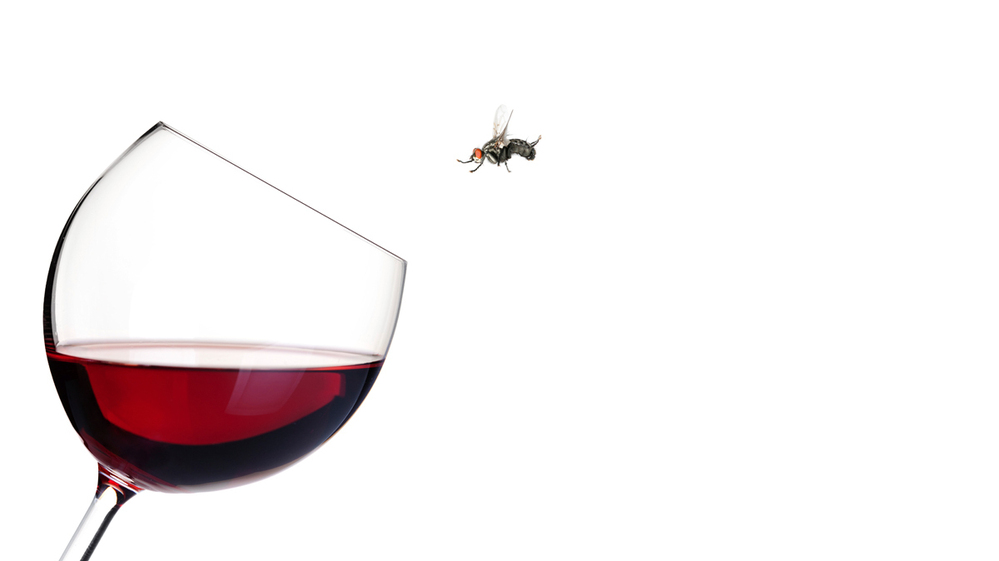
Alcohol: a key babyproofing product for this little mother.

Alcohol: a key babyproofing product for this little mother.

Alcohol: a key babyproofing product for this little mother.

Many a mom has reached for a glass of wine after a long day of tending children. But only fruit fly moms use their version of Chardonnay to guard their babies from harm.

When fly moms see marauding wasps, they seek out the alcohol in fermenting fruit, and lay their eggs there, according to new research. The alcohol is toxic to the wasps, but not to the fruit flies. They've evolved a tolerance for hooch.

No only do the fruit flies babyproof with alcohol, when given a choice they'll pick just the right proof about 3 percent. That's considerably less than the 12 to 14 percent in a glass of wine, but evidently enough to do in those lightweight wasps.

This news comes from Todd Schlenke, a evolutionary geneticist at Emory University who is making a bit of a specialty of studying the relationship between fruit flies and booze. His study was published in the journal Science.

A year ago, he reported that fruit-fly larvae will self-medicate with alcohol if they've been attacked by a wasp. The wasps lay eggs in the flies, and the alcohol kills the wasp larvae, saving the fly's life.

But some wasps are learning how to hold their liquor, Schlenke says, and the fruit flies may need to turn to more potent drink or figure out another survival strategy.

"It's sort of an arms race, I think," Schlenke says. "The flies do something to avoid being infected, and the wasps learn how to get around it."

Anthropomorphizing can be slippery, but it's hard not to feel a certain sympathy for these lowly fruit flies, whose drinking habits seem to echo ours in so many ways. For instance, it looks like fruit flies also turn to the bottle to nurse heartache. When a male fruit fly fails to mate with a female, he'll be more likely to start slugging down ethanol than the guy who scored, according to a study last year.

So why spend so much time hanging out with these "bar" flies? Schlenke studies the tiny flies to learn about big things like memory, heredity, and evolution.

For example, the mother fruit fly's ability to spot dangerous wasps is so refined that she'll only head for liquor when they see a female parasitic wasp (the males pose no threat to the young). "They only have to see the wasp once, and they remember," Schlenke says.

And even though the fruit flies have been living in the laboratory for many, many generations, they have no problem recognizing the danger posed by a wasp the moment they see it.

Ah, science!

Schlenke's revelations on the drinking habits of fruit flies have not only landed him in prestigious journals like Science, they've earned him a hat-tip from the satirical newspaper The Onion, which quipped, "I'm sure at least some of those flies also drink because of their crippling depression."

"Honestly, I think maybe The Onion is the highlight of my career," Schlenke told The Salt.

We bet the fruit flies will drink to that.


Pepper's Crossword Puzzle Helper - 2fishygirl on Scribd Scribd Pepper's Crossword Puzzle Helper - ebook download as or read book online. Thisbook has over 17,000 alphabetized entries obtained from working puzzles overthe years. Amazon.com: Fruit Ninja: Appstore for Android Download the Fruit Ninja app now to your Kindle Fire or other Android devices from the Amazon Appstore for Android. How to Make a Kick Ass Fruit Platter Chew On That As I mentioned yesterday, R and I had a large number of people over last weekend. And although I was by no means calm and composed, I think I handled Health Freak Mommy Please visit my other blogs at : http://www.healthfreakmommy.com/ for more interesting reads on my 3 little rascals and of course on my food reviews.... and my health ... Recipes - How To Information eHow.com Recipes: Wondering whats for breakfast, lunch, or dinner? Need a side dish or appetizer to serve with your favorite recipe? Find healthy recipes, cooking tips and ... the uppers & downers of parenting (or, coffee & wine) - Crappy ... I am a drug addict. I use uppers and downers. But only to make me a better parent. I never drank coffee before I had kids. At least not in a "Fresh Pots!" Pronounced Dead, Baby Girl Bounces Back to Life Parenthood from Pregnancy to Pre-school ... Couple Welcomes Two Sets of Identical Twins on Same Day. On Valentines Day, Tressa and Manuel Montalvo of Houston ... Get Rid of Fruit Flies - How To Information eHow.com Don't just sit there scratching your head, find useful info on Get Rid of Fruit Flies on eHow. Get essential tips and learn more about everything from How Can I Get ...

Thursday, December 6, 2012

Fruit Fly Nose Says Steer Clear Of Deadly Food; Human Nose Not So Reliable

Now we know why we'll never see a common fruit fly (Drosophila melanogaster) sitting on a beet. Enlarge image

Now we know why we'll never see a common fruit fly (Drosophila melanogaster) sitting on a beet.

Now we know why we'll never see a common fruit fly (Drosophila melanogaster) sitting on a beet.

Now we know why we'll never see a common fruit fly (Drosophila melanogaster) sitting on a beet.

The earthy smell of a fresh beet may spark delicious thoughts for us, but for a fruit fly, that smell screams danger.

Geosmin, a naturally occurring chemical that gives beets, fresh soil and corked wine their distinctive smell, is also cranked out by bacteria deadly to fruit flies. And it turns out that the tiny flies have a direct pathway from nose to brain made just to detect that smell and avoid the toxic microbes that produce it.

When Bill Hansson, a professor at the Max Planck Institute for Chemical Ecology in Jena, Germany, and his crew blocked the geosmin-detecting pathway in flies, they ate contaminated food and died. With the pathway intact, they steered clear. The fact that the tiny fly is devoting precious neuronal real estate to this shows how important it has been for survival to be able to detect the smell of spoiled food.

"They have one line for their whole nervous system just telling about this," Hansson tells The Salt. "On their nose they have cells only detecting this. We tested 3,000 compounds and only got a response to geosmin. That's an amazing specificity." His article was published in the journal Cell.

This is the first evidence of a special dedicated pathway for food odor, Hansson says. Animals are also very sensitive to smells that are sexual signals. But those are blends of pheromones, rather than a single smell.

People don't have a dedicated pathway to detect geosmin. That may be because those microbes don't pose a threat to us. Also, humans have many times more smell receptors than fruit flies. And we eat a much broader range of foods. Some of us even like beets.

In fact, geosmin can be a pleasant smell: Think about a farmer's field being plowed in the spring, or the garden just after it rains. But it's also responsible for the funky smell that sometimes troubles municipal water systems. (Supertasters may be able to smell germs in their sinuses, according to a recent study, but most of us don't have that talent.)

But the poor grad student who worked with the flies picked up a moldy geosmin stink that followed him around the laboratory. "It really doesn't smell nice," Hansson said. "You can smell him down the corridor."

There's no question that humans and other mammals react strongly to the smell of spoiled food. Just opening the office refrigerator is usually enough to prompt an "ugh!" or sometimes worse. But unfortunately, people don't have the ability to recognize the smell of dangerous bugs like E. coli or salmonella.

Still, this research could prove useful to humans. If dedicated smell pathways like the fruit fly's geosmin detector could be found in insects that pose a threat to humans mosquitoes, say, or agricultural pests like the corn borer Hansson thinks they could be used to develop repellents that would be safer than pesticides.

What smell screams danger to Hansson? Not geosmin, but the smell of vomit. Hansson remembers a long car trip in his native Sweden. His young son threw up in the back seat. Hansson found the hours spent smelling even the faintest remains of that smell to be excruciating. "It's such a strong stimulus. And it's one we don't adapt to. It's telling us someone has eaten something that made them sick. That's an important evolutionary signal."


Video - Breaking News Videos from CNN.com The latest video from CNN and its networks on breaking news stories. Topic Galleries -- South Florida Sun-Sentinel.com Topic galleries provide easy access to stories and photos about people, places, organizations, events and subjects of interest to you. They bring together rich ... U.S. News National News - Latest Headlines, Videos, Photos - ABC ... ABC News reports on United States politics, crime, education, legal stories, celebrities, weather, the economy and more Topic Galleries -- chicagotribune.com Topic galleries provide easy access to stories and photos about people, places, organizations, events and subjects of interest to you. They bring together rich ... MumbaiRock MumbaiRock is a social network ... The definition of Moncler Planning pertaining to the winter season?Seeing that winter season is usually slowly but surely creeping ... Consumer Updates - U S Food and Drug Administration Home Page Medication Errors Happen to Pets, Too; Help prevent mistakes that could endanger your pet. Medication Errors Happen to Pets, Too; Swallowing Eye Drops and Nose Sprays ... Ran Prieur Ran Prieur "The bigger you build the bonfire, the more darkness is revealed." - Terence McKenna Topic Galleries -- CTnow - CTnow.com - Connecticut News ... Topic galleries provide easy access to stories and photos about people, places, organizations, events and subjects of interest to you. They bring together rich ... ASTRO-THEOLOGY & Sidereal Mythology APPENDIX SIX Kersey Graves ... APPENDIX SIX. Kersey Graves. Introduction. A religion which sedulously opposes its own improvement can do nothing essential toward improving anything else...On the ... Topic Galleries -- baltimoresun.com - The Baltimore Sun Breaking ... Topic galleries provide easy access to stories and photos about people, places, organizations, events and subjects of interest to you. They bring together rich ...

Fruitfly Nose Says Steer Clear Of Deadly Food, Human Nose Not So Reliable

Now we know why we'll never see a common fruit fly (Drosophila melanogaster) sitting on a beet. Enlarge image

Now we know why we'll never see a common fruit fly (Drosophila melanogaster) sitting on a beet.

Now we know why we'll never see a common fruit fly (Drosophila melanogaster) sitting on a beet.

Now we know why we'll never see a common fruit fly (Drosophila melanogaster) sitting on a beet.

The earthy smell of a fresh beet may spark delicious thoughts for us, but for a fruit fly, that smell screams danger.

Geosmin, a naturally occurring chemical that gives beets, fresh soil and corked wine their distinctive smell, is also cranked out by bacteria deadly to fruit flies. And it turns out that the tiny flies have a direct pathway from nose to brain made just to detect that smell and avoid the toxic microbes that produce it.

When Bill Hansson, a professor at the Max Planck Institute for Chemical Ecology in Jena, Germany, and his crew blocked the geosmin-detecting pathway in flies, they ate contaminated food and died. With the pathway intact, they steered clear. The fact that the tiny fly is devoting precious neuronal real estate to this shows how important it has been for survival to be able to detect the smell of spoiled food.

"They have one line for their whole nervous system just telling about this," Hansson tells The Salt. "On their nose they have cells only detecting this. We tested 3,000 compounds and only got a response to geosmin. That's an amazing specificity." His article was published in the journal Cell.

This is the first evidence of a special dedicated pathway for food odor, Hansson says. Animals are also very sensitive to smells that are sexual signals. But those are blends of pheromones, rather than a single smell.

People don't have a dedicated pathway to detect geosmin. That may be because those microbes don't pose a threat to us. Also, humans have many times more smell receptors than fruit flies. And we eat a much broader range of foods. Some of us even like beets.

In fact, geosmin can be a pleasant smell: Think about a farmer's field being plowed in the spring, or the garden just after it rains. But it's also responsible for the funky smell that sometimes troubles municipal water systems. (Supertasters may be able to smell germs in their sinuses, according to a recent study, but most of us don't have that talent.)

But the poor grad student who worked with the flies picked up a moldy geosmin stink that followed him around the laboratory. "It really doesn't smell nice," Hansson said. "You can smell him down the corridor."

There's no question that humans and other mammals react strongly to the smell of spoiled food. Just opening the office refrigerator is usually enough to prompt an "ugh!" or sometimes worse. But unfortunately, people don't have the ability to recognize the smell of dangerous bugs like E. coli or salmonella.

Still, this research could prove useful to humans. If dedicated smell pathways like the fruit fly's geosmin detector could be found in insects that pose a threat to humans mosquitoes, say, or agricultural pests like the corn borer Hansson thinks they could be used to develop repellents that would be safer than pesticides.

What smell screams danger to Hansson? Not geosmin, but the smell of vomit. Hansson remembers a long car trip in his native Sweden. His young son threw up in the back seat. Hansson found the hours spent smelling even the faintest remains of that smell to be excruciating. "It's such a strong stimulus. And it's one we don't adapt to. It's telling us someone has eaten something that made them sick. That's an important evolutionary signal."


Articles by Jessica Snyder Sachs: Other Magazines Archives Thanks to my longtime Parenting editor Robert Barnett for bringing me on board NBC.com's iVillage team, where he is now the top health editor. Change4Obama - Change we can FINALLY believe in! Change Barack Obama to what you think he is or should be. (Funny Website) Video - Breaking News Videos from CNN.com Scientists: DNA evidence proves Big Foot is realDNA evidence proves Big Foot is real? U.S. News National News - Latest Headlines, Videos, Photos - ABC ... ABC News reports on United States politics, crime, education, legal stories, celebrities, weather, the economy and more Topic Galleries -- Courant.com Topic galleries provide easy access to stories and photos about people, places, organizations, events and subjects of interest to you. They bring together rich ... Topic Galleries -- South Florida Sun-Sentinel.com Topic galleries provide easy access to stories and photos about people, places, organizations, events and subjects of interest to you. They bring together rich ... Kibaaro News ++ News Saturdays: Your Songs Sundays: News Review Mondays: Interviews Tuesdays: Taareeko Wednesdays: Menbekering Thurdays: Dialogue Fridays: Islam Show Pets & Animals - How To Information eHow.com Pets & Animals: How to info on popular pets like cats and dogs, rare and exotic pets, pet health, food, illness and much more. Plus info on farm animals, horses ... Blatant Lies - Television Tropes & Idioms So one of the characters has a secret, one that they do not want leaking out. Unfortunately, Clark Kenting doesn't always cut it, and some aspect of the secret is ... sewage - Social Justice China's waste breakthrough 3.18.03 BBC. A scheme to manage human waste in a way more beneficial to the environment is to be launched in Beijing in time for the ...