Showing posts with label beer. Show all posts

Friday, February 8, 2013

When The Microbes Are Happy, The Brewer Is Happy

Yeast affects several aspects of beer including the foam, or head, that forms on the of the glass. If fermentation is too vigorous, too many of the foam-stabilizing proteins may be lost. Enlarge image i

Yeast affects several aspects of beer including the foam, or head, that forms on the of the glass. If fermentation is too vigorous, too many of the foam-stabilizing proteins may be lost.
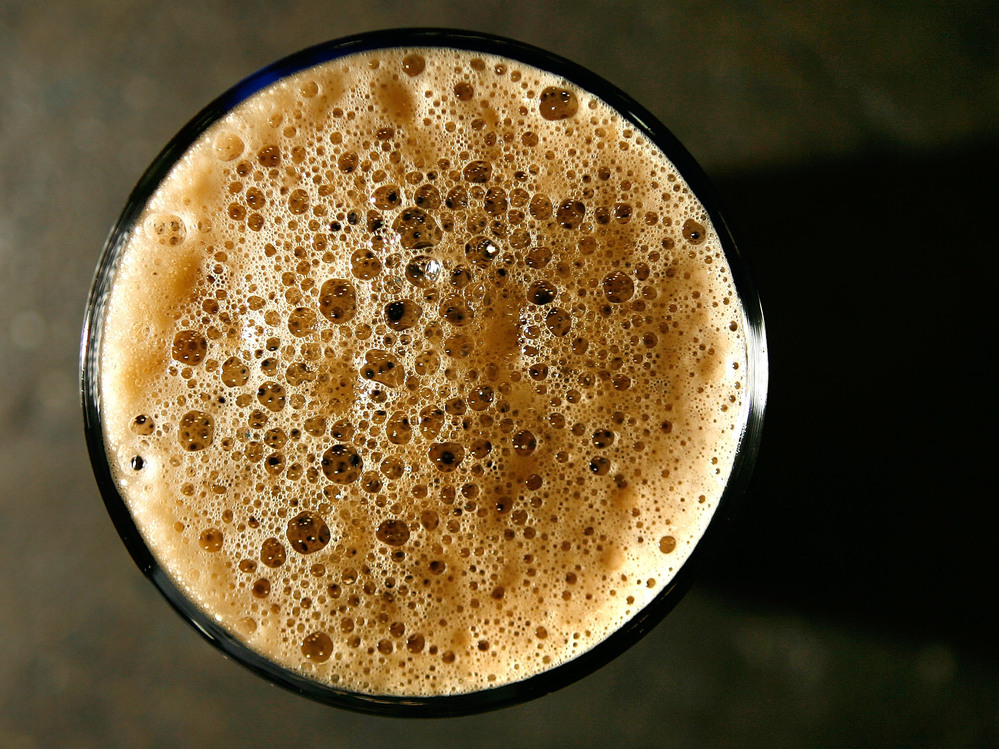
Yeast affects several aspects of beer including the foam, or head, that forms on the of the glass. If fermentation is too vigorous, too many of the foam-stabilizing proteins may be lost.

Yeast affects several aspects of beer including the foam, or head, that forms on the of the glass. If fermentation is too vigorous, too many of the foam-stabilizing proteins may be lost.

Yeast can be pretty demanding little buggers, despite being unicellular microscopic organisms. Brewers know they must appease them to get the beer they want.

"It's yeast-strain dependent, it's environment, it's temperature, oxygen levels," says Matt Brophy, brewmaster of Flying Dog Brewery in Frederick, Md. "There's a lot of variables that you need to have a high level of control over."

Yeast produces hundreds of chemical compounds that can affect the beer's ultimate flavor, appearance and stability. Over the centuries, humans have domesticated yeast strains with the best characteristics for brewing, so that the ones brewers use today are much more effective than wild yeast. It's kind of like going with a pedigreed Best In Show at Westminster, rather than a coyote.

"We deal with cultured yeast very specific strains that give us flavor profiles that we desire in our beers," Brophy says.

Then they have to pamper the yeast with the right conditions.

It gets fed wort, a sugary liquid made by steeping, roasting, and mashing barley or other grains. The wort is cooled to just the right temperature, and stirred to oxygenate it so that the yeast can grow and reproduce.

After all those demands have been met, the yeast starts converting simple sugars to alcohol and carbon dioxide.

Or, as a new report from the American Academy of Microbiology says, "If the Yeast Ain't Happy, Ain't Nobody Happy."

So does this mean that brewers are basically microbiologists?

"Yes, absolutely," Brophy says. "Not only do you need to learn and know about yeast health, viability, vitality, and all the variability that affect fermentation, but there's also the buggers that you don't want."

Ann Reid, director of the microbiology academy, says that even she was struck by "the degree to which the whole beer-making process really is an effort to produce something that the yeast will be really happy, with so they'll make you the beer that you want to drink."

In addition to describing the brewing process in depth and outlining the ways in which yeast affects beer's flavor, the report explores the history of brewing and differences in types of yeast.

Some highlights:

  • Yeast probably evolved the ability to produce alcohol because other microbes can't survive in it. It kills off the competition. But this also explains why fermented drinks were popular before the development of water sanitation systems beer was safer to drink than the local water supply.
  • The two major brewer's yeasts are ale and lager yeasts. Ale yeasts prefer warm temperatures for fermentation. Lager yeasts grow well at low temperatures, an important quality for brewers in Northern Europe.
  • Too little yeast, and fermentation will take too long to get started, allowing bacteria to outcompete it. Too much, and the beer will lack complex flavor and aroma.

This is the latest of the Academy's reports on microbes in our world. "We get the sense when people think of microbes, they think of things that make you sick and they think of microbiologists as people who work in the clinical laboratory at the hospital," Reid says. "It's a lot more varied than that."

Previous FAQ reports have queried microbiologists on oil spills, E. coli and adult vaccines.

For the yeast report, the academy had to turn to Europe for about half of their brewing experts. "There's not a lot of it going on in our universities," Reid says. "In Europe there are actual professors of fermentation who specialize in beer."

But regardless of where the experts come from, Reid says, "beer microbiologists are among the most fun of a pretty fun profession."


Friday, December 14, 2012

Brewers Prepare Beer For The End Of Time, Mayan Or Otherwise

Great Basin's Mayan Maybe? beer has been a fast seller, the company's brewmaster says.

Great Basin's Mayan Maybe? beer has been a fast seller, the company's brewmaster says.

The world isn't going to end next Friday, but December 21, 2012, has come to be known as the Mayan apocalypse because that's when the Mayan calendar ends. As scientists have told us repeatedly, the end of the calendar year was actually was a time for celebration and renewal the equivalent of an ancient New Year's Eve. So breweries around the country have decided to celebrate with what else? beer.

The alcoholic drinks the Mayans concocted in central America hundreds of years ago aren't quite like the beer we quaff today. There's archaeological evidence that they brewed something like a wine from cacao pods, and included ingredients such as honey, chilies, and flowers. And descendants of the Maya still make a fermented corn drink called pozol. Pozol can be sweetened with sugar, made bitter with chilies and salt, or colored with annatto.

But now modern brewers have taken these ingredient lists and come up with their own inventions.

Newport Storm in Rhode Island created their Annual Release '12 as an "ode to the Mayan gods," says Taylor Butzback, the brewery's public relations manager. After deciding to honor the Mayans with their yearly special brew, the company's small staff came up with a list of ingredients that they considered Mayan corn, chilies, cocoa nibs and their brewers refined the recipe with a touch of sweetness.

"The [blue] agave we used in it came towards the end," Butzbach says. The brewers tasted the beer they were brewing and "noticed it was super spicy." The blue agave, native to Mexico, helped to reign in the kick, she says.

At Great Basin Brewing in Reno, Nev., owner and brewmaster Tom Young was also inspired by the Mayans. His Mayan Maybe? (tagline: Brewed for the apocalypse. Or not.) contains cocoa nibs, honey, maize, vanilla beans, and habarnero chilies. "We decided to look at the Mayan culture and figure out what they would make," Young says.

The result is "a very drinkable beer," he says. "It really comes through why chilis and chocolate are such a good combination."

Beer enthusiasts may have some trouble tracking down these Mayan-inspired beers, as they have been brewed only in small batches. Young says bottles of Mayan Maybe? have already sold out, though the company has kept back some kegs for an End of the World party at their Sparks Brewery next Friday.

Lucky drinkers might also be able to find a rare bottle Theobroma from Delaware's Dogfish Head. That beer, inspired by a prehistoric chocolate brew and created with the assistance of University of Pennsylvania alcohol archaeologist Patrick McGovern, is only released once each year. It last went on sale in April.

Elysian released its Mortis Sour Persimmon Ale in November as part of its Twelve Beers of the Apocalypse. The label artwork features imagery from comic artist Charles Burns' "Black Hole" series.

The idea that the world will end next Friday is merely a "fun work of fiction," as Neil deGrasse Tyson said in 2009. Need more proof? At the ancient Mayan site of La Corona in Guatemala, archaeologists recently found an inscription calling the date the end of the calendar cycle, not the end of time.

But not all brewers inspired by the end of time went with a strictly Mayan theme. Elysian Brewing Co. in Seattle has been releasing their Twelve Beers of the Apocalypse one by one on the 21st of each month since January.

They started their series by asking, "If you're a brewer, and the end of the world is coming, what are the 12 beers you want to make?" says Joe Bisacca, Elysian's CEO and founder. At that time, he says, "you should brew whatever you want."

The result has been a creative list of alcoholic brews with ingredients like sour persimmons, dandelion leaves, yerba mate, and five different kinds of chili peppers. Some ingredients have caused problems during brewing. "The blood orange puree was interesting," Bisacca says, because "the yeast ate it like crazy."

Elysian will sell mixed cases of each of the twelve beers to raise money for charity. And all of them will be available at Elysian's end of the world party on Thursday. It's being held on that day "just in case" the world really does end next Friday, Bisacca says.


Free Our Beer Dedicated to reforming Ontario's beer retail ... The LCBOs Social Responsibility group is in the news again, this time for the rejection of the Flying Monkeys Smashbomb Atomic IPA. Torontoist has an article ... Bamf Beer Ive just returned from a week-long business trip to London. Since it wasnt a vacation trip, two things were true: first, I was on my own. buffalobrewhound One brewery. One bar. One beer. One sip at a ... One brewery. One bar. One beer. One sip at a time, in search of Beervana. The Cannon Brew Pub : THE CANNON BREW PUB :: COLUMBUS, GEORGIA ... Whats In A Name? In This Case: BEER!! The pub. There is really nothing else like it in the world. Its not a nightclub or a tavern, a parlor or a bar; not a ... Win Beer Packages ($280) For 2012 Oregon Brewers Festival ... Recent Posts. Portland Saturday & Sunday + Upcoming Events: Vancouver Winter Beerfest, Big 300 Art Show, Holiday Markets & More; Tickets On Sale Now: Mike Tyson ... Brewing - Wikipedia, the free encyclopedia Brewing is the production of beer through steeping a starch source (commonly cereal grains) in water and then fermenting with yeast. Brewing has taken place since ... Hops - Wikipedia, the free encyclopedia Hops are the female flowers (also called seed cones or strobiles) of a hop species, Humulus lupulus They are used primarily as a flavoring and stability agent in beer ... Professor_Beer_Diacetyl_Article An article describing diacetyl in beer, written by a professional brewer. Guided beer tastings with an award-winning brewmaster from New York's Capital Region Zythophile zee-tho-fyle, a beer, beer history, beerstyles, beer ... The answer, of course, is that Roger is completely correct, Worthington E is a pale ale or bitter with a strength that puts it in the Best Bitter category ... For People Who Dont Like Beer Bamf Beer I seem to have a knack for meeting people who say that they dont like beer. Ive also developed something of a talent for convincing them otherwise, so I thought ...

Wednesday, November 14, 2012

Raise A Toast To Building Better Beer Bubbles Through Chemistry

Scientists may have finally solved a problem that has plagued beer drinkers for ages: Insufficient foam resiliency.

As any beer drinker can tell you, a tall glass of lager without a white, foamy head on top just doesn't look right. And even if you start out with one, it can dissipate fast. And that's just sad.

You'll be seeing more of this white foamy stuff on top of the beers of the future, thanks to a recent genetic discovery. Enlarge image

You'll be seeing more of this white foamy stuff on top of the beers of the future, thanks to a recent genetic discovery.

You'll be seeing more of this white foamy stuff on top of the beers of the future, thanks to a recent genetic discovery.

You'll be seeing more of this white foamy stuff on top of the beers of the future, thanks to a recent genetic discovery.

Now, microbiologists have identified the specific gene in yeast responsible for a beer's head and they say this discovery can lead to stronger, longer lasting, more aesthetically pleasing foam on your favorite brews.

Tom Villa, the chair of microbiology at the University of Santiago de Compostela in Spain, says something called the Carlsbergensis foaming gene, or CFG1, is responsible for the white stuff at the top of your mug. As Villa and his colleagues write in the Journal of Agricultural and Food Chemistry, the gene resides in the yeasts used to ferment beer and it produces a protein that binds to the drink's CO2 bubbles, preventing them from escaping from the glass too quickly.

"The bubbles from the CO2 have to stay as long as possible," Villa says. "The longer they stay, the better the beer, as you know."

Now that we know exactly which gene is responsible for beer foam, Villa says it's possible to manipulate that gene to create beer with foam that lasts longer potentially for hours and hours, as our colleagues at Science Friday reported.

He also says the same gene responsible for creating the head on a beer is present in wine as well. His team experimented with these genes and came up with a wine that looks like a beer. "It creates a different kind of wine with a lot of foam," Villa says. "You can play around a little bit."

Since most people probably wouldn't be into sipping a frothy merlot, Villa's discovery will mainly impact the world of beer. And even then, he says, this gene has no impact on the flavor of a beer.

How does he know this? Naturally, he called in his students for a little taste-testing experiment.

"It's only the physical aspect of the beer," Villa says. "We all want the foam to stay there, the longer the better. You don't want to drink a beer that when you pour it, the foam collapses the next minute."

So while this discovery may not necessarily lead to better tasting beer, foam is surprisingly important to the overall experience of drinking a beer, so much so that a Japanese company has made a frozen version, as we've previously reported. And anything that improves the beer drinking experience, even if only superficially, is something we here at The Salt will cheer.


Debunking Beer Can Chicken: A Waste Of Good Beer Beer can chicken is not a good way to cook chicken. Here's why, and how you can make better roast chicken. Travel - vacation, travel guide, travel advice, itineraries ... Articles and deals on travel to and from Southern California. Find Las Vegas vacations, Mexico packages, Hawaii resorts and more. Beer - Wikipedia, the free encyclopedia Beer is the world's most widely consumed alcoholic beverage ; it is the third-most popular drink overall, after water and tea. It is thought by some to be the oldest ... Meathead: Debunking Beer Can Chicken: A Waste Of Good Beer (And It ... "I think Beer Can Chicken is a religion. We need a little separation of faith and science here." Sterling Ball, BigPoppaSmokers.com Think about this: You ... EXTENDED EXPERIMENTAL INVESTIGATIONS: Chemistry - Ideas for EEIs RESOURCES FOR QUEENSLAND STUDENTS & TEACHERS 'DEADLY' EEI IDEAS Ideas for Year 11 and 12 Chemistry Extended Experimental Investigations. From Dr Richard Walding, FAIP ... 2012 Renewal Scorecard: List of Renewals, Cancellations, Bubble ... January 3, 2012 06:43 AM PST 2012 Renewal Scorecard: What's Coming Back? What's Getting Axed? What's on the Bubble? Technology - New Scientist Find news and information on the latest new technology. Read about new inventions and advances in computer software and information technology Video - Breaking News Videos from CNN.com Brother, 11, saves little sis from pit bullsBrother saves sister from dog attack Guinness - Wikipedia, the free encyclopedia Guinness is a popular Irish dry stout that originated in the brewery of Arthur Guinness (17251803) at St. James's Gate, Dublin. Guinness is one of the most ... Alltop - Top Beer News So its been a while. Far too long in fact. So I bring you something closer to my heart than you may realize: Blast by Colt 45. Pours a florescent pink hue with two ...