Showing posts with label Congress. Show all posts

Tuesday, January 8, 2013

Partial Victory Claimed Even As Farm Bill Reform Fails Again

Peanut plants grow on a Halifax, N.C., farm that received federal subsidies in 2011. Enlarge image i

Peanut plants grow on a Halifax, N.C., farm that received federal subsidies in 2011.
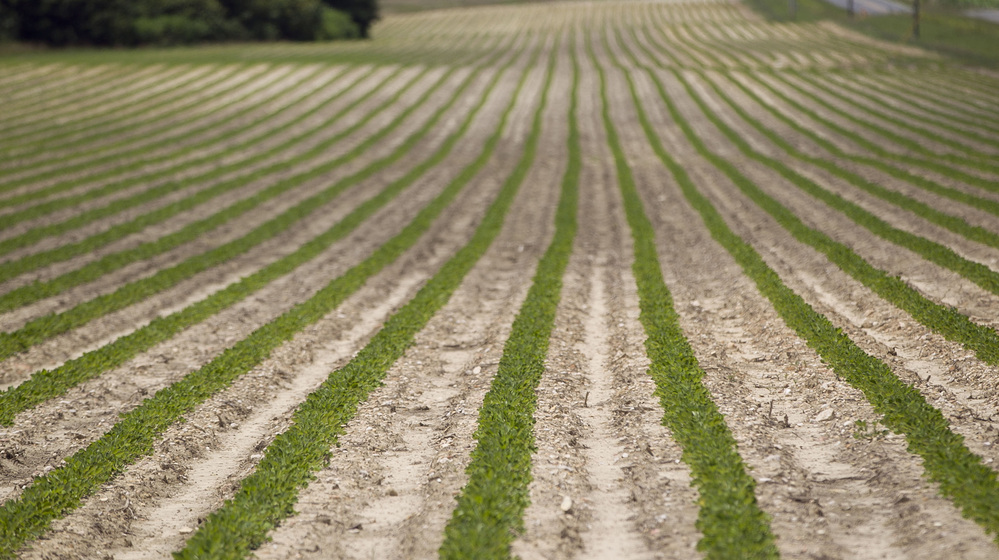
Peanut plants grow on a Halifax, N.C., farm that received federal subsidies in 2011.

Peanut plants grow on a Halifax, N.C., farm that received federal subsidies in 2011.

It's amazing how many different kinds of people have been trying to abolish or at least change the government's payments to farmers. They include economists, environmentalists, taxpayer advocates, global anti-hunger advocates and even a lot of farmers. Some have been fighting farm subsidies for the past 20 years.

This past year, those critics laid siege to offices on Capitol Hill because the law that authorizes these programs the farm bill was about to expire. (It has to be renewed every five years.)

But instead of passing a new five-year renewal, Congress extended only parts of the previous bill by nine months.

And so the reformers lost, again.

On the other hand, the big farm organizations that wanted to lock in generous subsidies for another five years also failed. All in all, the result was more like a stalemate, and the battle over farm subsidies now will resume in the new Congress. Some of the anti-subsidy campaigners are calling it a victory.

What's this argument all about? The economic case against subsidies is pretty straightforward: Taking money from taxpayers to make life more secure for farmers is wasteful and inefficient. "There's seemingly an intent to remove as much risk from agricultural production as possible with subsidies and subsidized insurance. We typically don't see anything like that for other sectors of the economy, at least not to that degree," says Barry Goodwin, a professor of economics at North Carolina State University.

Environmentalists like Scott Faber from the Environmental Working Group blame crop subsidies for destroying wildlife habitat. "Subsidies encourage farmers to plow up wetlands and grasslands that they wouldn't plant if they were simply responding to the market," he says.

The anti-hunger advocates, like Oxfam, argue that aid to American farmers makes it harder for farmers in poor countries to compete in the global marketplace. And the local/organic/alternative farming crowd says those subsidies go to the wrong kind of agriculture big farms growing corn, soybeans, cotton and rice, which aren't really the cornerstones of a healthy diet. If there are subsidies, these groups say, they should go to small farms, organic farms, and farmers growing fruit and vegetables.

Over the years, these critics have had some successes. Farm payments went way up in the late 1990s, but they have been falling ever since.

Last year, the anti-subsidy alliance saw a big opportunity. The law was up for renewal at a time when farmers hardly needed help. Apart from dairy and meat producers who were hit hard by last summer's drought, farmers have been doing very well in recent years, better than most Americans.

So the negotiating and dealing started.

The reformers got Congress to kill one big subsidy program, called direct payments. This program passed out more than $4 billion a year to farmers based simply on records of past agricultural production from land that they own.

Farmers, for their part, argued that farming is still a really risky business and that farm programs help ensure a stable supply of food. They persuaded Congress to increase subsidies for another kind of safety net, crop insurance.

And then, in the frantic end-of-the-year rush to resolve the government's fiscal crisis, all of that went out the window.

House and Senate leaders simply extended the farm subsidies that have been in place for that past five years. Those programs will continue until September.

When Sen. Debbie Stabenow, D-Mich., chairwoman of the Senate Agriculture Committee, heard what had happened, she went to the Senate floor on New Year's Eve to vent her outrage. "Here's what happens under this extension: The subsidies that we agreed to end, continue! It's amazing how it happens. The folks that want the government subsidies find a way to try to keep them at all costs."

Some of those advocating for reform of farm subsidies agreed that the extension was a disaster. The National Sustainable Agriculture Coalition, which represents small organic farmers, was angry. The coalition thought that Congress was on the brink of funding a collection of small programs that funnel money to organic farming and local food production.

But Faber, from the Environmental Working Group, which has led the anti-subsidy fight for many years, saw it as a partial victory. Congress, he noted, had refused to approve generous new five-year deal for farmers. Instead, the battle will continue in the new Congress.


Bill's Daily Briefing Huffington Post Report: Obama's Immigration Reform Push To Begin This Month Despite a bruising fiscal cliff battle that managed to set the stage for an even more ... Topic Galleries -- OrlandoSentinel.com Topic galleries provide easy access to stories and photos about people, places, organizations, events and subjects of interest to you. They bring together rich ... POLITICO Huddle - POLITICO.com BOEHNER SURVIVES REVOLT, Huelskamps list: 'You would be fired if this goes out,' Babies in Congress, Biden gets frisky, House Sandy aid vote, Giffords to Newtown ... John Quincy Adams a Founding Father? Michele Bachmann Says Yes ... On the heels of her official entry into the Presidential campaign in Iowa yesterday, Congresswoman Michele Bachmann came to GMA today. I gave her the ... John Nichols The Nation Breaking news and analysis of politics, the economy and activism. HuffingtonPost's Big News Pages HuffingtonPost's Big News Pages. Some news is so big it needs its own page. Video Cafe A spokesperson for the Department of State recently seemed to be really enjoying his job as called out Fox News correspondent Justin Fishel for asking an "asinine ... Comment: editorials, opinion and columns - Telegraph Find the latest editorial comment, opinion and columns from the Telegraph FAST TRACK LAND REFORM IN ZIMBABWE - Human Rights Watch ... III. BACKGROUND. Land Reform in the Twenty Years After Independence. Land has been a source of political conflict in Zimbabwe since colonization, when the country was ... News Archive - The Hill - covering Congress, Politics, Political ... Most Viewed Boehner's 100 loyal soldiers might give him political cover on 'fiscal cliff' House approves 'fiscal cliff' deal; bill headed to Obama's desk CBO: 'Fiscal ...

Farm Bill Critics Claim Partial Victory Despite Stalemate

Peanut plants grow on a Halifax, N.C., farm that received federal subsidies in 2011. Enlarge image i

Peanut plants grow on a Halifax, N.C., farm that received federal subsidies in 2011.

Peanut plants grow on a Halifax, N.C., farm that received federal subsidies in 2011.

Peanut plants grow on a Halifax, N.C., farm that received federal subsidies in 2011.

It's amazing how many different kinds of people have been trying to abolish or at least change the government's payments to farmers. They include economists, environmentalists, taxpayer advocates, global anti-hunger advocates and even a lot of farmers. Some have been fighting farm subsidies for the past 20 years.

This past year, those critics laid siege to offices on Capitol Hill because the law that authorizes these programs the farm bill was about to expire. (It has to be renewed every five years.)

But instead of passing a new five-year renewal, Congress extended only parts of the previous bill by nine months.

And so the reformers lost, again.

On the other hand, the big farm organizations that wanted to lock in generous subsidies for another five years also failed. All in all, the result was more like a stalemate, and the battle over farm subsidies now will resume in the new Congress. Some of the anti-subsidy campaigners are calling it a victory.

What's this argument all about? The economic case against subsidies is pretty straightforward: Taking money from taxpayers to make life more secure for farmers is wasteful and inefficient. "There's seemingly an intent to remove as much risk from agricultural production as possible with subsidies and subsidized insurance. We typically don't see anything like that for other sectors of the economy, at least not to that degree," says Barry Goodwin, a professor of economics at North Carolina State University.

Environmentalists like Scott Faber from the Environmental Working Group blame crop subsidies for destroying wildlife habitat. "Subsidies encourage farmers to plow up wetlands and grasslands that they wouldn't plant if they were simply responding to the market," he says.

The anti-hunger advocates, like Oxfam, argue that aid to American farmers makes it harder for farmers in poor countries to compete in the global marketplace. And the local/organic/alternative farming crowd says those subsidies go to the wrong kind of agriculture big farms growing corn, soybeans, cotton and rice, which aren't really the cornerstones of a healthy diet. If there are subsidies, these groups say, they should go to small farms, organic farms, and farmers growing fruit and vegetables.

Over the years, these critics have had some successes. Farm payments went way up in the late 1990s, but they have been falling ever since.

Last year, the anti-subsidy alliance saw a big opportunity. The law was up for renewal at a time when farmers hardly needed help. Apart from dairy and meat producers who were hit hard by last summer's drought, farmers have been doing very well in recent years, better than most Americans.

So the negotiating and dealing started.

The reformers got Congress to kill one big subsidy program, called direct payments. This program passed out more than $4 billion a year to farmers based simply on records of past agricultural production from land that they own.

Farmers, for their part, argued that farming is still a really risky business and that farm programs help ensure a stable supply of food. They persuaded Congress to increase subsidies for another kind of safety net, crop insurance.

And then, in the frantic end-of-the-year rush to resolve the government's fiscal crisis, all of that went out the window.

House and Senate leaders simply extended the farm subsidies that have been in place for that past five years. Those programs will continue until September.

When Sen. Debbie Stabenow, D-Mich., chairwoman of the Senate Agriculture Committee, heard what had happened, she went to the Senate floor on New Year's Eve to vent her outrage. "Here's what happens under this extension: The subsidies that we agreed to end, continue! It's amazing how it happens. The folks that want the government subsidies find a way to try to keep them at all costs."

Some of those advocating for reform of farm subsidies agreed that the extension was a disaster. The National Sustainable Agriculture Coalition, which represents small organic farmers, was angry. The coalition thought that Congress was on the brink of funding a collection of small programs that funnel money to organic farming and local food production.

But Faber, from the Environmental Working Group, which has led the anti-subsidy fight for many years, saw it as a partial victory. Congress, he noted, had refused to approve generous new five-year deal for farmers. Instead, the battle will continue in the new Congress.


Wednesday, September 19, 2012

So What Happens If The Farm Bill Expires? Not Much, Right Away

Sens. Jeanne Shaheen, D-N.H., and Pat Toomey, R-Pa., talk to reporters about the farm bill at the U.S. Capitol in June.

Sens. Jeanne Shaheen, D-N.H., and Pat Toomey, R-Pa., talk to reporters about the farm bill at the U.S. Capitol in June.

Sens. Jeanne Shaheen, D-N.H., and Pat Toomey, R-Pa., talk to reporters about the farm bill at the U.S. Capitol in June.

Congress is set to make a brief appearance in Washington this week, then recess until after Election Day. That means a farm bill is likely to be left undone, just one of the many items on lawmakers' "to-do" lists that won't happen anytime soon.

The 2008 farm bill, which provides funding for a variety of nutrition programs, including the Supplemental Nutrition Assistance Program (formerly food stamps), as well as payments to farmers and agricultural programs, will technically expire Sept. 30.

So what does it mean if Congress just leaves it on the table? In theory, some fairly scary things. For example, in the absence of either a new bill or an extension of the 2008 law, federal price supports revert to their 1949 levels.

Some farmers would be big winners the government would pay huge bonuses for wheat, for example while some farmers would get nothing at all. That's because some commodities, including soybeans, were added to the list of those supported by government after 1949.

"At that point, we'll have $38 milk," Rep. Collin Peterson, D-Minn., told a rally at the Capitol last week. "So what do you dairy farmers think about that?" (That $38 refers to the price per 100 pound weight the wholesale pricing unit. Basically, it works out to nearly four times what dairy farmers are guaranteed now.)

But the reality is, almost none of the changes would happen right after Sept. 30.

"We actually have until about Jan. 1 before we run into a lot of administrative problems with this bill reverting to some very high prices," says Mary Kay Thatcher, director of congressional affairs for the American Farm Bureau Federation.

That's because while the date on the law matches the federal fiscal year, the 2008 measure covers all of 2012's crops. So even if they haven't been harvested yet, things growing now are covered by the 2008 legislation. The first crop that would be affected by the new price supports "would be next spring when we harvest winter wheat," Thatcher says.

Vincent Smith, a professor of economics at Montana State University and a visiting scholar at the American Enterprise Institute, says the real reason supporters of the farm bill are in such a rush to get their bill done has more to do with budget politics than with the actual mechanics of the programs.

"They want to have a farm bill now that locks Congress and the taxpayer into obligations based on either the Senate or the House bill," he tells NPR. "What they're concerned about is that, if serious deficit-reduction talks take place, then a lot more money than was initially identified to come out of the farm bill by the "supercommittee" a year and a bit ago will have to come out of the farm bill."

A version of the farm bill was approved by the Senate earlier this year; a House committee approved a different version, including deeper cuts to food stamps.

When was the last time Congress let the farm bill lapse? The last time it was up for renewal: 2007. "The bill expired on Sept. 30, and we didn't pass the first extension until the 26th of December," says Thatcher. "And then I think it was extended another four or five times after that before we finally got the actual bill done."

So both Thatcher and Smith say to look for Congress to do some kind of extension of farm programs during its postelection lame duck session. But also, don't panic in the meantime.


John Nichols The Nation A Wisconsin judge has struck down key sections of Wisconsin Governor Scott Walkers controversial anti-labor law, in a ruling that union leaders say renews ... Ran Prieur Ran Prieur "The bigger you build the bonfire, the more darkness is revealed." - Terence McKenna G. Edward Griffin on the Federal Reserve System - YouTube The author of "The Creature From Jekyll Island," G. Edward Griffin, on the cartel structure of the Federal Reserve System and the 1910 "money trust ... So whats in the new federal highway bill anyway? NAFTA ... Some have tried to convince the public that the Trans Texas Corridor and NAFTA Superhighways are dead. But Congress recently passed a new, two-year federal ... Movies - Salon.com Salon coverage: Movies ... Saturday, Sep 15, 2012 4:30 PM UTC Richard Gere on Obama disappointment Hollywood's most famous Buddhist on Obama's "insane" wars, the ... What If Nothing Happens? In the event that your storage of food, water, medical, and other resources remains unmoved out of necessity, then count yourself fortunate. This is what we hope for ... FarmPolicy Blog Archives Agriculture Secretary on U.S. Drought USDA- Economic Research Service, "The 2002 Farm Act Provisions and Implications for Commodity Markets," by Paul C. Westcott, C. Edwin Young, and J. Michael Price (Nov ... Second Life: What Happens to Old and Expired Supermarket Products ... It doesn't all end up in the trash. Once food hits its sell-by date, many markets donate products to food banks or sell them to salvage stores. As darkness falls ... Car Auctions, Property Auctions, Police & Government Auctions ... Get an Amazing 25%, 50% or Even a Massive 80% off Retail Prices by Buying at Auctions Ye Olde Journalist The pen is my sword in which to fight yellow Journalism. The truth is out there, and I am determined to report on it and tell it like it is, even if those ...