Showing posts with label Anheuser-Busch. Show all posts

Wednesday, February 27, 2013

Budweiser May Seem Watery, But It Tests At Full Strength, Lab Says

Plaintiffs accuse Anheuser-Busch of misleading consumers about the alcohol content in Bud Light, Budweiser and other products. The brewer denies the claims. Enlarge image i

Plaintiffs accuse Anheuser-Busch of misleading consumers about the alcohol content in Bud Light, Budweiser and other products. The brewer denies the claims.
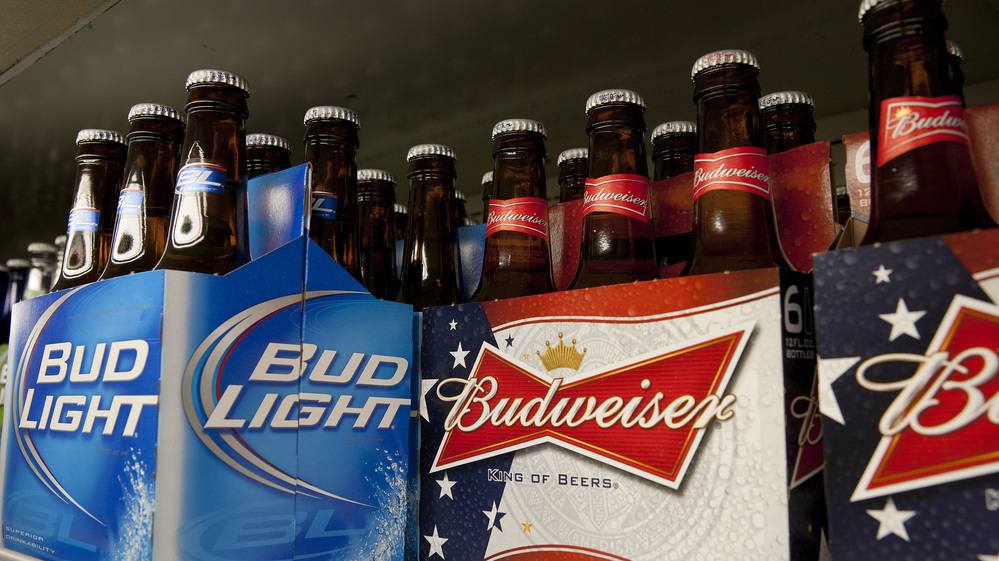
Plaintiffs accuse Anheuser-Busch of misleading consumers about the alcohol content in Bud Light, Budweiser and other products. The brewer denies the claims.

Plaintiffs accuse Anheuser-Busch of misleading consumers about the alcohol content in Bud Light, Budweiser and other products. The brewer denies the claims.

Anheuser-Busch is accused of misleading beer drinkers about the alcohol content of Budweiser and other products, in lawsuits filed against the brewer in several federal courts. The plaintiffs say Anheuser-Busch waters down its beers and then misrepresents their final alcohol content. The brewer says the lawsuits have no merit.

Like many mainstream U.S. beers, Budweiser has long been accused of tasting watery and low-powered in comparison with strong and flavorful American craft and European traditional brews. But the lawsuit's main contention is not that a crime against taste has been committed.

The plaintiffs allege intentional "mislabeling" of at least 10 beers' alcohol content, after the brewer added water to boost the amount of beer produced from raw materials. The suit also accuses the giant brewer of engaging in false advertising and unfair business practices.

Peter Kraemer, Anheuser-Busch InBev's vice president of brewing and supply, calls the lawsuits' claims "completely false," in an email to Bloomberg News. "Our beers are in full compliance with all alcohol labeling laws," Kraemer says.

Update at 6:15 p.m. ET. Beer Is At Full Strength, Tests Say

Samples of Budweiser, Bud Light Lime, and Michelob Ultra were found to be in line with their advertised alcohol content, according to lab tests conducted at NPR's request. Our colleague Dan Bobkoff, who reports on that side of the story on Thursday's Morning Edition, got the test results from White Labs in San Diego.

As analytical laboratory specialist Kara Taylor tells Dan, the lab's analysis showed that "the alcohol percentages inside the cans were the same as what was stated on the can."

"Some of them were spot on," she says. "Others deviated within a hundredth of a percentage" within federal limits.

Dan spoke to the lawsuit's lead attorney about the tests; you can hear the audio of that conversation after Thursday's show airs. Our original post continues:

The lawsuit, versions of which were filed in California, Pennsylvania, New Jersey and elsewhere, seeks a broad classification that would allow it to represent millions of consumers.

On Twitter and other social media networks, news of the lawsuit was greeted by jeers and jokes. But the practice of adding water to beer before it's packaged is common among large brewers. It's called high-gravity brewing, and it involves blending a potent brew with water.

The process is very efficient and that can mean higher profits for companies like Anheuser-Busch InBev, the world's largest brewer.

"In high-gravity brewing, you can make a lot more beer by stretching the beer that you have fermented," explains Dan Kopman, co-founder of Schlafly Beer, a craft brewery in Anheuser-Busch's ancestral home of St. Louis. (AB InBev is now headquartered in Belgium.)

Kopman says that adding water can help a brewer "stretch" the amount of the final product by at least 5 or 10 percent without changing the beer's flavor.

"This is primarily done in very large breweries, and it works well for lighter lager beers," he tells The Salt. "I would assume that all major brewers in the world high-gravity brew. It is not unique to AB."

As an example, Kopman says, Anheuser-Busch might brew high-gravity Bud, with an alcohol content of around 5.5 percent after fermentation.

"Then in packaging they will add deaerated water," he says, to achieve the desired flavor and alcohol content. Deaerated water has low oxygen levels, to help the beer "keep" on the shelves.

Brewers who use this process monitor alcohol content closely; most also verify it with a lab test after packaging. But that's where the newly filed lawsuit claims there are problems. The plaintiffs say the alcohol content printed on Budweiser, Bud Ice, Michelob and other beers' labels isn't accurate and that the discrepancy is intentional.

"AB never intends for the malt beverage to possess the amount of alcohol that is stated on the label," according to the suit, which also says Anheuser-Busch has the ability to measure alcohol content to a hundredth of a percent.

"As a result, AB's customers are overcharged for watered-down beer," the lawsuit claims, "and AB is unjustly enriched by the additional volume it can sell."

The suit claims that the practice of watering down beers was "vigorously accelerated" after Anheuser-Busch merged with InBev to form a mammoth global corporation in 2008. But the documents posted online do not cite lab tests of the beers.

"Our information comes from former employees at Anheuser-Busch, who have informed us that, as a matter of corporate practice, all of their products mentioned [in the lawsuit] are watered down," Josh Boxer, a lead attorney in the lawsuit, tells The Associated Press.

But Boxer "stopped short of saying the beers had been independently tested," the AP reports. And the lawsuit doesn't cite specific numbers to back up its claim, saying only that Budweiser has "significantly lower alcohol content" than what its label announces.

Two plaintiffs in the California suit, Nina Giampaoli and John Elbert, say they regularly purchased Budweiser over the past four years, taking the "stated percentage of alcohol into account" when they made their decisions to buy the beer.

Documents posted online to support the lawsuit include a Dec. 18, 2012, letter in which Boxer offers Anheuser-Busch a chance to "replace, refund or otherwise rectify the violations" on behalf of consumers who bought the brewer's products in the past four years. The suit says it will seek more than $5 million.

In a financial report released Wednesday, AB InBev said its fourth-quarter profit dipped slightly, to $2.5 billion. For 2012, the corporation reported a $9.4 billion profit a 19 percent rise, despite revenue growth of just 2 percent compared with 2011.


Biology 103 Lab 2002 Forum - Serendip Studio Comments are posted in the order in which they are received, with earlier postings appearing first below on this page. To see the latest postings, click on "Go to ... Project CBD CANNABIDIOL SCIENCE FOR DOCTORS FOR PATIENTS CBDiary is our catch-all column for news generated by patients, doctors, dispensaries, growers, plant breeders, pharmacologists, the industry, the government all ... CNN Video - Breaking News Videos from CNN.com Pastor uses tithe excuse to refuse tipPastor uses tithe excuse to dispute tip Breaking News, U.S., World, Weather, Entertainment & Video News My North State delivers breaking news and information on the latest top stories, weather, business, entertainment, politics, and more. For in-depth coverage, My North ... Health News & Articles Healthy Living - ABC News Get the latest health news from Dr. Richard Besser. Here you'll find stories about new medical research, the latest health care trends and health issues that affect ... How long does weed stay in your system How long does weed stay ... How long does weed stay in your system? How long does weed stay in the body? Technology - New Scientist Find news and information on the latest new technology. Read about new inventions and advances in computer software and information technology International News World News - ABC News Get the latest international news and events from Asia, Europe, the Middle East, and more. See world news photos and videos at ABCNews

Bud, Michelob Intended For That Beer To Taste Like Water, Suits Allege

Plaintiffs accuse Anheuser-Busch of misleading consumers about the alcohol content in Bud Light, Budweiser and other products. The brewer denies the claims. Enlarge image i

Plaintiffs accuse Anheuser-Busch of misleading consumers about the alcohol content in Bud Light, Budweiser and other products. The brewer denies the claims.

Plaintiffs accuse Anheuser-Busch of misleading consumers about the alcohol content in Bud Light, Budweiser and other products. The brewer denies the claims.

Plaintiffs accuse Anheuser-Busch of misleading consumers about the alcohol content in Bud Light, Budweiser and other products. The brewer denies the claims.

Anheuser-Busch is accused of misleading beer drinkers about the alcohol content of Budweiser and other products, in lawsuits filed against the brewer in several federal courts. The plaintiffs say Anheuser-Busch waters down its beers and then misrepresents their final alcohol content. The brewer says the lawsuits have no merit.

Like many mainstream U.S. beers, Budweiser has long been accused of tasting watery and low-powered in comparison with strong and flavorful American craft and European traditional brews. But the lawsuit's main contention is not that a crime against taste has been committed.

The plaintiffs allege intentional "mislabeling" of at least 10 beers' alcohol content, after the brewer added water to boost the amount of beer produced from raw materials. The suit also accuses the giant brewer of engaging in false advertising and unfair business practices.

Peter Kraemer, Anheuser-Busch InBev's vice president of brewing and supply, calls the lawsuits' claims "completely false," in an email to Bloomberg News. "Our beers are in full compliance with all alcohol labeling laws," Kraemer says.

The lawsuit, versions of which were filed in California, Pennsylvania, New Jersey and elsewhere, seeks a broad classification that would allow it to represent millions of consumers.

On Twitter and other social media networks, news of the lawsuit was greeted by jeers and jokes. But the practice of adding water to beer before it's packaged is common among large brewers. It's called high-gravity brewing, and it involves blending a potent brew with water.

The process is very efficient and that can mean higher profits for companies like Anheuser-Busch InBev, the world's largest brewer.

"In high-gravity brewing, you can make a lot more beer by stretching the beer that you have fermented," explains Dan Kopman, co-founder of Schlafly Beer, a craft brewery in Anheuser-Busch's ancestral home of St. Louis. (AB InBev is now headquartered in Belgium.)

Kopman says that adding water can help a brewer "stretch" the amount of the final product by at least 5 or 10 percent without changing the beer's flavor.

"This is primarily done in very large breweries, and it works well for lighter lager beers," he tells The Salt. "I would assume that all major brewers in the world high-gravity brew. It is not unique to AB."

As an example, Kopman says, Anheuser-Busch might brew high-gravity Bud, with an alcohol content of around 5.5 percent after fermentation.

"Then in packaging they will add deaerated water," he says, to achieve the desired flavor and alcohol content. Deaerated water has low oxygen levels, to help the beer "keep" on the shelves.

Brewers who use this process monitor alcohol content closely; most also verify it with a lab test after packaging. But that's where the newly filed lawsuit claims there are problems. The plaintiffs say the alcohol content printed on Budweiser, Bud Ice, Michelob and other beers' labels isn't accurate and that the discrepancy is intentional.

"AB never intends for the malt beverage to possess the amount of alcohol that is stated on the label," according to the suit, which also says Anheuser-Busch has the ability to measure alcohol content to a hundredth of a percent.

"As a result, AB's customers are overcharged for watered-down beer," the lawsuit claims, "and AB is unjustly enriched by the additional volume it can sell."

The suit claims that the practice of watering down beers was "vigorously accelerated" after Anheuser-Busch merged with InBev to form a mammoth global corporation in 2008. But the documents posted online do not cite lab tests of the beers.

"Our information comes from former employees at Anheuser-Busch, who have informed us that, as a matter of corporate practice, all of their products mentioned [in the lawsuit] are watered down," Josh Boxer, a lead attorney in the lawsuit, tells The Associated Press.

But Boxer "stopped short of saying the beers had been independently tested," the AP reports. And the lawsuit doesn't cite specific numbers to back up its claim, saying only that Budweiser has "significantly lower alcohol content" than what its label announces.

Two plaintiffs in the California suit, Nina Giampaoli and John Elbert, say they regularly purchased Budweiser over the past four years, taking the "stated percentage of alcohol into account" when they made their decisions to buy the beer.

Documents posted online to support the lawsuit include a Dec. 18, 2012, letter in which Boxer offers Anheuser-Busch a chance to "replace, refund or otherwise rectify the violations" on behalf of consumers who bought the brewer's products in the past four years. The suit says it will seek more than $5 million.

In a financial report released Wednesday, AB InBev said its fourth-quarter profit dipped slightly, to $2.5 billion. For 2012, the corporation reported a $9.4 billion profit a 19 percent rise, despite revenue growth of just 2 percent compared with 2011.


Tuesday, February 19, 2013

Beer Map: Two Giant Brewers, 210 Brands

In the past decade, a few big beer companies went on a buying spree, spending some $195 billion to buy up brewers around the world, according to Bloomberg.

Beer drinkers can be excused for not noticing. Unlike, say, airlines, which fold their acquisitions into one big, global brand, big beer companies tend to keep the brands they buy in the market.

As a result, the two biggest beer companies on the planet Anheuser-Busch InBev and SABMiller now own more than 200 brands based in 42 countries (including 18 in the U.S. alone). We've put together this handy guide so you can know whose beer you're really drinking.

All The Beer Brands Anheuser-Busch InBev and SABMiller Own

The story of Anheuser-Busch InBev's rise to global dominance is all about consolidation. Inbev was born out of a merger of Belgian brewer, Interbrew, and Latin American brewer, Companhia de Bebidas das Amricas aka AmBev, in 2004. That same year, Anheuser-Busch grew by acquiring one of China's biggest brewers, Harbin. The company we know today came about when InBev bought the American/Chinese powerhouse, Anheuser-Busch, for $52 billion dollars in 2008.

SAB Miller, the number two global brewer, got its name in 2002 after South African Breweries bought Miller. Just a couple years later, the firm grew by buying up the second largest brewer in South America, Bavaria. Two years later, they launched a joint venture in the U.S. with MolsonCoors to create MillerCoors. In 2011, they bought Australia's biggest brewer, Foster's, and took a big stake in Russia's second biggest brewer, Efes.

These days, the beer market is increasingly about the world outside the United States. The fastest growing beer market in the world right now is China, and several South American markets are growing rapidly as well. That's why brewing giants like ABI are trying to snap up brewing operations all over the globe. Just last April, ABI paid $1.2 billion for a big stake in Cerveceria Nacional Dominicana, the Dominancan Republic national brewer, which brews Presidente beer.

That's why Anheuser-Busch InBev (ABI), the world's largest brewer, wants to buy the world's sixth largest brewer, the Mexican brewer Grupo Modelo.

The buyout offer would give ABI control of 46 percent of the U.S. beer market (it has 39 percent of the U.S. beer market and Grupo Modelo has 7 percent). That alarmed the Department of Justice's antitrust division so much they sued to stop the merger.

But ABI really wants to make this deal happen. The company even agreed to sell off the right to sell Corona in the U.S. The move is an attempt to appease U.S. regulators, but it hints at something larger ABI's interest in the market outside the U.S.

"The AB InBev and Grupo Modelo transaction has always been about Mexico and making Corona more global in all markets other than the U.S.," the company said in a recent press release.


SweetWater Brewing Company - Buckhead - Atlanta, GA (404) 691-2537 "First time I was back since they opened up the expansion area. That area is VERY nice. The upstairs area offers TON of room which helps ... Yazoo Brewing Company - Downtown - Nashville, TN (615) 891-4649 "Local brewery. Tour - cheap, fun and great entertainment! You get a free pint glass and three glasses of spectacular beer to taste! Beer ... Americas 100 best beer bars: 2011 Beer DRAFT Magazine Our annual list of the best bars for craft beer. Lion Lion is one of Australasias leading beverage and food companies, producing great brands in dairy, juice, soy and alcoholic beverages. Site details company, brand ... Cologne Pub Guide: bars, beerhalls and beer gardens Introduction: I look back with extreme embarrassment now at the rubbish I wrote about Cologne when I first put this page together. I apologise for misleading ... Where to Taste: Pubs, Bars and Taverns - New York City Beer Guide Where to Taste: Pubs, Bars and Taverns Our recommendations are listed alphabetically below. If you know a place that you think should be mentioned, please let us know! 13623 eBay - Electronics, Cars, Fashion, Collectibles, Coupons ... Find great deals on eBay for 13623 and 1444. Shop with confidence. vintage key chain eBay - Electronics, Cars, Fashion ... Find great deals on eBay for vintage key chain and vintage key ring. Shop with confidence.