In Quebec, a restaurant's use of the word "pasta" on its menu sparked a government agency into action. Officials who enforce rules that guard French as the official language now say "exotic" words can be allowed in some cases.
In Quebec, a restaurant's use of the word "pasta" on its menu sparked a government agency into action. Officials who enforce rules that guard French as the official language now say "exotic" words can be allowed in some cases.
A government agency in Quebec, Canada, has come under intense criticism after attempting to get pasta stricken from a restaurant's menu. The move had nothing to do with the food: Officials said Italian words such as pasta, calamari, and antipasto should be replaced with French words to conform with the law.
After Quebec's office that enforces the predominance of the French language sent an official notice of infractions against Quebec's Language Charter to the Buonanotte restaurant earlier this month, co-owner Massimo Lecas posted a photo of his menu, with "pasta" and other offending words circled.
The incident led to disbelief, outrage, a barrage of jokes, and eventually, a promise from Quebec Language Minister Diane De Courcy that her agency would review how it enforces a law requiring that no language takes precedence over French.
In a separate incident, officials also asked a Montreal restaurant named Brit Chips to rename its signature dish fish and chips poisson frit, et frites.
For its part, the Quebec government has admitted that its agents had acted with an "excess of zeal," although it maintained that they were responding to complaints from citizens. The agency now says Italian words such as "pasta" can be allowed on menus.
"If it's only the name of the dish, if it's an exotic name in the language of origin, that wouldn't be a problem," OQLF spokesman Martin Bergeron told the CBC. That could open the possibility of exceptions for some dishes, the report concludes, provided they have exotic names such as "fish and chips."
The flap sparked a flurry of news stories. And on Twitter, the pastagate hashtag attracted everything from serious debate to jokes about the language police "gnocching" at people's doors.
To many of his supporters, Lecas tweeted a standard response: "Grazie...oooops MERCI!"
Monday, Lecas said that he received an official letter in French, of course notifying him that the inquiry into his restaurant's menu was now closed.
Despite the agency's retreat from its initial position, the publicity generated by "pastagate" led other restaurateurs to come out with their own stories of the government's efforts to cleanse them of languages other than French.
At Brasserie Holder, owner Maurice Holder tells the CBC that the Quebec agency faulted a grocery list, written on a kitchen chalkboard. While words such as salade,oeuf, and sucre passed muster, "steak" would need to be replaced by bifteck, he was told.
"The restaurateur said he was also asked to cover up print on a hot water switch that read 'on/off,'" the CBC reports."When a first layer of opaque tape failed to cover up the English words, Holder said he was told to add a second layer of tape."
"I love Quebec... but it's not getting any easier," David McMillan, owner of Montreal's Joe Beef, tells National Post. McMillan speaks both English and French. "My wife is French, my business partner is French, my children go to French school, but I just get so sad and depressed and wonder, what's wrong with these people?"
As Canada's CTV reports, an agency's analysis of media coverage of "pastagate" led to "60 times more coverage in news reports outside the province than a recent trip where Premier Pauline Marois tried to drum up foreign business for Quebec."
Dealing Coke to customers called "heavy users." Selling to teens in an attempt to hook them for life. Scientifically tweaking ratios of salt, sugar and fat to optimize consumer bliss.
In his new book, Salt Sugar Fat: How the Food Giants Hooked Us, Pulitzer Prize-winning journalist Michael Moss goes inside the world of processed and packaged foods.
Moss begins his tale back in 1999, when a vice president at Kraft addressed a meeting of top executives of America's biggest food companies. His topic: the growing public health concerns over the obesity epidemic and the role packaged and processed foods were playing in it. Michael Mudd stated his case,pleading with his colleagues to pay attention to the health crisis and consider what companies could do to hold themselves accountable.
According to Moss, the first response came from the CEO of General Mills.
"[He]got up and made some very forceful points from his perspective," Moss tells Fresh Air's Dave Davies, "and his points included this: We at General Mills have been responsible not only to consumers but to shareholders. We offer products that are low-fat, low-sugar, have whole grains in them, to people who are concerned about eating those products.
"Bottom line being, though, that we need to ensure that our products taste good, because our accountability is also to our shareholders. And there's no way we could start down-formulating the usage of salt, sugar, fat if the end result is going to be something that people do not want to eat."
In Salt Sugar Fat, Moss details how those three ingredients became key to the success of processed and packaged foods and how they are fueling the nationwide obesity epidemic.
Employing scientists to dissect elements of the palate and tweak ratios of salt, sugar and fat to optimize taste, the processed food industry, Moss says, has hooked consumers on their products the same way the cigarette industry hooked smokers on nicotine.
Since that meeting in 1999, when executives declined to craft an industrywide standard for more healthful products, some companies, like Kraft, have tackled the issue unilaterally, altering recipes to cut down on salt, sugar and fat. Moss' research, however, indicates that government regulation may be necessary to implement industrywide standards in the interest of public health.
Enlarge image i
Michael Moss is a Pulitzer Prize-winning reporter for The New York Times.
Michael Moss is a Pulitzer Prize-winning reporter for The New York Times.
"I was surprised to hear from the former CEO of Philip Morris, who is no friend of government, no friend of government regulation," says Moss, "to tell me that, 'Look, Michael, in the case of the processed food industry, what you're looking at is a total inability on their part to collectively decide to do the right thing by consumers on the health profile of their products. In this case, I can see how you might need government regulation if [for] nothing else [than] to give the companies cover from the pressure of Wall Street.' "
Interview Highlights
On the marketing campaign for Frosted Mini-Wheats that called the cereal "brain food"
"What they came up with was some science that they had generated that they said showed that kids who ate Frosted Mini-Wheats for breakfast would be as much as or almost 20 percent more alert in the classroom, which the company translated into better grades for kids. ... You could almost see parents trying to do the math: 'Well, you know, Johnny got a C+ on that test, and if we bumped it up by 20 percent, hey, he's in an A-minus category.' That campaign went on for a while until the FTC jumped in and said, 'Hey, wait a minute, we're looking at your study and it doesn't really show anything near that kind of gain,' and not only that, but they weren't even looking at other breakfasts to compare to the Frosted Mini-Wheats."
On Coke's marketing strategy
"Within Coke they referred to their best customers not as you might think 'consumers' or 'loyal fans' or something like that. They became known as 'heavy users.' And Coke had a formula ... that basically said, '20 percent of the people will use 80 percent of the product.' And, as Coke saw it, it was worth their while more to focus on those 20 percent using 80 percent of the product than to try to generate more consumption by the other 80 percent. So the heavy users of soda became those people who were drinking as many as 1,000 cans of soda a year, sometimes even more."
On hooking teens on brand loyalty
"The clientele were kids teenagers who were going out on their own for the first time with a little bit of change into an environment where they could make the decision about what to buy and, for $1 or $2, they could go in there and choose a soda or a snack and decide between brands. And this was critical to Coke, as it is to other companies, because those decisions early on, especially in the teen years, will develop brand loyalties. So a child that chooses Pepsi at age 13 or 14 is likely to maintain that brand loyalty through the rest of their life."
On Kraft owner Philip Morris' foresight with regards to processed foods
"As Philip Morris came under pressure for nicotine and cigarettes, it eventually started looking at the food divisions in light of the emerging obesity crisis. And there were moments in these internal documents where Philip Morris officials were saying to the food division, 'You guys are going to face a problem with salt, sugar, fat in terms of obesity of the same magnitude, if not more than [what] we're facing with nicotine right now. And you've got to start thinking about this issue and how you're going to deal with that.' "
On visiting Kellogg
"They made for me special versions of some of their most iconic products ... without any salt in it to show me why they were having trouble cutting back. And, I have to say, it was a god-awful experience. ... starting with Cheez-Its, which normally I could eat all day long. The Cheez-Its without salt stuck to the roof of my mouth and I could barely swallow. Then we moved onto frozen waffles, which tasted like straw. The real moment came in tasting a cereal I think it was Corn Flakes which tasted hugely, awfully metallic. It was almost like a filling had come out of my mouth and it was sloshing around."
Read an excerpt of Salt Sugar Fat
Articles: Food/Nutrition Find great articles about food and nutrition at ChicagoHealers.com and benefit from a host of top tips to aid your journey to wellness. Food - Wikipedia, the free encyclopedia Food is any substance consumed to provide nutritional support for the body. It is usually of plant or animal origin, and contains essential nutrients, such as ... The Blog of Bruce Bradley A thriller author talks about writing, life, and more. Key topics of blog include the food industry, food safety, writing, divorce, and family. Healthy Living - How To Information eHow.com Healthy Living: Discover how to lose weight by drinking clean purified water. Find tips on staying healthy by eating foods from low fat and low carb diets to gluten ... Real Sugar Vs. Artificial Sweeteners: Which Is Better? : Real Food ... Do you want to hear an amusing quote? This one comes via the coworker who was telling us how bad Plastic 7 is. After he told me how bad my plastic mug full of green ... Food The Courier-Journal courier-journal.com Recipes, cooking tips, food blogs, farmers market news, and profiles of chefs and great cooks from The Courier-Journal in Louisville, Kentucky. Food Additives CSPIs Food Safety Since 1971, the Center for Science in the Public Interest has been a strong advocate for nutrition and health, food safety, alcohol policy, and sound science. Its ... Sugar - Wikipedia, the free encyclopedia Sugar is the generalised name for a class of sweet-flavored substances used as food. They are carbohydrates and as this name implies, are composed of carbon, hydrogen ...
Located north of Lima, Peru, the Caral-Supe settlement was the ancient home of the Norte Chico people, a civilization almost as old as the Egyptians.
Located north of Lima, Peru, the Caral-Supe settlement was the ancient home of the Norte Chico people, a civilization almost as old as the Egyptians.
Megalomaniacs, consider yourselves warned. Anchovies will not help you build your empire. To rule long and prosper, serve corn.
That's the word from archaeologists who say they've solved a mystery that's been puzzling their colleagues for the past 40 years: How did some of the earliest Peruvians manage to build a robust civilization without corn the crop that fueled other great civilizations of the Americas like the Maya?
The Norte Chico people, who lived some 5,000 years ago, built a thriving civilization but from the archaeological evidence previously available, it looked like they did it solely on anchovies. And anyone who's ever nibbled an anchovy on a pizza knows there's not a lot of meat on those tiny bones.
Would that have given the Norte Chico enough oomph to build the monumental architecture they left behind, including dozens of large communities with huge earthen platforms and circular ceremonial plazas, some 40 meters across?
Enlarge image i
A view of one of the ceremonial plazas at the Caral-Supe archaeological site.
A view of one of the ceremonial plazas at the Caral-Supe archaeological site.
"Think about anchovy at every meal you ate," says Jonathan Haas, an archaeologist at the Field Museum in Chicago. "The problem with anchovies is if you are going to get calories out of them, you have to eat a lot of them, and it's not a balanced diet."
Agriculture is considered the engine of civilization, and in the Americas, that means corn.
Though very little evidence of corn consumption had been found in Peru dating back to the time of the Norte Chico, Haas and his colleagues figured these people just had to be eating corn. So they decided to look harder.
First, they searched Norte Chico archaeological sites north of Lima for proof that the ancient Peruvians had been growing corn. They found lots of old maize pollen.
Then, they went looking for pollen on the stone tools the residents of Norte Chico used to cook. They looked under the microscope, and "lo and behold, the large majority of the tools are being used to process maize," Haas tells The Salt.
Finally, they looked in the fossilized human poop found in the sites. They found anchovy bones and lots of corn starch. And that's not all: Turns out, sweet potatoes were the second most popular carbohydrate, and guava the most popular source of sugar. (You can learn a lot from fossilized feces.)
Haas says this "corn rules" thesis may be controversial, but he thinks his team's data are strong enough to hold up. The work was published in the Proceedings of the National Academy of Sciences.
"Rather than being a maritime-based society, it's an agriculturally based society," Haas says. "South America then falls in line with the rest of the civilizations of the world."
Empire State Building's 80th Anniversary - Interesting America ... A celebration of all the little-known facts and stories about the Empire State Building over its 80 year history. How to Build an App Empire: Can You Create The Next Instagram? Chad Mureta runs his seven-figure app business from his iPhone. (Photo: Jorge Quinteros). I first met Chad Mureta in Napa Valley in 2011. Two years Empire State Building - Wikipedia, the free encyclopedia The Empire State Building is a 102-story skyscraper located in Midtown Manhattan, New York City, at the intersection of Fifth Avenue and West 34th Street. It has a ... Byzantine Empire - Wikipedia, the free encyclopedia The Byzantine Empire (or Byzantium) was the direct continuation of the Roman Empire during Late Antiquity and the Middle Ages, centred on the capital of Constantinople. Heir to the Empire (Star Wars: The Thrawn Trilogy, Vol. 1 ... YA-- This first book in a trilogy takes place five years after Return of the Jedi (Ballantine, 1983) by James Kahn. Han and Leia are now married and expecting twins ... Empire Dance Shop : Home Empire Dance Shop is a full service dance shop with emphasis on pointe shoes. Inland Empire Online Breaking news, sports, weather, classified ads, jobs, real estate, obituaries for Riverside and San Bernardino counties. The Press-Enterprise newspaper website. Hail to the Chief - YouTube A United States Air Force Band, Performs Hail to the Chief
Oxfam's "report card" evaluates giants of the supermarket aisle on their commitment to social and environmental issues.
Oxfam's "report card" evaluates giants of the supermarket aisle on their commitment to social and environmental issues.
Do failing grades inspire more effort? Oxfam hopes so. The activist group on behalf of the poor has just handed out report cards to 10 of the world's top food companies, grading their commitments to protect the environment and treat people fairly.
Oxfam doesn't grade on the curve, evidently. Every company flunked. But two European-based companies, Nestle and Unilever, were at least better than the others.
Both companies have policies that are supposed to ensure that workers around the globe are treated fairly, for instance, and they're better-than-average in trying to limited greenhouse gas emissions. Nestle (Taster's Choice; Perrier) got especially high grades for its efforts to conserve water. Unilever (Lipton Tea; Hellman's mayonnaise) got extra credit for policies aimed at helping small farmers.
Oxfam also assigned grades for how companies protect women's rights, contribute to climate change, and provide information about their suppliers.
Associated British Foods (Mazola corn oil; Twinings Tea) came in at the bottom of Oxfam's rankings, but Kellogg's (Pop Tarts) and General Mills (Cheerios, Yoplait) weren't much better.
These grades, it should be noted, are based on official policies, not actual behavior. Neither Oxfam nor any other independent group has the resources to travel the globe to see first-hand how these policies are implemented on, say, tea plantations in remote corners of Sri Lanka and Mozambique.
Oxfam calls its new campaign "Behind the Brands." This strategy targeting companies that own popular consumer brands is increasingly popular among environmentalists and other groups devoted to social change. Jason Clay, a vice-president of the World Wildlife Fund, laid out the reasons a couple of years ago in a TED talk.
It comes down to what's practical, Clay said. We could try to convince millions of farmers to work differently. We could try to persuade billions of consumers to buy different products. But it's a lot easier for us to put pressure on a few dozen companies huge conglomerates that order commodities from every corner of the globe.
Those companies are extraordinarily sensitive when it comes to the image of their consumer brands. They already have very specific rules for their suppliers when it comes to quality and safety. How about associating those brands with environmental quality and worker well-being?
Oxfam says it will be happy to revise its grades when companies improve their performance.
Opinion Governments have withholding information down to a science Information commissioner asked to decide whether Ottawa broke the law by muzzling its scientists. Bad Rabbit Food: What NOT To Feed Your Bunny - Bunniez on HubPages You'd think that feeding rabbits would be easy. Just chuck any old plant matter into the cage and have done with it, right? Wrong. This feeding methodology happens to ... Health News & Articles Healthy Living - ABC News Get the latest health news from Dr. Richard Besser. Here you'll find stories about new medical research, the latest health care trends and health issues that affect ... Personal Finance - How To Information eHow.com Personal Finance: Find answers to nagging financial questions, from taxes and stocks, to real estate and insurance. Saving money for a new home or your kids ... Cockatiel Cages, Training Advice & Behavior Guide Doctor Cockatiel Discussions about behavior and things you need to know when training a pet Cockatiel. Also read helpful Cockatiel bird cage reviews. CNN Video - Breaking News Videos from CNN.com Pastor uses tithe excuse to refuse tipPastor uses tithe excuse to dispute tip Parenting - How To Information eHow.com Parenting: Parenting tips and advice starting with pregnancy and childbirth, and caring for newborns and toddlers, through dealing with teenagers, and even ... Biochemimbal "PULL DOWN -LENGTHY PAGE" Web est. 8/1998 Web updated 12/5/2011. BAD BEHAVIOR AND "ILLNESS" ARE CAUSED BY. BIOCHEMICAL IMBALANCES. Nutrients such as Vitamins ...
A sip or a hit? Jack Faller sucks up a bourbon Vaportini at Red Kiva lounge in Chicago.
Here at The Salt, we've heard about some whacky cocktail trends swirling around the country recently from bacon-infused mescals in Washington to liquid nitrogen martinis in San Francisco.
But why do you need to drink your cocktail when you could inhale it instead?
That's right, folks, the "Vaportini" has arrived. And it's making a big splash on the cocktail scene in Chicago.
In essence, the Vaportini is a simple device that evaporates flavor-infused spirits, so you can breathe in the aromas and alcohol through a glass straw.
Restaurateur Julie Palmer experimented with a variety of designs for the Vaportini, but in the end, the simplest worked the best: a hand-blown glass globe with a candle underneath it.
Think of it as something between warming a brandy snifter over a candle and freebasing Knob Creek bourbon.
Restaurateur Julie Palmer came up with the idea after visiting a friend in Helsinki. "She would go into the sauna with a bottle of vodka and pour it over the coals," Palmer tells The Salt. "You could really feel the effects of the alcohol without drinking it."
When Palmer returned home, she wanted to recreate that experience at Red Kiva, a cocktail lounge she had opened up in Chicago's hip West Loop neighborhood.
She enlisted the help of her father, who's an engineer, and started experimenting with a few fancy designs. "I even taught myself to solder," Palmer jokes.
But ultimately she settled on a simple setup: a hand-blown glass globe with a candle underneath it. A shot of spirit sits in the globe and as it heats up, the liquid evaporates and fills the sphere with flavorful and intoxicating vapors, which you can then suck up through a glass straw.
Palmer officially launched the Vaportini last December, and by January, she had to stop taking orders for the $30 devices because she ran out of supplies.
"I'm negotiating with bars all over the country to bring it in, and I'm working with a local distiller to develop spirits specific for it," she says. "I made a lemon-and-tarragon-infused vodka it was incredible."
Jake Malooley, a reporter for Time Out Chicago, got to try the Vaportini firsthand recently, while writing an article on the device.
He gives the gaseous quaffs mixed reviews.
"I felt like it was unsatisfying," he tells The Salt. "Part of why we drink beer and cocktails is for the taste it's cold and refreshing. The Vaportini eliminates a lot of the sensual elements of the cocktail experience."
Enlarge image i
To mix up a Vaportini, add your favorite spirit to the glass globe and light the candle below. A few minutes later, vapors fill with glass with flavors and alcohol.
To mix up a Vaportini, add your favorite spirit to the glass globe and light the candle below. A few minutes later, vapors fill with glass with flavors and alcohol.
Nevertheless, Malooley says he was surprised by how much of the whiskey's nuances came through in the vapors. "When you inhale it, you can taste the flavors of each alcohol on your tongue. You can tell it's whisky."
Malooley doesn't think vapor cocktails will replace the liquid versions anytime soon. "It's a fun accessory to do as a dessert course or start off the night, but you wouldn't want to spend the whole night with the Vaportini it just wouldn't be satisfying."
So the Vaportini is fun, but is it safe?
Behavioral biologists Dennis Thombs and Scott Walters, who study alcohol abuse at the University of North Texas, say scientists haven't examined alcohol inhalation in humans yet, so they don't know if the Vaportini poses any extra risks.
"What I will say, though, is that inhaling is a very efficient and rapid way to delivery drugs to the brain," Thombs tells The Salt. "So I would think one would get intoxicated quickly."
On the other hand, a Vaportini has a large amount of water in it, even when it's just straight bourbon or vodka, Walters says. "You'd have to inhale a lot of water before you'd get a whole shot of alcohol. But it might clear up your sinuses."
Malooley agrees. After "sipping" on the Vaportini for about 30 minutes, Malooley says he felt "a mild buzz that wore off fast."
"When we left the bar, I even asked the photographer I was with if he wanted to go get a beer, because I felt like having a real drink," Malooley chuckles.
Lethal injection - Wikipedia, the free encyclopedia Lethal injection is the practice of injecting a person with a fatal dose of drugs (typically a barbiturate, paralytic, and potassium solution) for the express purpose ... Narconon International - East Los Angeles, CA - Non-Profit ... Narconon International, East Los Angeles, CA. 2,809 likes 319 talking about this 58 were here. Vaportini Yes, alcohol can now literally be inhaled Comprised of a glass bowl, straw, stainless steel ring, and candle, the Vaportini uses a standard empty pint glass to heat alcohol to the point of vaporization, at ... Kitchen Exhibitionist Culinary quests of a food enthusiast stuck in the sticks. 801 Bar Manual 104p - Docstoc We Make Every Small Business Better Hospitality Industry Manuals for Hotels and Resorts ... Bar & Beverage Manual ***** Oriental Hospitality Consultants OrientalHospitality.com Bar ... What happens if i mix cyanide and water? - Yahoo! Answers Best Answer: what compound of cyanide? cyanide the is anion CN-. What's the cation? it makes a huge difference HCN is hydrogen cyanide KCN is potassium ... Parents' horror as new $35 device lets you INHALE alcohol goes on ... Parents have been warned of the dangers of a simple new device freely available online which heats alcohol and allows it to be inhaled - reportedly giving the user an ... Bargain Booze News, deals and banter from Bargain Booze Many people like their spirits neat. However, the more discerning drinker may favour something with a little more colour to it. The cocktail has been around for well ...
Two Fish McBites, which are not the Chicken of the Sea.
Two Fish McBites, which are not the Chicken of the Sea.
The McDonald's menu is a sacred document, like the Constitution. You can't just add things willy-nilly. It took hard work and sacrifice to add the Fourth Amendment, the McRib, and the Twenty-third Amendment, the Snack Wrap. Now, a new item called Fish McBites seeks ratification.
Miles: Fish McBites for the bottom feeder in all of us.
Ian: I can't wait to wash this down with McDonald's new Chumrock Shake.
Mike: This is great for Catholics at Easter. Few things capture the spirit of Lent more than the words, "I'll have the Fish McBites."
Enlarge image i
Fish McBites come in a special container, which has a little slot to hold your tartar sauce, and a clever little well for your tears.
Mike: The special container makes it easy to eat while driving ... to your colon cleanse.
Eva: It is clever. An even better container would be one that doesn't open so you don't have to eat these.
Enlarge image i
Peter and Robert investigate/recoil in horror.
Peter and Robert investigate/recoil in horror.
Ian: They went with the name "Fish McBites" because the name "Cat Food" was already taken.
Miles: Fish McBites are definitive proof that things are most assuredly not better down where it's wetter, under the sea.
Peter: I threw them into a dumpster, because, you know, catch and release.
Enlarge image i
A look within.
A look within.
Ian: Just putting a "Mc" in front of something doesn't mean it's edible. That said, I'm excited for the McHorse.
Mike: Really, though. This is a great meal for people scared off by the horse meat scandal. It's a terrible meal for anyone worried about the seahorse meat scandal.
Eva: Which of the Seven McSeas of the World are these Fish McBites from?
Enlarge image i
A birds-eye view, from some birds who decided to fly over to Taco Bell instead.
A birds-eye view, from some birds who decided to fly over to Taco Bell instead.
Robert: What kind of fish are these made from? Crappie?
Peter: It says it's "Alaskan Pollock," which I thought was a guy smearing canvases with herring guts.
Miles: In the U.K., they're known as Pollock Bollocks.
[The verdict: I guess if you like the Filet-O-Fish, but can't handle the pressure of deciding how big a bite should be, you might like this.]
Sandwich Monday is a satirical feature from the humorists at Wait! Wait! Don't Tell Me.
Carl's Jr Model sandwich - YouTube Swimsuit model Nina Agdal eats a Carl's Jr. sandwich. Apparently, the only way to eat Carl's Jr.'s new charbroiled Atlantic cod fish sandwich is on a beach ... GrubGrade New Charbroiled Atlantic Cod Fish Sandwich from Carl ... Fish is dominating the fast food news with Lent soon approaching. The latest is from Carls Jr. and the Charbroiled Atlantic Cod Fish Sandwich. Can the McRib Save Christmas? - Update your user profile - Profile ... Subscribe to Advertising Age today! Just updated! Ad Age Marketer Contact List available for purchase; Ad Age's exclusive agency executive contact list is now ... Carls Jr., Hardees introduce grilled fish sandwich Latest ... The CKE Restaurants Inc.-owned sister brands will become one of the first national quick-service chains to sell a grilled fish sandwich versus the fried alternatives ... McDonald's puts Fish McBites in Happy Meals Lifestyles Detroit ... McDonald's says it is offering its first new Happy Meal in a decade: Fish McBites. The world's biggest hamburger chain said Fish McBites will be widely available at U ... Hot Pastrami Sandwich - Chicago Area - Chowhound Going to be in Chicago for 5 days,looking for the best Hot pastrami sandwich on the best rye I can find. Fast Food Geek: Arby's Fish Sandwich [Review] Its no secret that Fish sandwiches at Fast Food restaurants are an after -thought. Most dont even bother wasting menu or freezer space when it isnt Lent ... The Ravenous Princess I do love fish. And, I know that the Fileto'fish isnt exactly the best fish sandwich out there. But, its comfortable and homey, even if its not ...
Don't hold back on the olive oil, a Spanish study concludes.
Don't hold back on the olive oil, a Spanish study concludes.
Pour on the olive oil in good conscience, and add some nuts while you're at it.
A careful test of the so-called Mediterranean diet involving more than 7,000 people at a high risk of having heart attacks and strokes found the diet reduced them when compared with a low-fat diet. A regular diet of Mediterranean cuisine also reduced the risk of dying.
The findings, published online by The New England Journal of Medicine, come from a study conducted right in the heart of Mediterranean country: Spain.
A group of men and women, ages 55 to 80 at the start of the study, were randomly assigned to a low-fat diet or one of two variations of the Mediterranean diet: one featuring a lot of extra-virgin olive oil (more than a quarter cup a day) and the other including lots of nuts (more than an ounce a day of walnuts, almonds and hazelnuts).
The Mediterranean diet is rich in fish, grains, nuts, fruits and vegetables. The diet is low in dairy products, red meat and processed foods.
In this study, funded mainly by the Spanish government, the researchers made sure people got regular training sessions in the particulars of each diet. They also checked people's actual consumption of olive oil and nuts with lab tests.
One thing the researchers didn't do was set any limits on calories or targets for exercise.
While lots of research has found benefits from the Mediterranean diet, many of the studies have observed what people have eaten and looked for associations. One of this study's strengths is that it randomly assigned people at high risk of developing cardiovascular disease to diets that stood to help then.
The study was stopped early (after a median follow-up of 4.8 years) because the benefits from the Mediterranean diet were already becoming apparent. Overall, the people consuming the diets rich in olive oil or nuts had about a 30 percent lower risk of having a heart attack, stroke or dying from a cardiovascular cause.
In absolute terms, there were about 8 of those problems for every 1,000 person-years in the Mediterranean diet groups compared with 11 per 1,000 person-years in the low-fat diet group.
How does the Mediterranean diet work? The prevailing theory is that it lowers bad cholesterol and triglycerides while increasing protective good cholesterol. It may also also help the body's ability to process sugar.
Healthcare - How To Information eHow.com Healthcare: Discover remedies to lower high blood pressure and deal with hypertension, kidney stones, and blood sugar levels. Find tips for joint pains like carpal ... News on Yahoo! Health Top health news stories, events, findings, information and research on Yahoo! Health HCV New Drug Research View Full Text @ NATAP: Sexual transmission of HCV among monogamous heterosexual couples: The HCV partners study Sexual transmission of HCV rare among long-term ... Medicine - Wikipedia, the free encyclopedia Medicine is the applied science or practice of the diagnosis, treatment, and prevention of disease. It encompasses a variety of health care practices evolved to ... Health News & Articles Healthy Living - ABC News Get the latest health news from Dr. Richard Besser. Here you'll find stories about new medical research, the latest health care trends and health issues that affect ... Amazon.com: The China Study: The Most Comprehensive Study of ... "[These] findings from the most comprehensive large study ever undertaken of the relationship between diet and the risk of developing disease are challenging much of ... Food on Shine - Yahoo! Shine - Women's Lifestyle Healthy Living ... The fastest way to cook a whole chicken Shine Food - Thu, Feb 21, 2013 12:11 PM EST. What's old is new again when it comes to cooking a whole chicken: It's called ... Nutrition Journal Nutrition Journal considers manuscripts within the field of human nutrition. Animal studies are not published. The journal aims to encourage scientists and physicians ...
 Enlarge image i


 Enlarge image i
 Enlarge image i
 Enlarge image i
 Enlarge image i


 Enlarge image i
 Enlarge image i
 Enlarge image i
 Enlarge image i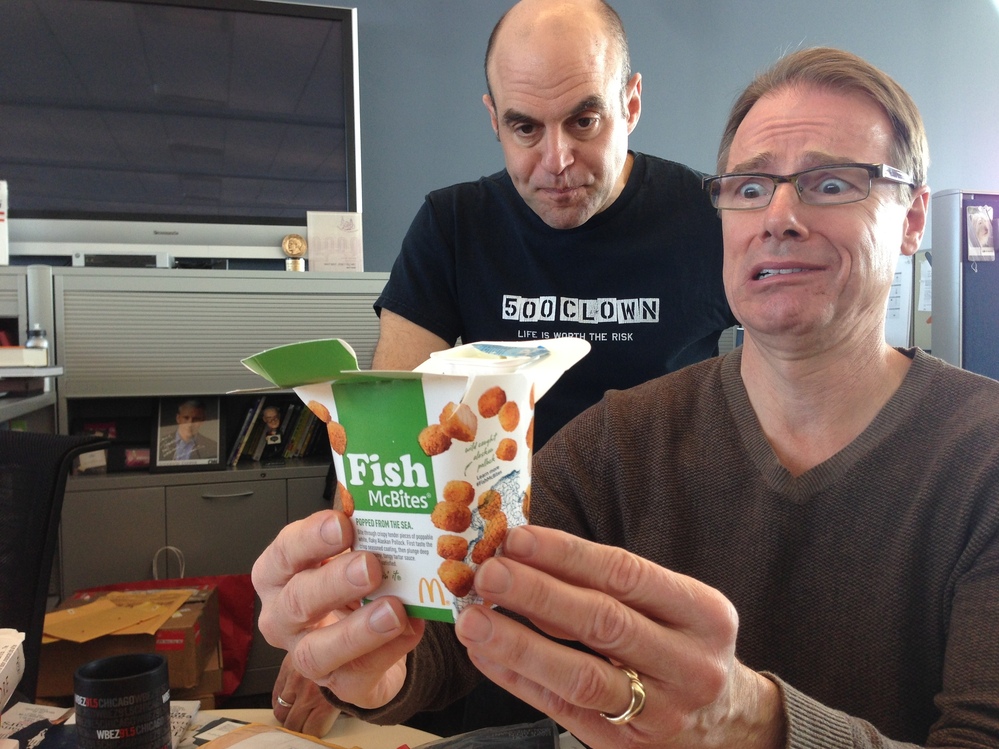
 Enlarge image i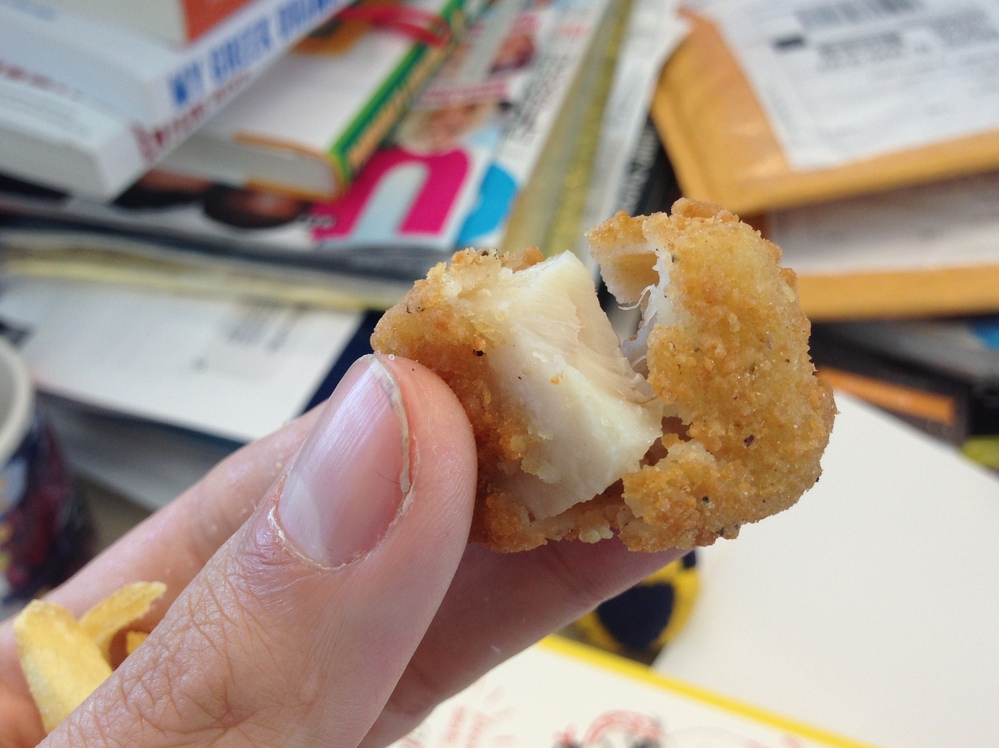
 Enlarge image i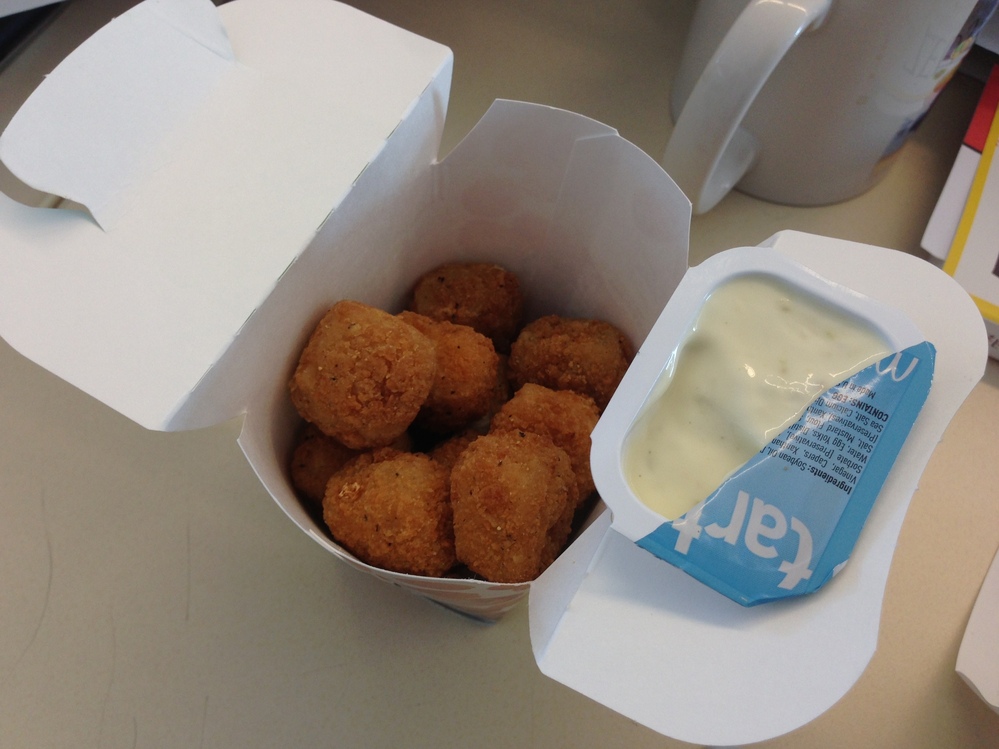
 Enlarge image i